


Exchange Traded Funds (ETF) have quickly emerged over the past few decades as the investment asset class of choice for investors who prefer ETF real time pricing, lower expenses, and wide menu of choices over mutual funds or similar pooled investment platforms. Due to their real time market pricing, they can avail themselves of digital technology to create synthetic derivative high-dividend streams, such as with the YieldMax catalog of ETFs, something that is unavailable from mutual funds.
Portfolio Diversification To Mitigate Risk
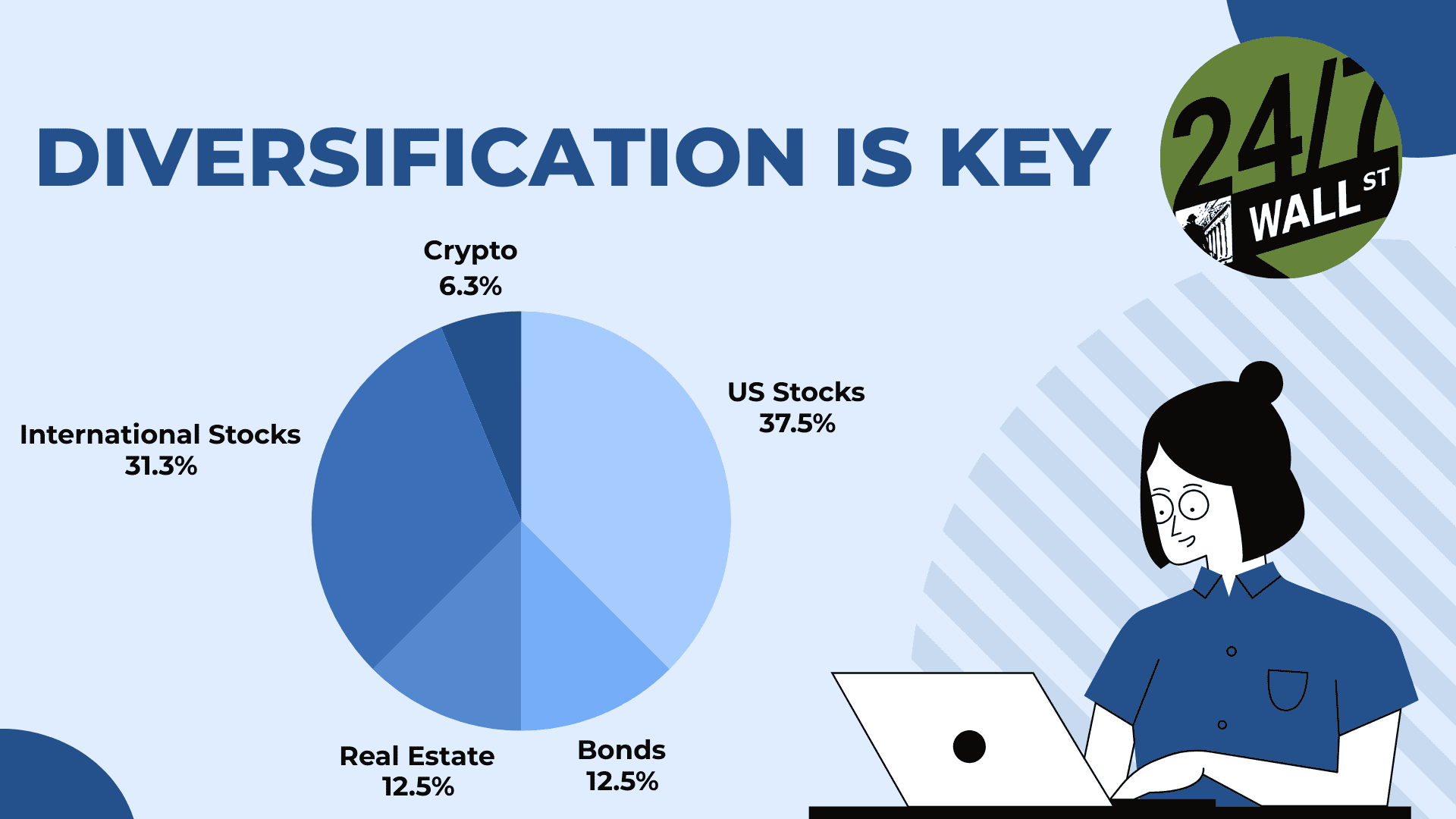
Even ETF portfolios can benefit from diversification from international, industrial, and asset class allocation mixes.
The concept of portfolio risk mitigation through diversification has been a cornerstone of prudent fund management for centuries. In The Bible Old Testament Book of Ecclesiastes 11:2, it reads: “Divide your investments among many places, for you do not know what risks lie ahead.” (NLT)
A diversified portfolio is a time tested risk mitigation strategy best encapsulated in the maxim: “Don’t put all your eggs in one basket.” While the temptation to maximize gains riding the fastest horse is normal, the number of winning streaks cut short by sudden disasters, geopolitical events, or other unexpected occurrences are endless throughout history in all of mankind’s ventures.
Some may argue that, except for single stock ETFs such as those created by YieldMax, ETFs, by design, are already diversified, as their portfolios are assembled to proportionately mirror and track a designated index that is publicly followed. Though that is technically correct, an index is usually devised to group securities with common features and ranking them by criteria such as market capitalization size.
Nevertheless, risk tolerance is a totally subjective sensibility, and every investor needs the security of a portfolio that won’t plague them with sleepless nights. As a result, some individual investors, many of them DIY types who ascribe to the FIRE (Financial Independence, Retire Early) ethos, often take to social media forums like Reddit for feedback and tips on portfolio management. Some inquiries about ETF diversification have cropped up. However, an objective perspective as to the different ways meaningful diversification can be introduced, is lacking in many of these forums. Therefore:
Portfolio Diversification Parameters

There are numerous different categories of ETFs now available to investors to suit most risk tolerances and industrial sector interest focus.
The following are some options for inserting diversification into a portfolio. As the Vanguard S&P 500 ETF (NYSEARCA: VOO | VOO Price Prediction) is the largest and most widely held ETF on the planet, that can be a presumptive baseline.
For Capital Appreciation Growth Diversification:
If one wishes to add potentially greater upside and can tolerate commensurately higher volatility, adding an ETF based on another index, such as the menu of choices tracking the NASDAQ-100 or the Russell 2000, can offer greater exposure to technology and other sector stocks that are fast rising but are not hamstrung by large-cap defensive stocks or those in solid but relatively static growth industries. Other indexes for which ETFs are offered include some that gauge trading momentum, small-cap growth, and a panoply of additional parameters.
There are also aggressive growth ETFs focused solely on specific industrial sectors, such as AI, biotech, energy, telecom, commodities, healthcare, space exploration and satellites, and many others.
Alternatively, for investors who want growth but feel that the volatility of the S&P 500 is too much of a roller-coaster for their comfort, there are a number of ETFs that are tilted more towards stable, large-cap stocks that offer dividends as well. These ETFs may track stocks by cash flow or other criteria that offer steadier and less volatile growth performance and may be categorized under value (lower debt/equity ratio).
Geographical Diversification:
Any index predicated on groupings of US stocks is overwhelmingly represented by US companies, with the exception of multinationals with ADR representation on a US stock exchange. However, certain major companies, such as Saudi Arabian Oil Company (ARAMCO), Korean electronics titan Samsung, and China’s TenCent Holdings do not have stock available in the US. An emerging markets ETF, such as the Vanguard FTSE Emerging Markets ETF (NYSEARCA: VWO) or the Avantis Emerging Markets Equity ETF (NYSEARCA: AVEM) would afford them exposure to such international stocks.
Investment Income:
While portfolio growth is an imperative for a majority of investors, income is vitally important for many retirees. Additionally, many aggressive growth portfolios will often rebalance towards a larger ratio of income based ETFs as retirement age looms closer. As a huge general category, income based ETFs have a number of subsectors that can include US government bonds, municipal bonds, corporate bonds, dividends, and specialized sector ETFs (see below).
Specialized Sector Income:
The SEC makes a special arrangement for certain industries to access the capital markets by tax arrangements that require these entities to remit 90% of profits to shareholders. There are indexes and corresponding ETFs that track the various companies in each of these sectors:
- Real Estate Investment Trust (REIT) – These companies are engaged in a wide range of real estate activity that can include development, mortgage underwriting, finance, real estate management, and even portfolio management of government agency mortgage backed securities.
- Midstream – Midstream companies are engaged in the logistics and storage of hydrocarbon products, i.e. petroleum and natural gas, in their various forms. This includes maritime and inland transportation, natural gas, freezing gas into liquid form, and refined products from crude oil, in addition to crude oil itself.
- Business Development Companies (BDC) – BDCs are companies that provide small and mid-level private corporations with a wide range of lending and other finance services that are no longer available from many banks after the 2008 subprime mortgage banking meltdown.
High Dividend Synthetic Derivative ETFs:
Popularized by the YieldMax catalog of ETFs and rivaled of late by JP Morgan Chase with its JP Morgan Equity Premium Income ETF (NYSEARCA: JEPI), these ETFs are designed to track a volatile index (or, in some YieldMax cases, a single, highly volatile stock). In addition, they are actively managed, so that a derivative option covered call strategy with discretionary risk mitigation through puts or other means to synthetically generate a dividend income stream, often payable monthly with each option expiration month.
As some High Dividend ETFs may pay as often as weekly, this has captured the attention of a growing percentage of FIRE adherents, who deploy the weekly dividends for dividend compounding in a Dividend Reinvestment Plan (DRIP) program. Since many FIRE members work freelance on a project basis, the flexibility of the dividend frequency allows them to halt the DRIP and use the dividend income for other purposes in between gigs. The caveat to these ETFs is the elevated risk of potential capital erosion if the market turns flat or bearish, since appetite for the call options would subsequently dry up proportionately.
Too Much Diversity?

Each investor’s individual bandwidth to effectively monitor on a daily or weekly schedule has a major bearing on how many different ETFs he or she may wish to allocate into their portfolio.
While the notion of diversity in a portfolio is certainly advisable, practical considerations are also something to be factored into the overall equation. While ETFs are usually not an investment that one trades like an individual stock, it is prudent to regularly monitor one’s portfolio. As a result, the ability and bandwidth one has to comfortably keep track of their portfolio should be included in determining an optimal portfolio allocation strategy.
While some investors may wish to acquire examples of some or all of the aforementioned types of ETFs, there are others who stick with only two or three as the extent of what they can track regularly.
When John Bogle first devised the index fund, he admits he did not anticipate how it would balloon to what it has become, and, in fact, disliked ETFs for what he perceived as them leading to excessive speculation. Nevertheless, his Vanguard Funds, has become the largest ETF issuer in the industry and the millions who have successfully engaged in portfolio wealth building owe the index fund concept to his innovation.
In the end, the ease with which one can buy or sell an ETF makes customizing a portfolio relatively painless, so one can sample different ones to feel out a comfort level without undue capital risk, which makes the process more convenient, expeditious and less intimidating for digital age investors.















 Top Gaining Stocks
 Top Losing Stocks