



In recent years, the subject of portfolio growth has taken on a much larger level of importance with younger Millennials to Gen-Z. Some of this attention is the result of the FIRE (Financial Independence Retire Early) ethos, a mindset that espouses a hard work ethic, spending thrift, and aggressive investing. The eventual underlying goal is to build a nest egg for a comfortable, if not lavish retirement lifestyle while still young enough to enjoy it – presumably a number of years, if not a decade, before reaching age 65.
Within the FIRE movement and other DIY investor communities, the methods for attaining that nest egg can vary, depending upon one’s individual risk tolerance, investment style preferences, and employment situation.
Flipping The Investment Script
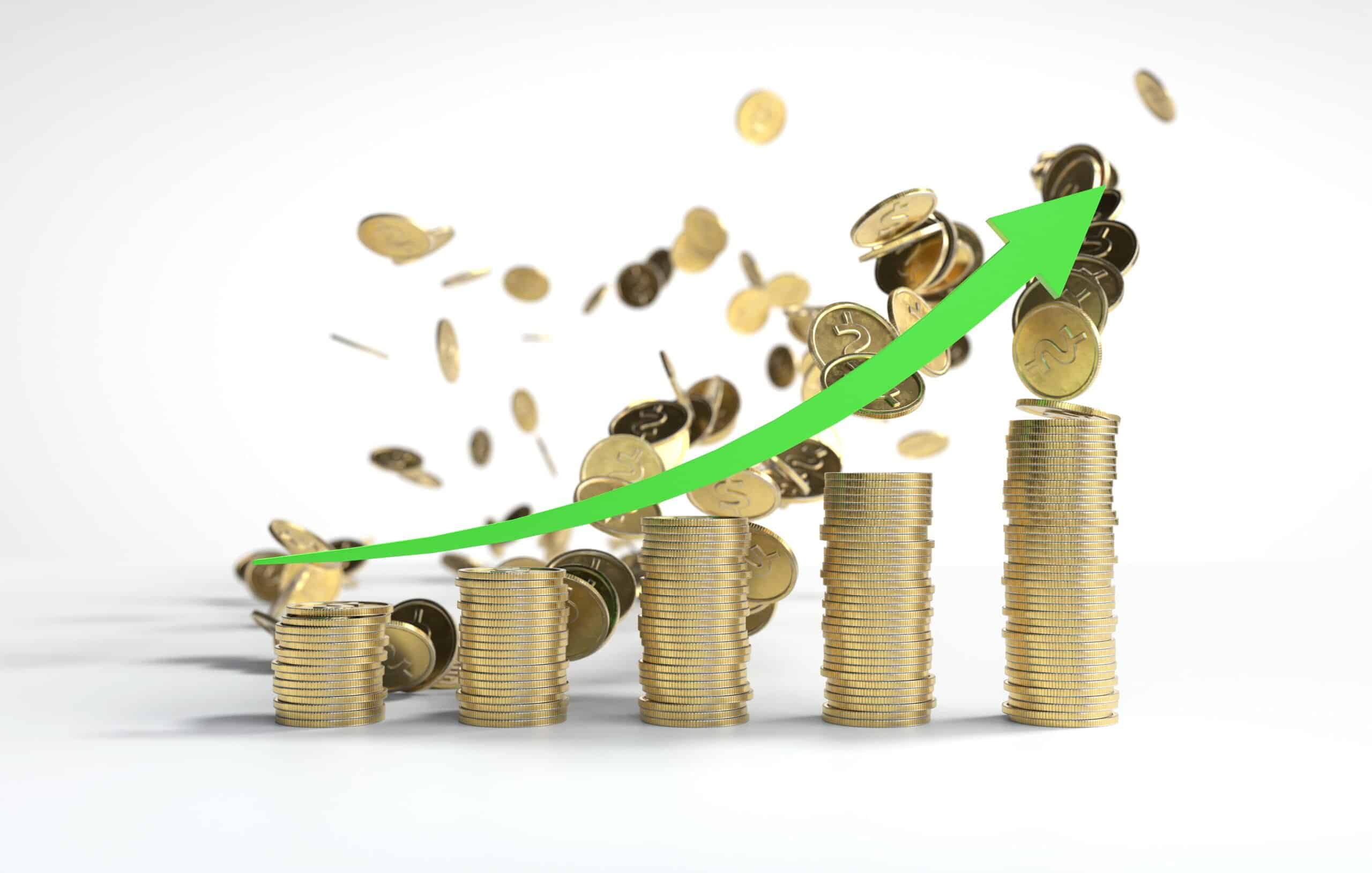
The monthly and weekly frequency of YieldMax ETF dividend distributions have revived dividend compounding with younger investors who can more readily observe quicker results.
In the past, growth was primarily attained through capital appreciation and compound interest. Dividend income, in which anything over 5% was considered high-yield, was a nice bonus, but predominantly the focus of interest among retirees and those dependent on regular income for their personal and household expenses. Exchange Traded Funds created to track popular indexes like the S&P 500 or the NASDAQ-100 garnered huge investment dollars. Given their relatively low expense ratios, their easy reference performance tracking, and historically strong performance, these ETFs have been a formidable wealth building platform for millions of investors. Some ETFs offer a combination of growth and income, such as the Schwab US Dividend Equity ETF (NYSE: SCHD | SCHD Price Prediction).
Thanks to fintech and an innovative use of derivatives, Yield Max and several of their rivals have changed the profile of what a dividend ETF is and what it can do. By banking on highly volatile stocks and deploying covered calls with healthy premiums and strategic puts to minimize downside risk, the YieldMax catalog of ETFs deliver ultra high dividends, payable monthly, or in the case of such as ETFs as the YieldMax Ultra Option Income Strategy (NYSEARCA: ULTY) and YieldMax Universe Fund of Option Income ETF (NYSEARCA: YMAX), payable weekly.
As a result, dividend ETFs with such a high degree of payout distribution frequency have grown in preference for wealth building via dividend compounding. They are often deployed in a Dividend Reinvestment Plan (DRIP) that regularly purchases additional shares that also generate proportionate dividends to grow a portfolio’s value in a snowball effect. Although these high-yield dividend ETFs continue to grow, this year’s most innovative ETF to date comes from a completely left field approach: the Fundstrat Granny Shots US Large Cap ETF (NYSEARCA:GRNY).
Granny Shots – Effective, Yet Unconventional
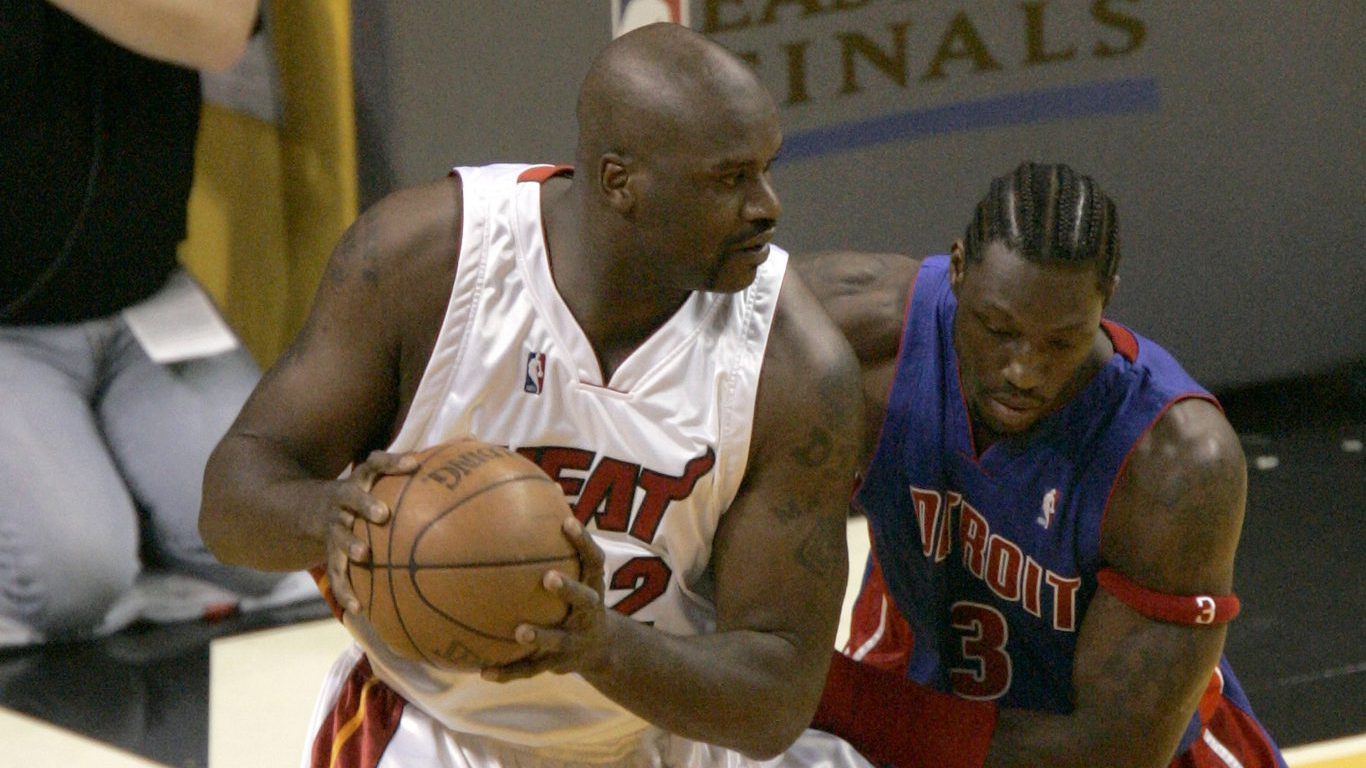
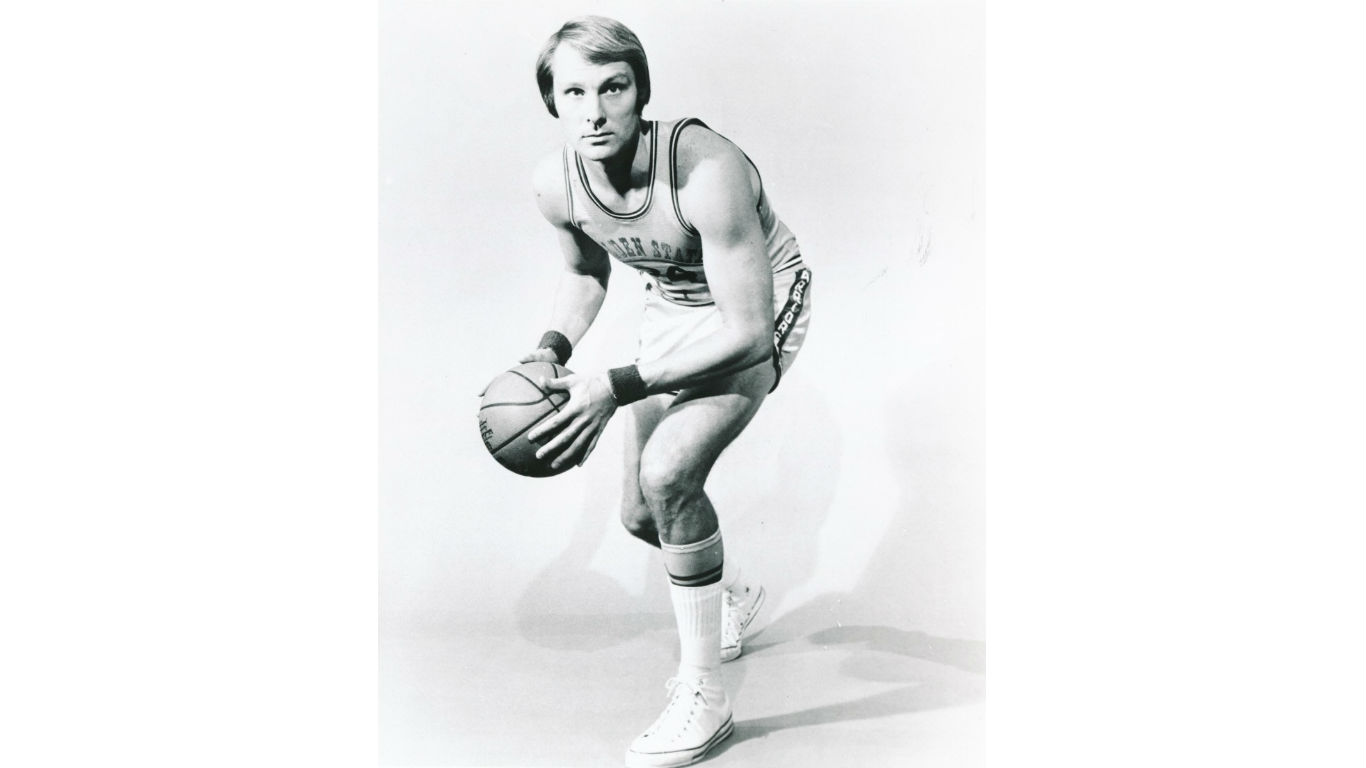
Despite his NBA dominance in the paint, Shaquille O’Neal refused to improve his woeful 52% free throw percentage by spurning NBA Hall of Famer Rick Barry’s offer to teach him the granny shot, which Barry used for a lifetime NBA 89.9% percentage.
The aesthetically ridiculed but statistically superior and effective basketball “granny shot” is an underhanded free throw used primarily by children and the elderly who lack the strength to execute the standard, overhand free throw. Its best known exponent was 1970s NBA and ABA scoring champion and 1975 NBA championship MVP winner Rick Barry, who used the granny shot to log a lifetime 89.9% free throw percentage. So consistent was Barry’s foul shooting that he offered to teach it to the legendarily poor shooting superstar Shaquille O’Neal. O’Neal declined, even though it would have boosted his percentage and negated the “Hack-a-Shaq” strategy of other teams fouling him on purpose to regain possession of the ball, since Shaq’s odds of conversion were minimal. Shaq claimed that the granny shot would harm his “hip-hop” image and preferred to suffer from an NBA lifetime 52% from the foul line.
GRNY is the brainchild of maverick Wall Street equities analyst Tom Lee, who founded Fundstrat in 2014 after 20+ years with Kidder, Peabody, Solomon Smith Barney, and JP Morgan Chase. He has a history of bucking the trend and being the lone analyst to step up against the majority opinion. In 2002, he was the lone analyst to call attention to accounting inconsistencies of Nextel, which caused some controversies when Nextel vehemently responded in the Wall Street Journal but didn’t address Lee’s points. When the Nextel merger with Sprint became the biggest flop in telecom industry history, Lee’s integrity and acumen were both vindicated and the start of a strong following in the investing community.
Taking cryptocurrencies seriously way before the majority of his Wall Street peers, Tom Lee became the first Wall Street analyst to, in 2017, publicly go on record in analyzing Bitcoin (BTC). At the time, Bitcoin had hit a new high of $2,450 and many investors feared it was a bubble. Dismissing the naysayers, Lee projected a 5-year price target of $55,000. Tom Lee’s comfort in public appearances and willingness to answer random audience questions both in person and online rapidly expanded his reputation among cryptocurrency and DIY equity investors.
By developing an entirely new approach to stock selection analysis that incorporates macroeconomic trends and how various stocks will thrive or fail in different scenarios, Lee has created a large-cap ETF that has year-to-date returns of over 23% (as per Yahoo! Finance) vs. 9.6% for the S&P 500, according to Yahoo! Finance as of the time of this writing. GRNY’s success has fueled rapid inflows of over $2.3 billion into Fundstrat’s coffers in almost 10 months, a feat that a majority of popular ETFs can take 10 years to achieve.
Different Strokes For Different Folks

Comparing methodologies between growth and income ETFs can be like comparing beef and pork – both meats, but widely different in taste, nutritional content, and recipe use.
The methodologies between SCHD, YMAX, ULTY and GRNY are vastly dissimilar from each other. A synopsis of each ETF below demonstrates their disparate approaches:
SCHD: SCHD is designed to track The Dow Jones U.S. Dividend 100 Index. It contains large-cap stocks that are dividend bearing, so it is less volatile than other ETFs whose underlying indexes are focused on tech stocks, for example. Launched in 2011, SCHD has averaged over 10% annually since inception. Otherwise, it is a relatively solid and conventional ETF in the mold of many others from Vanguard, State Street, and other rivals. It pays a 3.84% yield.
YMAX: The YieldMax system of creating synthetic securities through option strategies against a single or multiple volatile stocks is the hallmark of its ETF catalog. YMAX is what the company describes as a “fund of funds” within the YieldMax arena,primarily single stock ETFs, and offers investors exposure to the equivalent of a YieldMax mutual fund blended portfolio, featuring smaller stakes in a collection of different YieldMax ETFs. Its distribution rate is 56.26%.
ULTY: ULTY features a portfolio collection of 30-40 hyper volatile stocks against which the YieldMax derivatives strategy is applied. The composition of the portfolio gives its manager greater flexibility and discretion to decide upon which options to deploy and against which stocks. This differs from YMAX, which only passively collects shares of various single stock YieldMax ETFs that are already sitting with open option positions independent of YMAX itself. Its distribution rate is 88.60%.
GRNY: The GRNY selection process commences with deep research across macro trends, business cycles, demographics, and other criteria for the bird’s eye view perspective on the US economy. Fundstrat’s analytics team then prowls for large-cap, primarily S&P 500 companies with over $10 billion market cap that appear, at first look, best positioned to capitalize on the forecasted trends. The elimination process involves standard criteria like earnings and call transcripts to such arcane digital data points as keyword frequency, to narrow down the 40 or so companies genuinely aligned with these trends, with a minimum of (2) trend qualifications for portfolio inclusion. It pays no dividends to date.
Practical Application

Like Johnny Walker Black Label Blended Scotch, a blended portfolio that increases upside and income and mitigates risk can combine the best of several worlds or types.
From an investment perspective, diversification of asset composition and strategy is generally considered to be prudent, especially for those investors who lack the bandwidth to monitor a portfolio for several hours per day. Given the widely divergent approaches that each of these ETFs take, a mixed portfolio offers a combination of higher potential growth with added risk mitigation.
On the conventional capital appreciation side, GRNY’s 23.60% YTD return demonstrates the greatest horse power among the group of 4 ETFs. However, it pays no dividends. SCHD offers solid capital appreciation of 11% annually over the past 10-years, along with a respectable 3.87% yield.
On the income side, both ULTY and YMAX are clearly ahead of the game in the group of 4, with 88.6% and 56.25% distribution rates, respectively. However, they do have a caveat: both ETFs have lost sizable NAV this year, and ULTY especially runs a risk of capital erosion to below $5.00. On the other hand, if it can continue its weekly dividend rate, investors who are willing to wager that it will stabilize and eventually go back up stand a good chance of full recoupment in under 30 months.
Of course, degrees of personal risk tolerance and investment goals are subjective and vary widely, so any mixed portfolio should be allocated in accordance to the particulars of the investor in question. Nevertheless, wealth building options are continuing to expand for investors as these ETFs demonstrate.










 Top Gaining Stocks
 Top Losing Stocks