



24/7 Wall St. Key Points:
- Tapping a 401(k) before age 59 1/2 typically results in an early withdrawal penalty.
- The rule of 55 could give you earlier access to 401(k) funds, but it won’t work for everyone.
- It’s best to have retirement savings in multiple accounts, including at least one that isn’t restricted.
- Also: Take this quiz to see if you’re on track to retire (Sponsored)
As of 2025, the average 401(k) balance for workers in their 50s is about $490,000. So, a 54-year-old with $4 million remains far above the national average—roughly eight times higher. And you’re also in a great position to retire on the spot. Even though you’ll need to stretch your nest egg further than someone retiring in their 60s, a $4 million balance gives you the leeway to do that.
But what if all of your money is tied up in a 401(k) plan? Retiring now and tapping your savings could leave you facing penalties on your withdrawals. But thankfully, not all is lost.
This post was updated on November 10, 2025 to include recent figures as of 2025 and to clarify caveats to the rule of 55.
You may have to hang in until next year
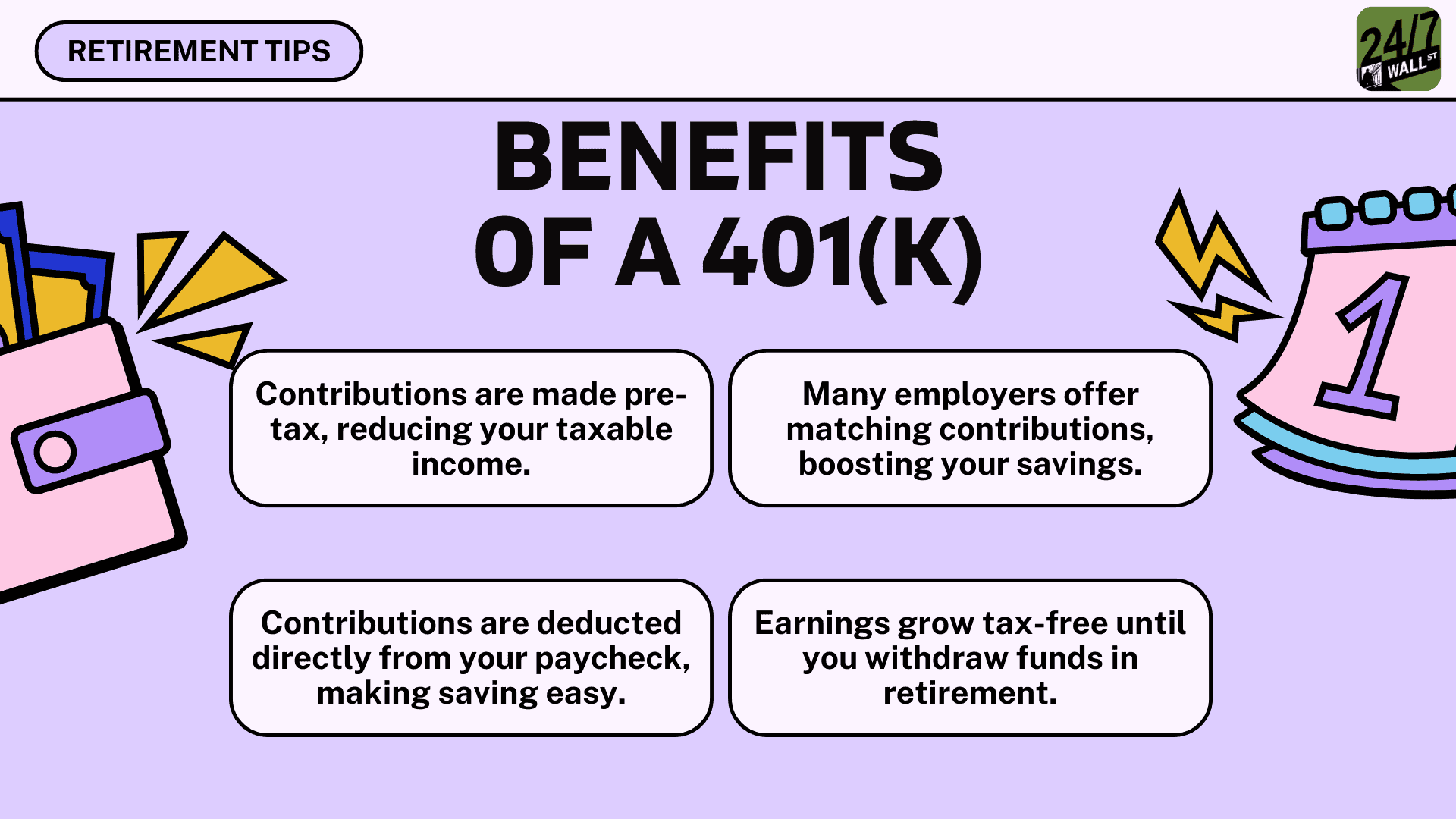
The IRS offers a pretty sweet tax break on 401(k) plan contributions. So in exchange, it sets restrictions on the amount of money you can contribute to these plans and the age at which you’re allowed to take penalty-free withdrawals.
If you take a 401(k) distribution before age 59 1/2, you risk a 10% penalty. And even with $4 million to your name, that penalty is an expense you probably don’t want to bear.
The good news, though, is that you may not have to sit tight and avoid touching your 401(k) until age 59 1/2. You may be able to get your money out penalty-free in 2025.
It’s a loophole known as the rule of 55; it allows you to take penalty-free withdrawals from a 401(k) if you leave your job the calendar year you turn 55 or later. In that case, you get penalty-free access to the 401(k) sponsored by the employer you’re separating from. Note that the plan must permit in-service or post-separation withdrawals; some plans restrict access until full termination paperwork is processed.
So here, if you’ll be 55 in 2025 and you leave your job then, you’d generally be eligible for penalty-free withdrawals, assuming your 401(k) plan is sponsored by the employer you’re working for now and are separating from. But if part of your $4 million is in a former employer’s 401(k), the rule of 55 won’t apply to that account. Touching an old 401(k) at 55 would leave you subject to penalties on withdrawals.
Getting through the waiting period
Having to continue plugging away at a job when you’re ready to leave it — and have saved enough to call it quits — can be frustrating. But thanks to the rule of 55, you may access your money penalty-free soon enough.
That said, it’s best to spread your retirement savings across various accounts, including at least one that isn’t tax-advantaged. That provides the freedom to take withdrawals at any point in time.
The above situation is salvageable due to age 55 being right around the corner. But imagine a scenario where you can’t retire at age 45 or 50 despite having plenty of savings because your money is tied up in restricted accounts. Talk about frustrating. So just as it’s important to diversify investments in the course of saving for retirement, it’s important to diversify accounts, too.














 Top Gaining Stocks
 Top Losing Stocks