



Jeff from Austin called The Ramsey Show in April with a problem that is more common than most families want to admit: his mother is on $1,600 a month in Social Security, has no funeral plans, and a funeral home just quoted her $25,000 to $26,000, with financing available at $600 a month for five years. Jeff told Ramsey he wasn’t even sure how long his mother had left.
Dave Ramsey’s response was direct: “So, Mom, you did not live your life in a Mercedes, and you shouldn’t die in a Mercedes.” He called the funeral home operator a “slickster” and told Jeff his mother got sold. Ramsey’s verdict is correct, and the math behind it is worth understanding in full.
What a $25,000 Funeral Actually Costs Someone on Social Security
The caller’s mother receives $1,600 a month. A $25,000 funeral exceeds a full year of her entire income. The financing offer makes it worse: $600 a month for five years takes a large portion of her monthly Social Security check for five years straight. That is not a funeral plan. That is a financial trap structured around grief.
The national savings rate has been falling. The U.S. personal savings rate dropped from 6.2% in the first quarter of 2024 to 4.0% by the fourth quarter of 2025. For seniors living entirely on Social Security, that national average is irrelevant because there is no wage income to save from. A $25,000 obligation at $600 a month leaves almost nothing for housing, food, medication, or any other expense.
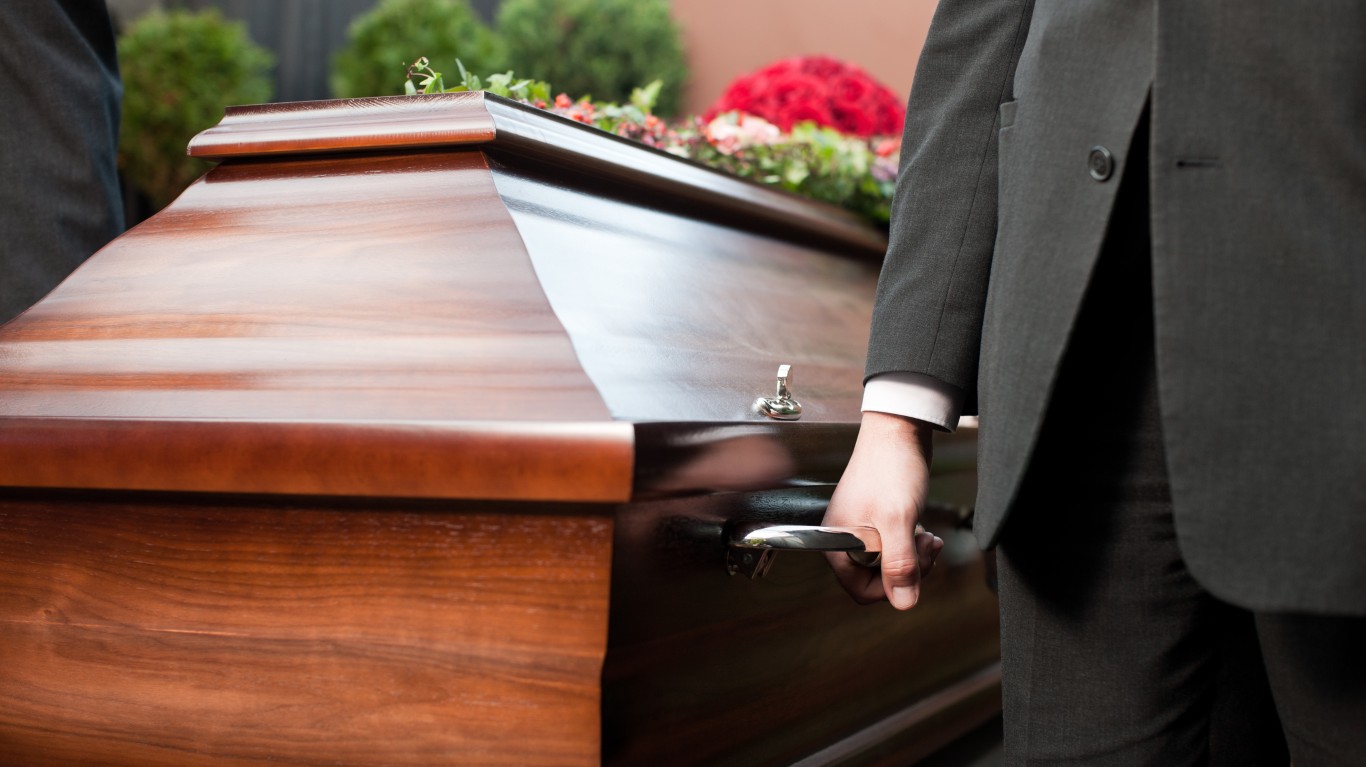
Ramsey’s budget target: $5,000 to $6,000. His reference point: the average American funeral costs $7,000, and caskets are available at Costco — a figure Ramsey cited on air. The gap between $6,000 and $25,000 is not dignity. It is markup, add-ons, and financing interest layered on top of a family’s worst day. The $25,000 quote included extras like a $400 photo video. These are upsells, not necessities.
Why Prepaying a Funeral Is Almost Always the Wrong Move
Ramsey’s advice goes further than just finding a cheaper operator. He advises against prepaying any funeral, ever. The financial logic is sound. Money paid to a funeral home years before death is money that stops working for the family. Kept in a dedicated savings or payable-on-death account, that same $5,000 to $6,000 remains available for any emergency rather than locked into a contract with a specific funeral home that may change ownership, raise prices, or go out of business.
Consumer sentiment is at 56.6 on the University of Michigan index, well below the 80 threshold that signals neutral confidence and close to the recessionary level of 60. Families under financial pressure are exactly the population that funeral upselling targets, because grief creates urgency and urgency suppresses comparison shopping.
Who Is Vulnerable and What to Do Instead
The profile most at risk: a fixed-income senior with no liquid savings, a family member handling arrangements under emotional duress, and a funeral home that leads with financing rather than price transparency. Jeff’s mother owns a house, though it is in poor condition. Ramsey’s suggestion to auction the house quickly to cover costs addresses the liquidity problem directly. Even a distressed-sale price on real property will typically exceed the cost of a reasonable funeral.
The family that is least vulnerable looks different: they have already identified a low-cost funeral provider, they have a written budget agreed upon before any arrangements begin, and they are not making financial decisions while sitting across from a salesperson at the worst moment of their lives.
The CPI stands at 330.3, reflecting sustained inflation that has eroded purchasing power for fixed-income households. Funeral service costs have tracked or exceeded general inflation, which makes the price gap between a $6,000 funeral and a $25,000 one even more meaningful in real terms.
The Action Steps Before the Phone Call You Dread
- Get itemized price lists from at least three funeral homes before any arrangements are needed. Federal law requires funeral homes to provide these on request.
- Set a firm budget ceiling in writing and share it with the family member who will handle arrangements.
- If prepayment feels necessary, use a dedicated savings account or a payable-on-death account rather than a funeral home contract. The money stays liquid and the family retains control.
- Check Costco, Sam’s Club, and direct-to-consumer casket retailers for pricing before accepting a funeral home’s casket quote.
Ramsey’s core point holds: the amount spent on a funeral is not a measure of love or respect. A $6,000 funeral arranged with intention is a complete and dignified goodbye, regardless of what a $25,000 one costs.













 Top Gaining Stocks
 Top Losing Stocks