


Galloway’s Defense of Apple’s Cash Choice
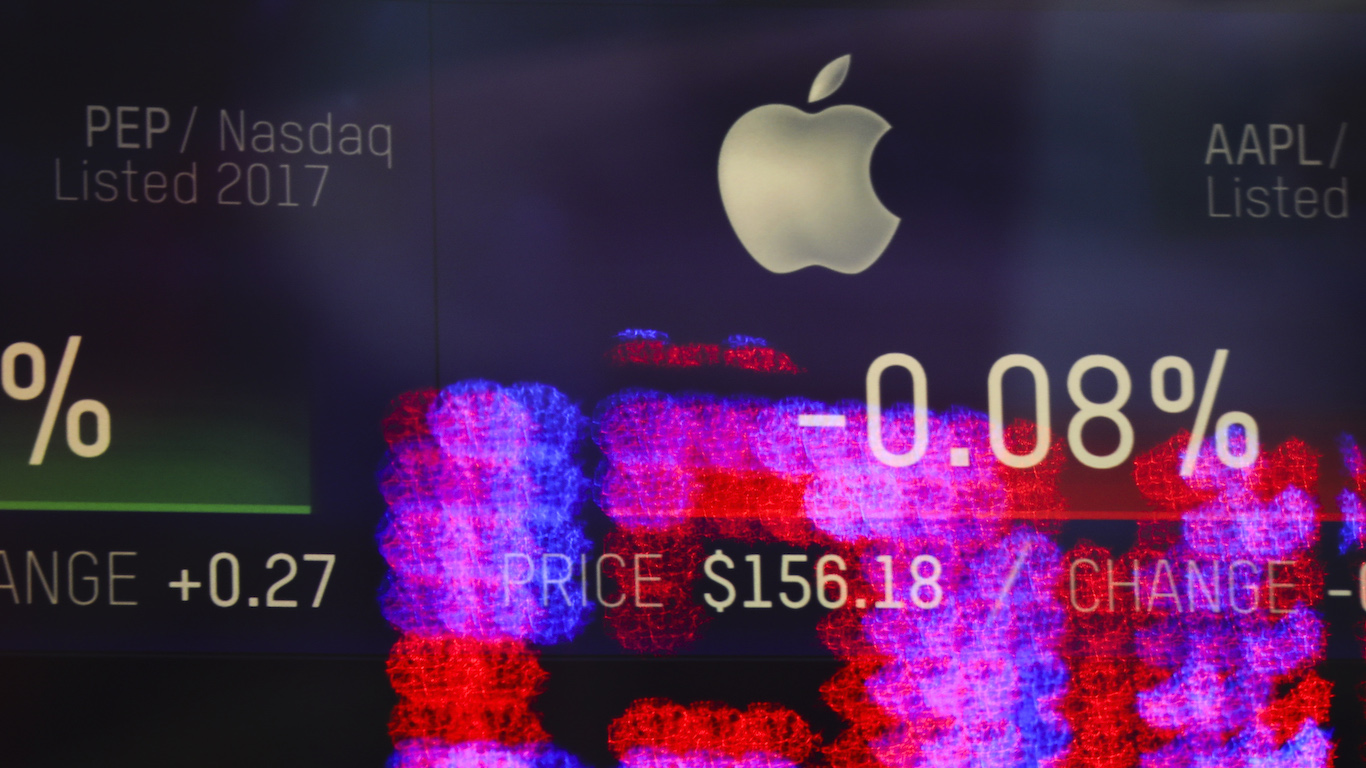
On the latest Prof G Markets, Scott Galloway defended Apple (NASDAQ: AAPL | AAPL Price Prediction) for authorizing a fresh $100 billion share repurchase while peers spend record sums on AI infrastructure. He framed Apple as the owner of “custody of the billion most important consumers in the world and wealthiest” and predicted the company would “play Anthropic off against OpenAI and extract an enormous royalty statement” rather than fight an “out-of-control AI CapEx war.”
Co-host Ed Elson pushed back, asking why investors should swallow “$100 billion worth of stock at what is already a decently rich valuation” instead of “data centers, which are supposedly going to be the picks and shovels of the next generation of computing.”
The stakes are personal for anyone holding Apple as a retirement anchor. The board is explicitly choosing shareholder yield over growth optionality. If that bet ages badly, you trade tomorrow’s compounding for today’s payout.
The Verdict: Galloway Is Mostly Right
The financial concept underneath the debate is shareholder yield: dividends plus net buybacks divided by market cap. Apple’s quarterly dividend rose 4% to $0.27 per share, and the prior quarter alone retired $24.7 billion in stock. Against a $4.1 trillion market cap, the combined cash return runs near 3% annually, which compares with a 0.4% headline dividend yield.
Compare the three capital strategies side by side:
- Apple: $100 billion buyback authorization, dividend hike, $2.01 EPS on an eighth consecutive beat.
- Microsoft (NASDAQ: MSFT): $30.9 billion Q3 CapEx, up 84% year over year, funding a $37 billion AI run rate.
- Google (NASDAQ: GOOGL): $35.7 billion Q1 CapEx and $175 to $185 billion guided for FY26.
The market has already cast a YTD vote: AAPL +2%, MSFT -14%, GOOGL +23%. Investors are paying for AI when it shows up in the income statement (Google’s Gemini momentum) and punishing it when it shows up only in the capex line (Microsoft).
A concrete scenario: a 60-year-old with $400,000 in Apple inside a brokerage account. The dividend pays roughly $1,500 a year. The buyback does the heavy lifting. By retiring shares while net income grew 19% last quarter, Apple manufactures EPS accretion that this investor can harvest through systematic withdrawals without selling a winning thesis.
Where the Strategy Breaks
This call fits investors over 55 who want Big Tech exposure without binary AI risk. Apple’s $31 billion Services quarter and $45.6 billion cash pile underwrite the dividend through any product cycle hiccup. Galloway’s framing of Apple as the “under-the-mattress stock” rests on real durability.
It hurts younger investors with 25-year horizons. If Microsoft’s AI build compounds, foregoing that capex bet means missing the next platform leg. Elson’s valuation point is the caveat Galloway glosses over: buying back stock at a 37 P/E is mechanically less accretive than buying it at 18, and prediction markets show only a 37% probability AAPL closes May above $280. Run three checks on any buyback-heavy holding.
How to Pressure-Test the Bet Yourself
First, calculate the combined shareholder yield (dividend yield plus net repurchases divided by market cap) and require it to clear the 10-year Treasury. Second, divide the buyback dollars by the current price-to-earnings ratio to see how many earnings dollars per share you actually get back.
Third, pair the position. Holding Apple for stability is rational, and investors looking for AI exposure could research a focused AI infrastructure name alongside it to capture the upside Apple is consciously forgoing.
The takeaway: Galloway’s read on Apple’s defensive moat is correct, yet a buyback at 37x earnings carries valuation risk. Pay attention to the price the company pays for its own stock, because that is the price you are paying too.




 Top Gaining Stocks
 Top Losing Stocks