


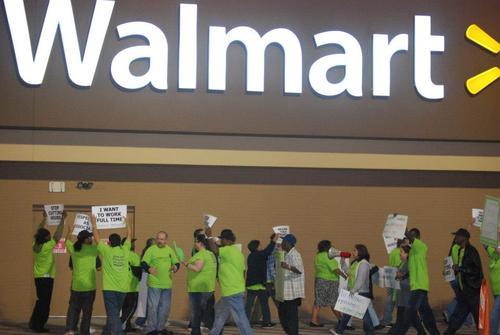
Wal-Mart’s annual guidance was focused more around capital spending of $12 billion to $13 billion, and the following year’s cap-ex is being put at $11.8 billion to $12.8 billion. Our biggest concern here is that Wal-Mart’s sales guidance is being confirmed at $475 billion to $480 billion for the current year. Thomson Reuters has a consensus estimate of almost $480.7 billion.
If Wal-Mart managed to hit the consensus revenue target it would represent sales growth of only 2.5% from last year. The new range given implies sales growth of between only 1% and 2%, which sounds a lot like Wal-Mart is only keeping with national inflation. The reality is that Wal-Mart’s growth engine is behind it and these numbers reflect that.
Wal-Mart’s tempered expectations are implying growth of 120 to 150 small-format stores and about 115 large-format stores. That is a slight bump up in small-format stores but a smaller number of planned superstores.
Another bit of pressure we have been observing against Wal-Mart is that many consumers have adopted the trade-down economy by going to the dollar stores. Most dollar stores are now full of products that the peak price may be under $5.00, but they are far more diverse in products compared to the dollar stores of just a decade ago.
Investors are having a hard time making any serious commitment to Wal-Mart as well. Its shares closed down 0.4% at $74.37 against a 52-week trading range of $67.37 to $79.96. The current price represents a valuation of 14.3-times expected earnings per share for the current fiscal year, but we would caution that the earnings figure is at the consensus estimate rather than any implied trimming from the new sales guidance.





 Top Gaining Stocks
 Top Losing Stocks