


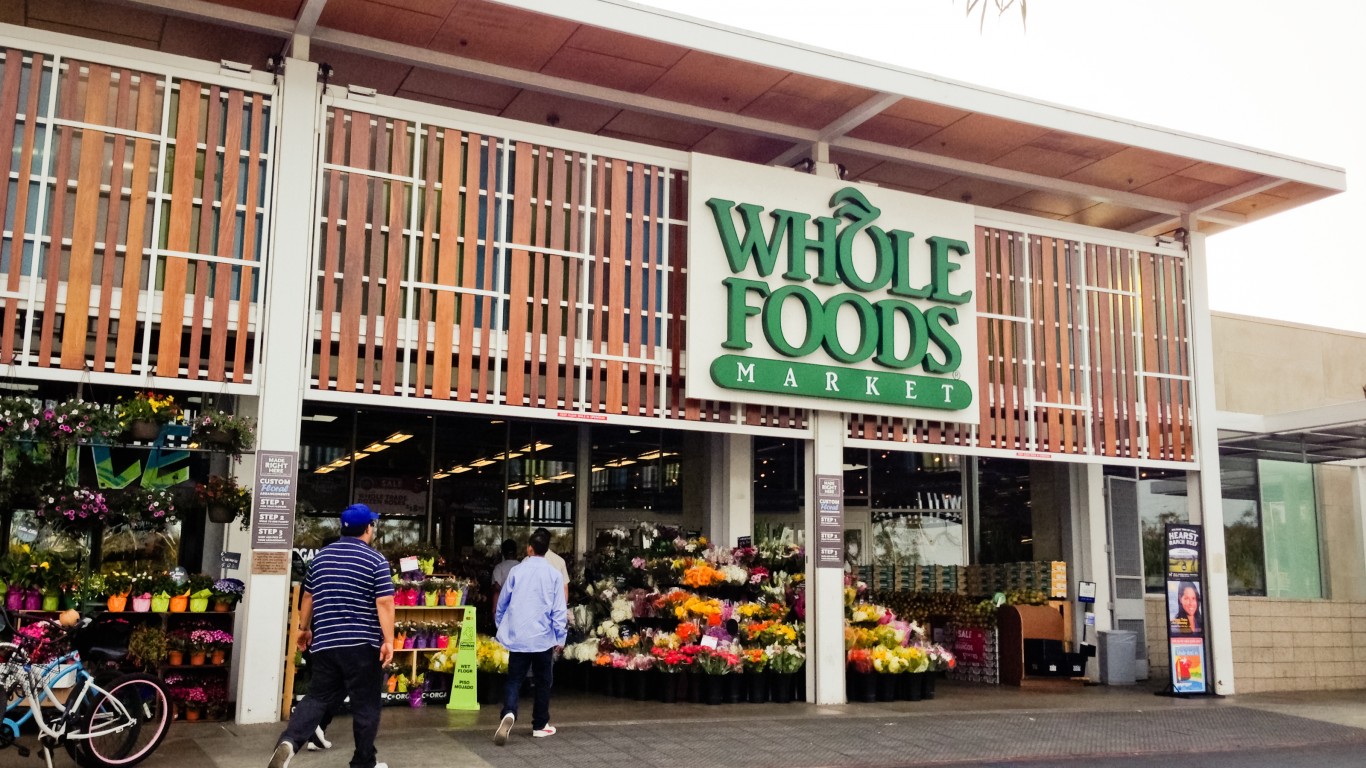
The company announced Wednesday morning that it is launching a produce rating system it calls “Responsibly Grown” that will assess the growing methods for the fresh produce and flowers it sells based and assign a ranking of “good,” “better” or “best.” The ranking is based on how the impact that a supplier’s growing practices have on human health and the environment. Whole Foods claims this ranking system will “help shoppers make more informed choices in the produce and floral departments, and it prohibits some of the most hazardous neurotoxins still allowed in agriculture.” The company said it is launching the program with ratings on hundreds of products, representing more than 50% of produce nationwide.
The tiered ranking system may also lead to a tiered pricing system, although Whole Foods does not indicate that that is what will happen. But that seems almost inevitable given the inferred costs the rankings will impose on producers.
To achieve a “good” rating a farm must take 16 major steps to protect air, soil, water and human health. A grower must also restrict pesticide use only to those compounds listed by the U.S. Environmental Protection Agency. To obtain a “better” or “best” ranking, growers will be rated in multiple areas including pest management, farmworker welfare, ecosystems and biodiversity, and enhancing soil health, among others.
All these efforts imply a cost, and Whole Foods is betting that its customers will be willing to pay more to support growers who take the steps outlined by the grocery chain. The company is not likely to see a significant rise in revenue unless there is undetected pent-up demand for Responsibly Grown produce. What Whole Foods is likely to get is a boost to its image as the leading retailer of sustainably grown food. That won’t hurt the store, but it probably won’t make much difference in the stock price.
The company’s stock was trading up about 0.9% early Wednesday morning, at $37.39 in a 52-week range of $36.08 to $65.59.







 Top Gaining Stocks
 Top Losing Stocks