



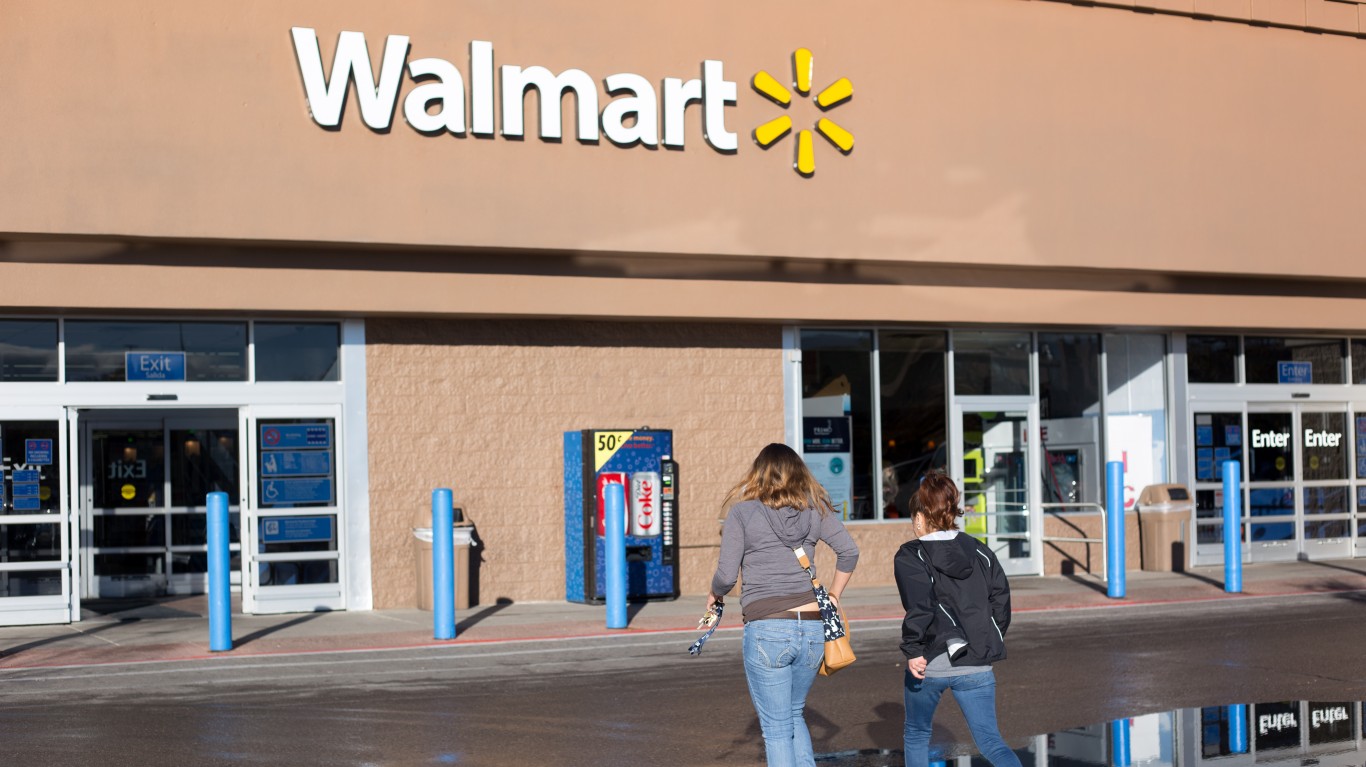
The impact of a Walmart store opening for consumers does, in fact, lower retail prices for consumers who live in the area around the new store. The impact on other retailers has been studied, but the results are not decisive. The authors claim that this study on the impact of a Walmart store on house prices is the first peer-reviewed study of its kind. The study was published in the Journal of Urban Economics.
The average price of homes within the study area around a Walmart store was approximately $267,000. For homes priced at that average, the increase in value for houses located within half a mile of the store is $7,000, and the increase for houses in the area from half a mile to one mile out is $4,000.
ALSO READ: Companies Paying Americans the Least
The study also noted a similar effect at the opening of a Target Corp. (NYSE: TGT) store. By looking at 42 new Target stores that were built in the same time period as the Walmart stores. The results suggest “that the opening of a new Target store increases property values by 1.5% for houses that are one to two miles away from the Target.”
The researchers conclude:
On average, the benefits to quick and easy access to the lower retail prices offered by Walmart and shopping at these other stores appear to matter more to households than any increase in crime, traffic and congestion, noise and light pollution, or other negative externalities that would be capitalized into housing prices. This result is potentially useful to policymakers that consider passing zoning regulations and other laws that could affect Walmart’s ability to build new stores within their jurisdiction.
The authors note, however, some externalities may affect those households “very close” to a Walmart and that the study’s findings are based on an average that may not be true in every case. The data also may not be accurate in more rural areas where the authors did not have housing data.









 Top Gaining Stocks
 Top Losing Stocks