



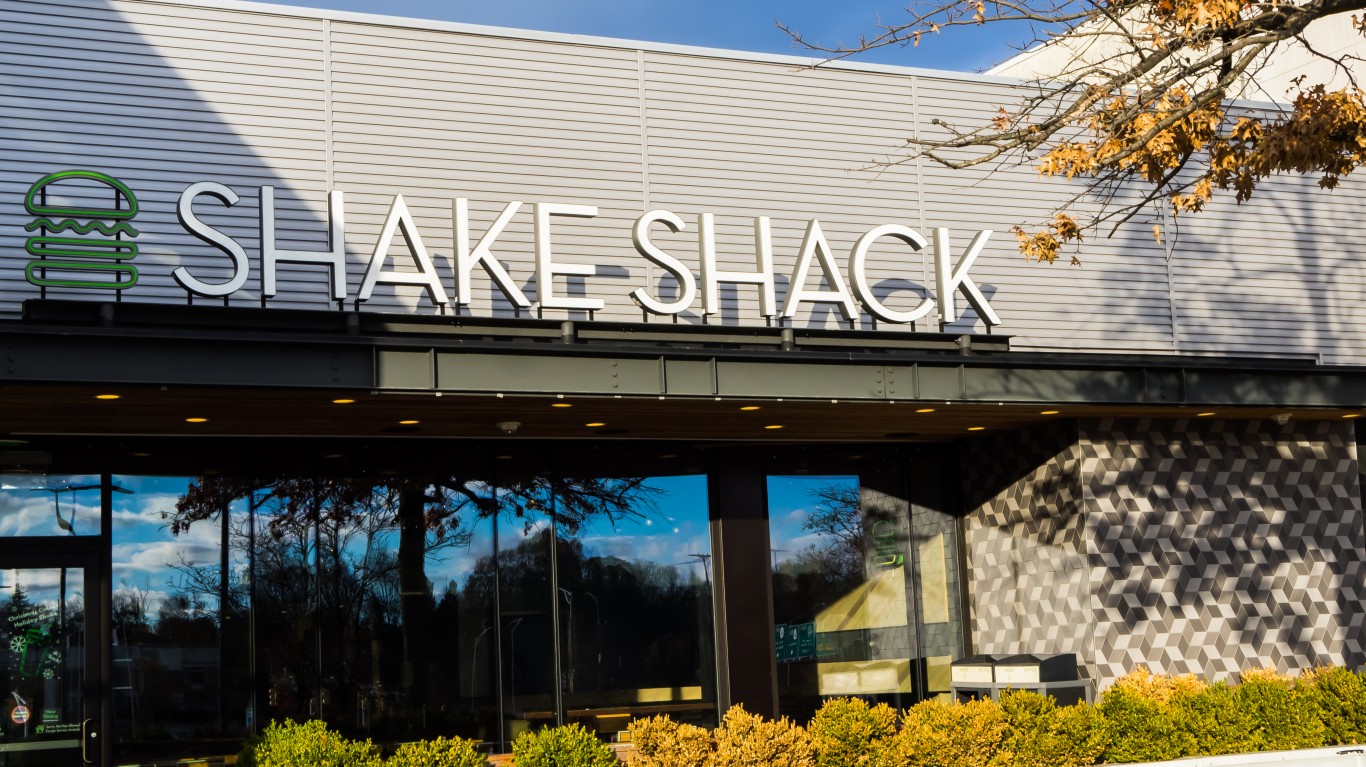
Shake Shack Inc. (NYSE: SHAK) was one of the more recent hot post-initial public offerings that has gone from hot to “too hot to handle” for many investors. It’s a great headliner company with a loyal customer base, but it also has traded at valuations that might seem more appropriate to an internet company than a restaurant chain.
According to Nick Setyan and Colin Radke of Wedbush Securities, it may finally be safe enough to buy shares of Shake Shack. 24/7 Wall St. would warn investors that the implied upside in this call is handily above the consensus analyst price target, and it is not really that much more upside than the 8% to 15% upside range projected for new Buy and Outperform ratings seen in Dow and S&P 500 stocks.
Wedbush raised its rating to Outperform from Neutral, and it raised the firm’s official price target all the way up to $43. The team’s prior target was $33, and the consensus analyst target from the Thomson Reuters sell-side analyst universe was last seen at $36.90.
Thursday’s upgrade of Shake Shack shares was based on more realistic same-store sales growth expectations, the potential for upside from new unit strength and margin leverage ahead of expectations.
[nativounit]
With more flattish same-store sales growth now the official forecast, and aside from meaningfully easier comparisons, the Wedbush team is now expecting higher transactions from the Shack app, continued menu innovation and average check growth to offset the pressure from cannibalization and new units entering the comparable store base in line with a 1% run rate for the remainder of 2017.
On top of margin expectation, Wedbush also is looking for upside to its current EBITDA expectations. The report said:
We believe pressure on labor could be lower than expected as last year’s voluntary wage increases are lapped. We also believe that should beef costs continue to rise, Shake Shack would not be averse to taking additional price increases given low pricing relative to historical levels. We also believe beef inflation would likely curtail intense discounting among QSR burger players, benefitting Shake Shack’s competitive positioning.
Wedbush sees Shake Shack’s new unit outperformance as likely to drive upside. The team said:
Not only does 2017 revenue guidance imply new unit volumes well below recent trends, but also significant pressure from other non-comp stores. While we believe there will be pressure from the non-comp base, we continue to model less pressure than guidance and the Street’s expectations. We also note Shake Shack’s new units are profitable within a quarter of opening, in contrast to most growth peers.
As far as how Wedbush has raised the Shake Shack price target so much, the team sees 20% or more in annual EBITDA growth beyond 2018. They see that valuation being at the very high end of the growth peer set as appropriate. The team also now has a base-case discounted valuation of its ultimate opportunity at about 12 times its EV/EBITDA median.
Shake Shack shares were last seen trading up more than 3% at $37.85, but the trading volume was around 550,000 shares even at 11:30 a.m. Eastern Time. Shake Shack shares have a 52-week trading range of $30.36 to $42.94.
If Wedbush’s call proves to be right, then Shake Shack has about 17% in implied upside from Wednesday’s closing price but just under 15% from the Thursday opening bell price of $37.46. Whether that is enough in implied upside for a high-value stock like Shake Shack remains to be seen. At the prices ahead of the call, Shake Shack was valued at about 60 times expected 2018 earnings per share.
[wallst_email_signup]









 Top Gaining Stocks
 Top Losing Stocks