


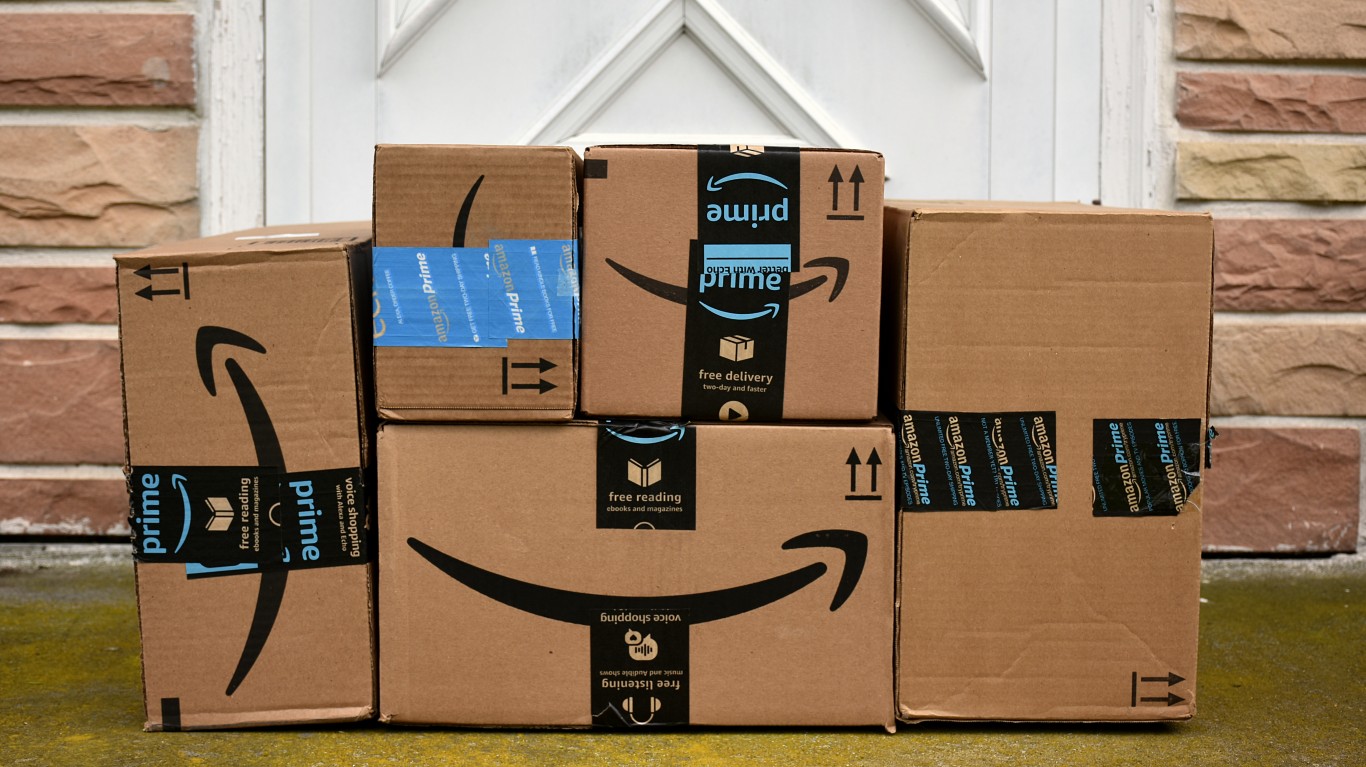
Amazon.com Inc. (NASDAQ: AMZN | AMZN Price Prediction), known for its Prime Service, is pushing back its much-lauded Prime Day due to the pandemic. This e-commerce juggernaut has been the go-to for many Americans during the age of COVID-19, sending its stock to all-time highs. However, will postponing Prime Day cause near-term pain for investors or will markets shrug it off?
Prime Day acts as Amazon’s Black Friday or Alibaba’s Singles Day. The sheer volume of sales that occurs on this day alone is staggering. Roughly 10% of the companies in the S&P 500 have market caps less than the sales from Prime Day in 2019.
A looking at the numbers shows that Prime Day has only gained traction over the past few years. In 2019, total Prime Day sales increased 71% year over year to $7.16 billion. For 2018, 2017 and 2016, sales for this period totaled $4.19 billion, $2.41 billion and $1.52 billion, respectively.
Additionally, for 2019, Amazon sold more than 175 million products, up from 100 million products in 2018. Amazon also noted that the reason for the outsized sales growth for this past year in particular was that Prime Day was 12 hours longer than previous years, making a total of 36 hours. Prime Members increased by 10 million year over year as well.
[nativounit]
So what does that mean for this year?
Ultimately, Amazon is losing out on $7 billion or more in revenues, assuming flat sales growth, for this quarter. Although this may be detrimental to Amazon in the near term, the company has been bolstered by pandemic sales.
Also, Amazon is not forgoing Prime Day this year, only postponing it. By the looks of it, Amazon has its eyes set on the first week of October, or at least this is what the company has been telling third-party sellers.
One last thing to note. Prime Day in the past has created supply chain issues for Amazon. Some Prime Members did not receive their packages in two days because of the sheer volume of sales. Considering the strain that the coronavirus already has put on Amazon, the extra deliveries could only be exacerbated. Putting off Prime Day for supply chain concerns is valid as well.
So, while the revenue may not be realized now, it is not off the table. If anything, Amazon investors and Prime members alike will have to wait much longer than two days for these deals to arrive.
Amazon stock traded down about 2% on Tuesday, at $3,134.16 in a 52-week range of $1,626.03 to $3,344.29. The consensus price target is $2,930.30.
[recirclink id=724667][wallst_email_signup]












 Top Gaining Stocks
 Top Losing Stocks