


Investors love dissecting Amazon (NASDAQ:AMZN | AMZN Price Prediction) into neat buckets: its dominant e-commerce engine, the high-margin cash cow that is AWS cloud computing, and the company’s aggressive push into generative AI. Yet they rarely pause to examine how these pieces interlock in daily operations.
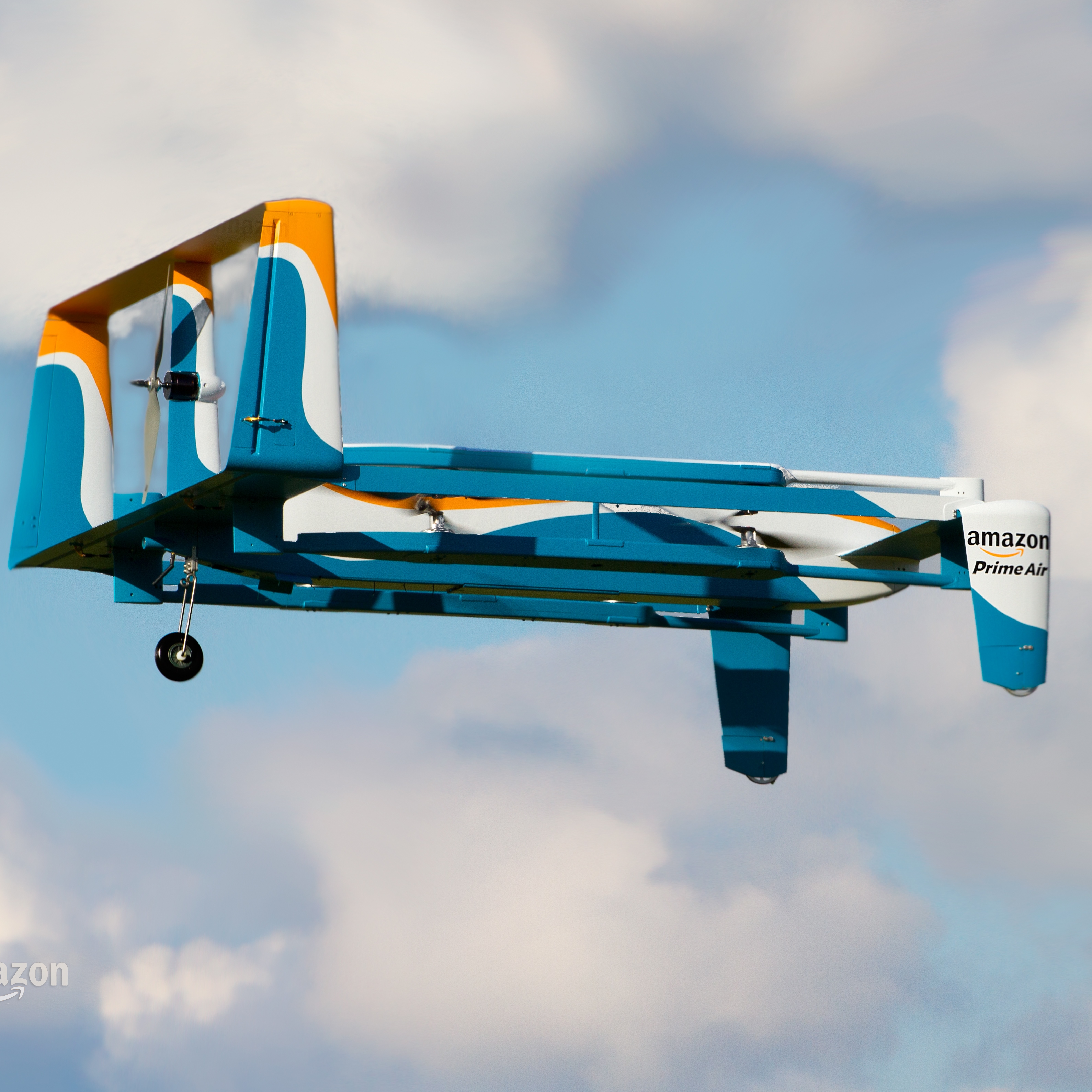
CEO Andy Jassy recently appeared on Capital Group’s Capital Ideas podcast and highlighted one vivid example. Once dismissed as little more than a “science project,” Amazon’s drone delivery service — Prime Air — has become the clearest distillation of how every business unit reinforces the others. When pressed on whether the company could scale to 250 million drone deliveries within five years, Jassy revealed he is actually forecasting double that number.
This is more than aerial innovation; it is the Amazon flywheel in full, high-speed rotation, with profound implications for efficiency, customer loyalty, and long-term shareholder value.
The AWS-Logistics-Data-AI Flywheel Spins Faster
At the core of Amazon’s model sits a self-reinforcing loop that most analysts still treat as separate silos. AWS generates enormous free cash flow that funds the relentless expansion of physical infrastructure — warehouses, robotics, and now drone fleets. Every drone flight, every package routed in under an hour, generates fresh troves of real-world data: terrain mapping, weather patterns, neighborhood demand signals, traffic micro-variations, and precise delivery windows.
That data flows straight back into AWS-hosted machine-learning models. The AI then optimizes routing algorithms, inventory placement, predictive restocking, and even personalized recommendations. Faster, cheaper deliveries drive higher order volumes and stronger Prime retention. More volume produces yet more data, compounding the cycle.
Drones accelerate this loop dramatically. Lightweight, autonomous, and capable of 30-to-60-minute service, they slash last-mile costs while simultaneously creating a proprietary, real-time training dataset no competitor can replicate at scale. What begins as a logistics upgrade ends up supercharging AWS workloads and AI capabilities — turning physical movement into digital intelligence that improves every other part of the business.
The Hidden Prescription for Exponential Growth
Nowhere does this flywheel spin with greater force than in Amazon Pharmacy. Prescription delivery is the ideal payload: small, lightweight, high-margin, and extremely time-sensitive. When a customer needs medication for pain, infection, or chronic conditions, “under one hour” is not a nice-to-have convenience — it is a trust event. Once patients experience the reliability of same-day or sub-hour drone or ultra-fast ground delivery, switching costs skyrocket. They refill prescriptions automatically, add family members to the account, and lean on Amazon for related health products. Usage frequency is high and recurring. Each interaction feeds the data engine with patterns that improve routing, demand forecasting, and even supply-chain resilience for temperature-sensitive drugs.
The result is a high-trust, high-frequency service that compounds exponentially. Prime members already enjoy discounted generics and transparent pricing; layer on drone-enabled urgency and the habit becomes sticky at a level traditional retail pharmacies cannot match. Logistics efficiency funded by AWS lowers costs, AI sharpens execution, and the resulting customer lock-in drives incremental e-commerce spend elsewhere on the platform. What looks like “just another delivery vertical” is quietly becoming one of Amazon’s most powerful economic moats.
Drones as the Catalyst
Prime Air’s evolution from mocked concept to operational reality exemplifies the flywheel’s power. Regulatory approvals, technological maturation, and AWS-backed capital have enabled Amazon to launch Prime Air drone deliveries in select markets, though broad scalability is still pending further regulatory clearance.
Jassy’s bullish forecast — roughly 500 million annual deliveries by the end of the decade — signals that aerial logistics will soon move from experimental to material. Each successful flight not only delights customers but also tightens the data-AI loop, funding further expansion. The virtuous cycle is no longer theoretical; it is airborne.
Key Takeaway
E-commerce scale, AWS profitability, and flashy AI initiatives continue to suck all the oxygen out of investor conversations about Amazon. Yet the pharmacy business — currently a modest contributor generating an estimated $2 billion in annual revenue against Amazon’s $717 billion total in 2025 — stands poised as the hidden asset for explosive near-term growth.
As drone and ultra-fast delivery networks mature and the flywheel turns faster, Amazon Pharmacy can capture a far larger slice of the $634 billion U.S. pharmacy market. High-trust, high-frequency prescription service will drive Prime stickiness, generate proprietary health-adjacent data, and deliver outsized margins.
The real story at Amazon is not just what is visible in the cloud or on the website — it is what is quietly landing on doorsteps, one prescription at a time. Investors who connect these dots may find the stock’s most compelling upside still hiding in plain sight.










 Top Gaining Stocks
 Top Losing Stocks