


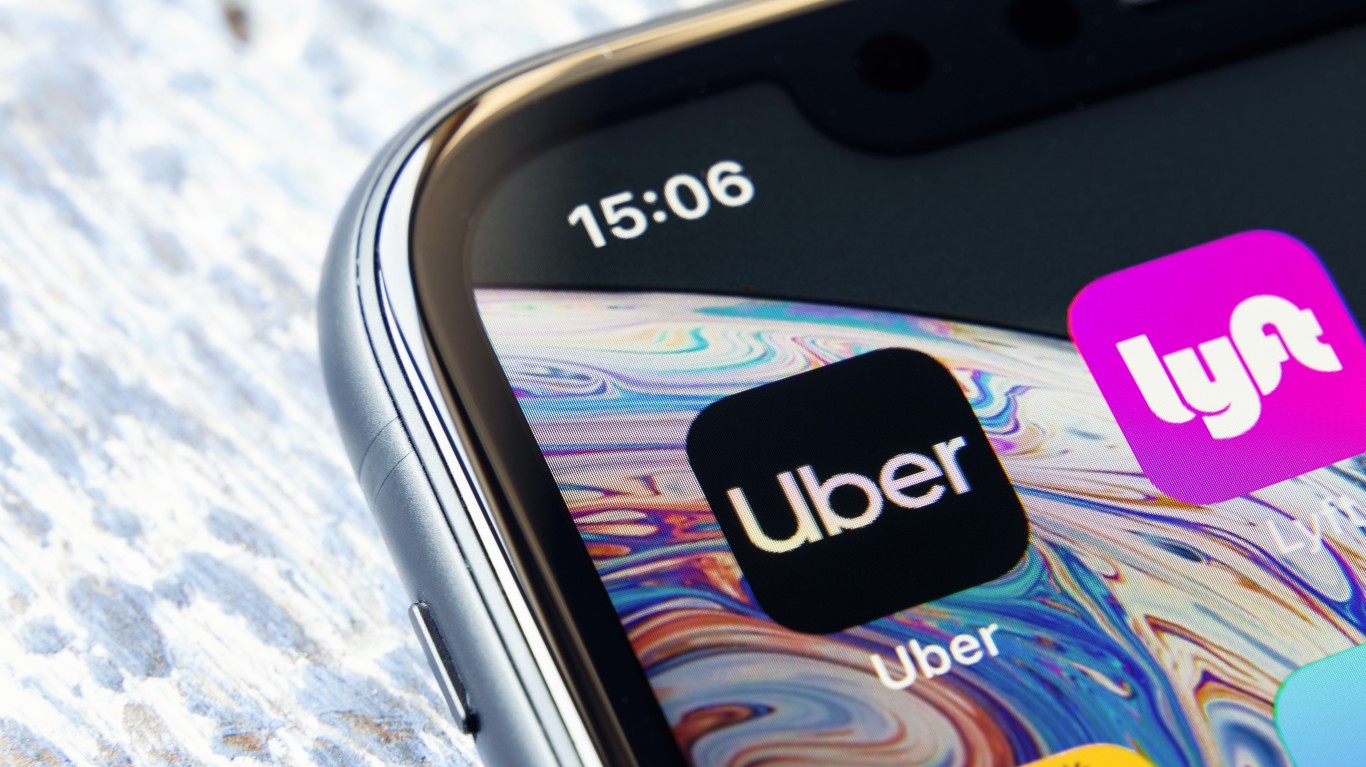
Ride-hailing rivals Uber Technologies Inc. (NYSE: UBER | UBER Price Prediction) and Lyft Inc. (NASDAQ: LYFT) each saw solid gains on Thursday in the midst of this coronavirus pandemic. So why are these ride-sharing companies making a run? Uber held an investor call to provide an update on its business, and apparently things look to be turning around.
Even though business is slowing for these firms, there is a light at the end of the tunnel. Spending on Uber and Lyft have slowed in the United States, mirroring what has been seen globally. According to research firm Edison Trends, each company saw a decline of about 20% in customer spending last week. While this is bad, things are going to get better, eventually.
In the investor call, Uber CEO Dara Khosrowshahi noted that the company at one point saw its Hong Kong trips fall by 45% from their peak, and trips in the country are now down 30%, signaling “the beginnings of a recovery.”
He went on to say that there were cost advantages for the company, implying that if the company’s rides business had declined 80% in the fourth quarter, the company would have broken even for the segment on the basis of earnings before interest, taxes, depreciation and amortization (EBITDA).
Apparently, this shows the variable nature of Uber’s cost structure and how the firm can manage its costs appropriately. What separates Uber and Lyft from many other companies is the fixed costs that go into operating the business. Companies with high fixed costs seem to be suffering the most during this COVID-19 outbreak, with airlines and the cruise industry getting the worst of it because they cannot generate any cash flow in this time to cover daily fixed costs.
[nativounit]
Also worth noting is that Uber and Lyft are not taking on any new drivers while this pandemic is ongoing, at least not yet. This is one way they are cutting costs on their end.
Uber stock was last seen up about 30% on Thursday, at $19.17 in a 52-week range of $13.71 to $47.08. The consensus price target is $47.58.
Lyft stock traded up about 15% to $18.46, with a 52-week range of $14.56 to $88.60. The consensus price target is $64.59.
[recirclink id=654257]
[wallst_email_signup]













 Top Gaining Stocks
 Top Losing Stocks