



The cost of energy around most of the world has started to soar. This is partly due to Russia’s attack on Ukraine, which has led some nations to boycott Russian oil, triggering a shortage of oil and gas. Russia is the world’s second-largest producer of crude. OPEC+ nations, which include Russia and Saudi Arabia, have to decide to keep output at planned levels rather than addressing potential shortages. As a result, crude prices spiked to over $110 a barrel, nearly double the level a year ago.
Meanwhile, retail electricity rates have already been rising. Considering the burden of energy bills on households, in San Francisco, people have the lowest energy bills relative to their incomes. (Interestingly, California is not the state where people struggle to pay their energy bill. Rather, people in this state can’t pay their energy bills.)
The U.S. Energy Information Administration recently reported that last year, U.S. retail electricity prices “rose at the fastest rate since 2008.” Cold weather and supply interruptions were partially to blame. Thomas Nichols, an economist at Moody’s Analytic, commented: “It’s a period where we’re seeing a historic runup in prices.”
Realtor.com’s recently released Electric Shocks: The U.S. Cities Where People Are Spending the Most — and the Least — on Energy Bills ranks 50 large metro areas by their energy burden, using data from Greenlink Analytics. Data on incomes and energy costs used to calculate the energy burden is from 2018, the latest data available. Therefore, the report notes that energy burdens could be significantly higher today due to rising gas prices and inflation.
Typically, the energy burden per household is 3% to 4% of income, according to the Labor Department. A figure above 6% is considered a “heavy” energy burden. Above 10% is considered “severe.” (These are the most expensive states to live in.)
Realtor.com added the median home price per city. Cities with the lowest energy bill burden tended to have the highest home prices, likely due partly to possible higher incomes in these cities. The lowest burden was in San Francisco, at 1.7%, against a median home price of $1.2 million in January. New York was second at 1.9%, against a median home price of $1.5 million.
California has one of the highest residential electricity prices, according to the Energy Information Administration, but the San Francisco metropolitan area also has the second highest median annual household income of all metro areas nationwide, at about $115,000. The city has also enacted a program to retrofit homes to reduce carbon emissions. Such work generally also reduces energy use and costs overall.
Of course, the energy burden is uneven within the metro, and according to the American Council for an Energy-Efficient Economy, the report notes, low-income households in San Francisco have an energy burden that is five times higher than that of wealthier households.
Click here to see the city where people have the lowest energy bills

10. Minneapolis, Minnesota
> Annual median home price: $268,100
> Mean energy burden: 3.2%
[in-text-ad]
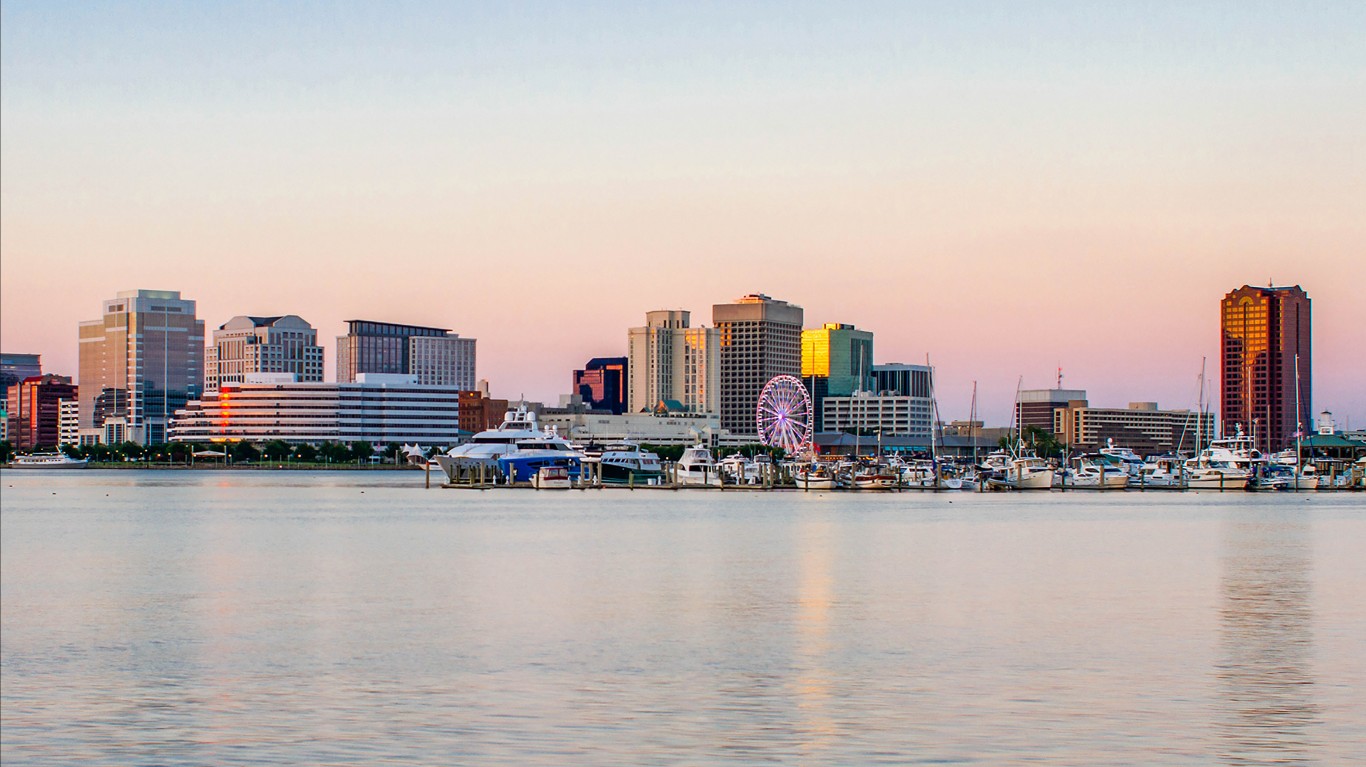
9. Virginia Beach, Virginia
> Annual median home price: $287,400
> Mean energy burden: 3.1%
[recirclink id=1000566]

8. Washington, District of Columbia
> Annual median home price: $618,100
> Mean energy burden: 3.0%

7. Raleigh, North Carolina
> Annual median home price: $266,900
> Mean energy burden: 2.9%
[in-text-ad-2]

6. Salt Lake City, Utah
> Annual median home price: $346,100
> Mean energy burden: 2.8%

5. Portland, Oregon
> Annual median home price: $438,500
> Mean energy burden: 2.7%
[in-text-ad]

4. Denver, Colorado
> Annual median home price: $427,600
> Mean energy burden: 2.4%
[recirclink id=1070913]

3. Seattle, Washington
> Annual median home price: $713,600
> Mean energy burden: 2.3%

2. New York, New York
> Annual median home price: $635,200
> Mean energy burden: 1.9%
[in-text-ad-2]

1. San Francisco, California
> Annual median home price: $1,152,300
> Mean energy burden: 1.7%










 Top Gaining Stocks
 Top Losing Stocks