A Battle With Japan During WWII Was the Largest in US Naval History

Photo of Douglas A. McIntyre
By Douglas A. McIntyre Published
This post may contain links from our sponsors and affiliates, and Flywheel Publishing may receive compensation for actions taken through them.
A Battle With Japan During WWII Was the Largest in US Naval History

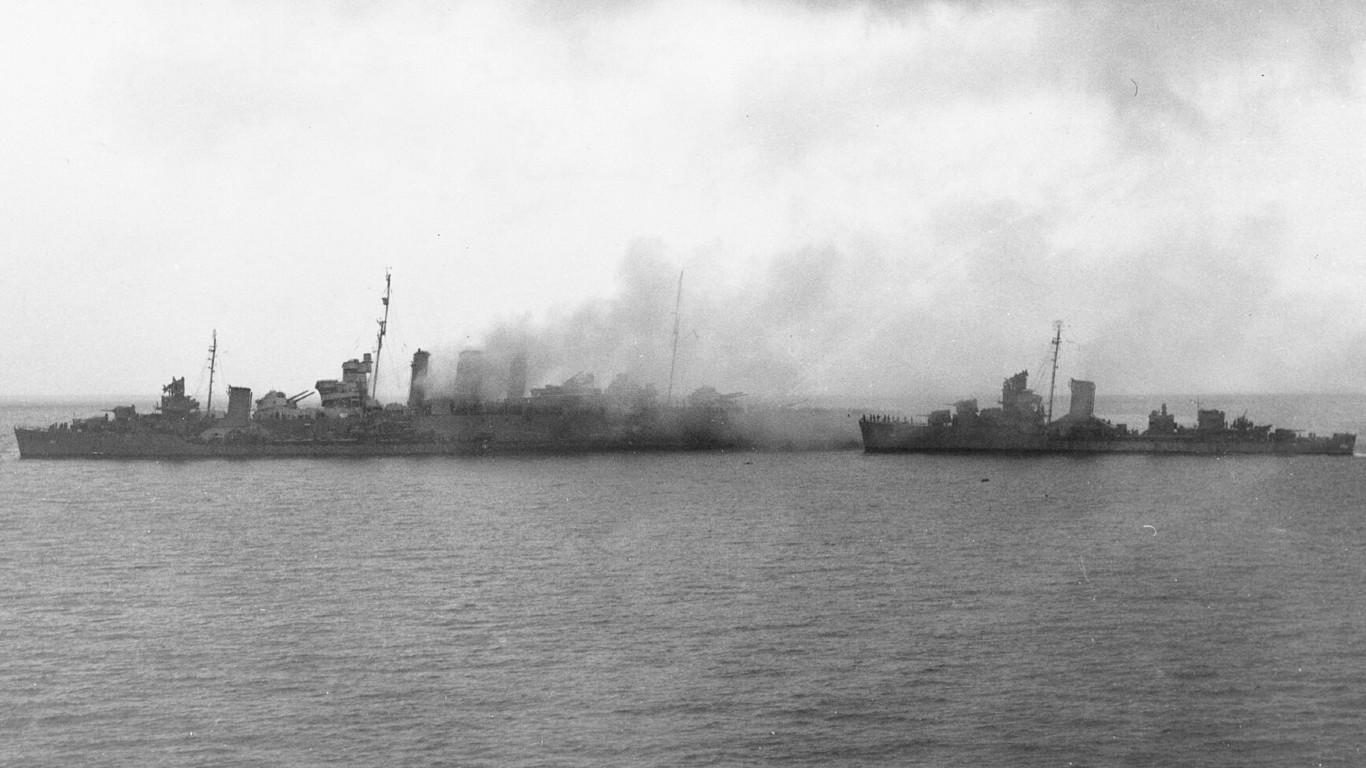
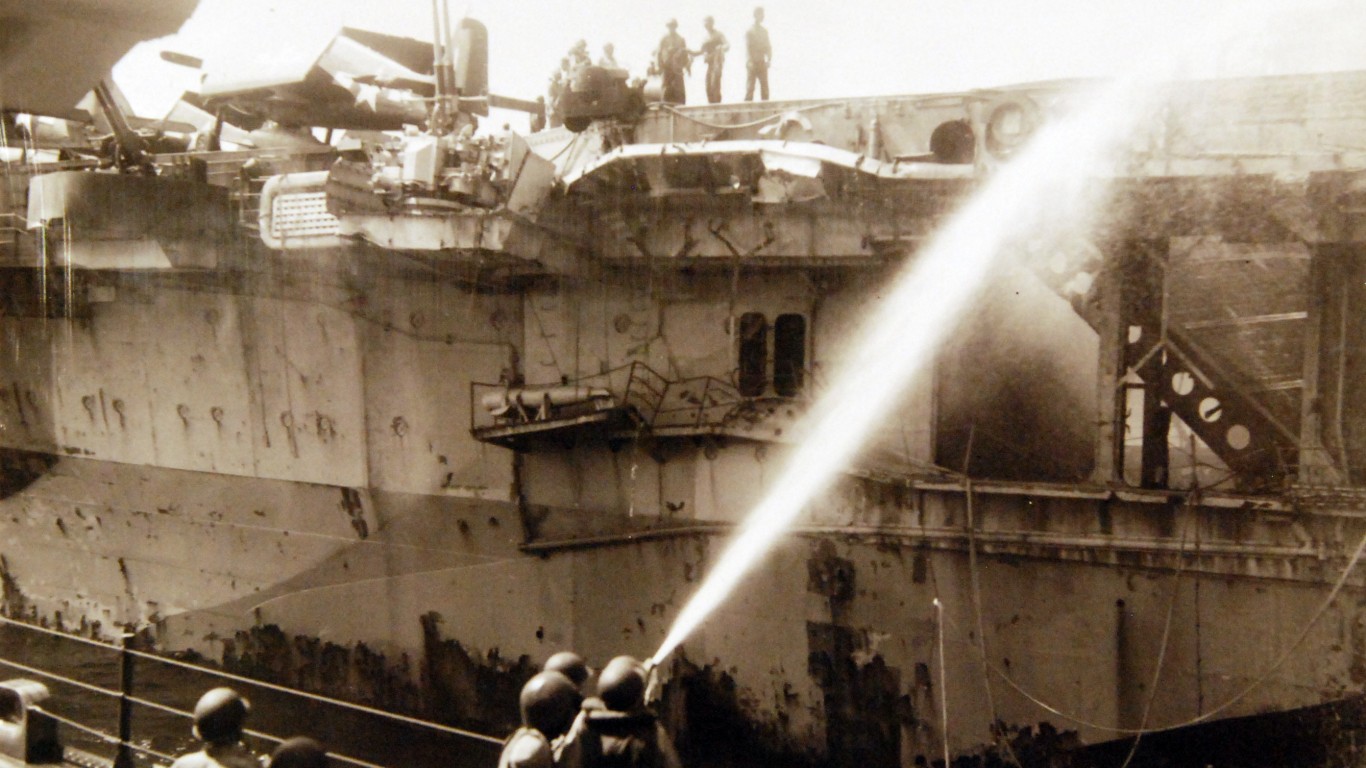
© 80-G-270368 (Public Domain) by national_museum_of_the_us_navy

Naval battles are a thing of the past. The last massive engagement of two fleets was The Battle of Leyte Gulf between the U.S. Navy and Japanese Imperial Fleet. It is also the largest naval battle in U.S. history.

The Battle of Leyte Gulf ran from Oct. 23 to Oct. 26, 1944. The American forces came from two different parts of the navy. These were the Seventh Fleet, commanded by Vice Admiral Thomas Kinkaid, and the Third Fleet, overseen by Admiral William F. Halsey. The fact that there was not a common chain of command has sometimes been described as a limitation to the swift transmission and carrying out of orders, but U.S. forces prevailed nonetheless.
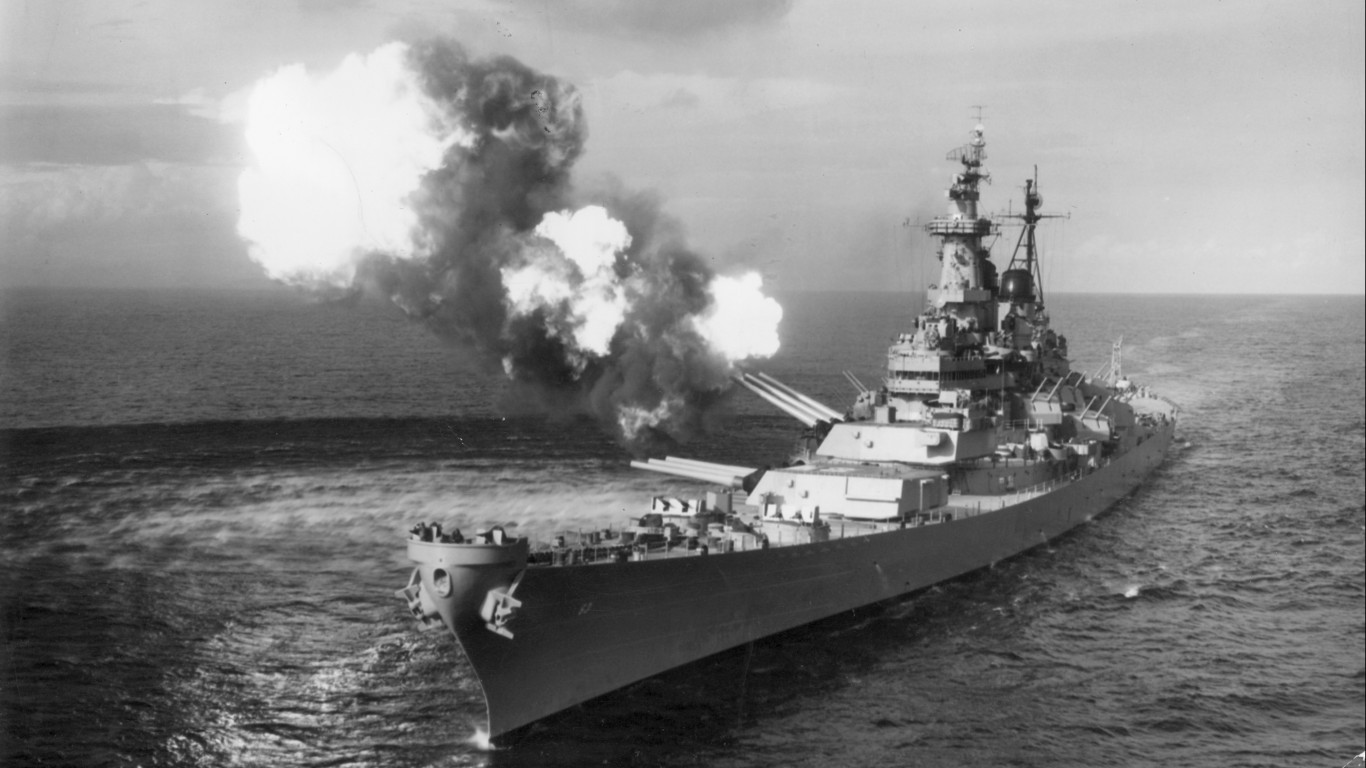
The largest American ships in these fleets were several battleships and aircraft carriers. The Japanese Combined Fleet, commanded by Admiral Soemu Toyoda, also included several large ships of the same types. (Read about the peak strength of history’s most powerful navies.)

The engagement of ships over the three days was spread out over 100,000 square miles. The Americans had 232 ships to Japan’s 53. About 200,000 soldiers and sailors were involved. The cause of the battle was an attempt by Japan to prevent an American invasion of the Philippines.

As the U.S. forces approached, Japan drew the fleets into a number of separate engagements across the region. Over 400 planes joined the battle as well. The U.S. inflicted massive casualties on Japan and sunk 26 warships, including four aircraft carriers. The loss at Leyte Gulf dealt a death blow to Japan’s ambitions, crippling their navy and giving the U.S. undisputed command of the Pacific.

Click here to read about all of the most pivotal naval battles of all time.

Photo of Douglas A. McIntyre
About the Author Douglas A. McIntyre →

Douglas A. McIntyre is the co-founder, chief executive officer and editor in chief of 24/7 Wall St. and 24/7 Tempo. He has held these jobs since 2006.

McIntyre has written thousands of articles for 24/7 Wall St. He is an expert on corporate finance, the automotive industry, media companies and international finance. He has edited articles on national demographics, sports, personal income and travel.

His work has been quoted or mentioned in The New York Times, The Wall Street Journal, Los Angeles Times, The Washington Post, NBC News, Time, The New Yorker, HuffPost USA Today, Business Insider, Yahoo, AOL, MarketWatch, The Atlantic, Bloomberg, New York Post, Chicago Tribune, Forbes, The Guardian and many other major publications. McIntyre has been a guest on CNBC, the BBC and television and radio stations across the country.

A magna cum laude graduate of Harvard College, McIntyre also was president of The Harvard Advocate. Founded in 1866, the Advocate is the oldest college publication in the United States.

TheStreet.com, Comps.com and Edgar Online are some of the public companies for which McIntyre served on the board of directors. He was a Vicinity Corporation board member when the company was sold to Microsoft in 2002. He served on the audit committees of some of these companies.

McIntyre has been the CEO of FutureSource, a provider of trading terminals and news to commodities and futures traders. He was president of Switchboard, the online phone directory company. He served as chairman and CEO of On2 Technologies, the video compression company that provided video compression software for Adobe’s Flash. Google bought On2 in 2009.

Featured Reads

Our top personal finance-related articles today. Your wallet will thank you later.

Continue Reading

Top Gaining Stocks

CBOE Vol: 1,568,143
PSKY Vol: 12,285,993
STX Vol: 7,378,346
ORCL Vol: 26,317,675
DDOG Vol: 6,247,779

Top Losing Stocks

LKQ
LKQ Vol: 4,367,433
CLX Vol: 13,260,523
SYK Vol: 4,519,455
MHK Vol: 1,859,865
AMGN Vol: 3,818,618