


Maintaining air superiority is the goal of the U.S. military, and every year the U.S. government spends billions of dollars to help achieve this goal. However, in the process of keeping military aircraft up to date, some have to be retired from service to make room for the next generation.
The Air Force is adding more to its cutting-edge arsenal of fighter jets like the F-15EX Eagle and the F-35, while others, like the F-22, are slowly being retired from service. Congress made a handful of these decisions for the coming year. (The U.S. has the largest air force in the world.)
To determine the aircraft being phased out by the U.S. Air Force in fiscal 2023, 24/7 Wall St. referenced the article “Air Force Would Reduce Fleet by 250 Old Aircraft, Bring on 82-plus New Ones,”published by industry journal Air & Space Forces Magazine. Aircraft are ranked according to the number that is planned to be phased out in fiscal 2023. Information on when these aircraft entered service, crew size, and max speed came from Military Factory, an online index of military vehicles, aircraft, and vessels.
Perhaps the biggest divestiture on this list is combat drones, which would be moved to another undisclosed government organization. The divestment of F-22s is another sizable move by the Air Force, with the reasoning being that upgrading the aircraft to full combat capability would not be cost effective considering the F-22 is set to phase out in 10 years or so. Accordingly, the savings from the F-22 divestment will be applied to the Next Generation Air Dominance (the Air Force’s air supremacy initiative) family of systems.
Among the other aircraft being retired, the Air Force is retiring aircraft that fall under the transports, trainers, tankers, and close-air support categories. Some of these aircraft entered service back in the 1950s. (This is the U.S. Air Force’s oldest aircraft.)
Here is a look at the aircraft that the US Air Force plans to phase out in fiscal 2023.
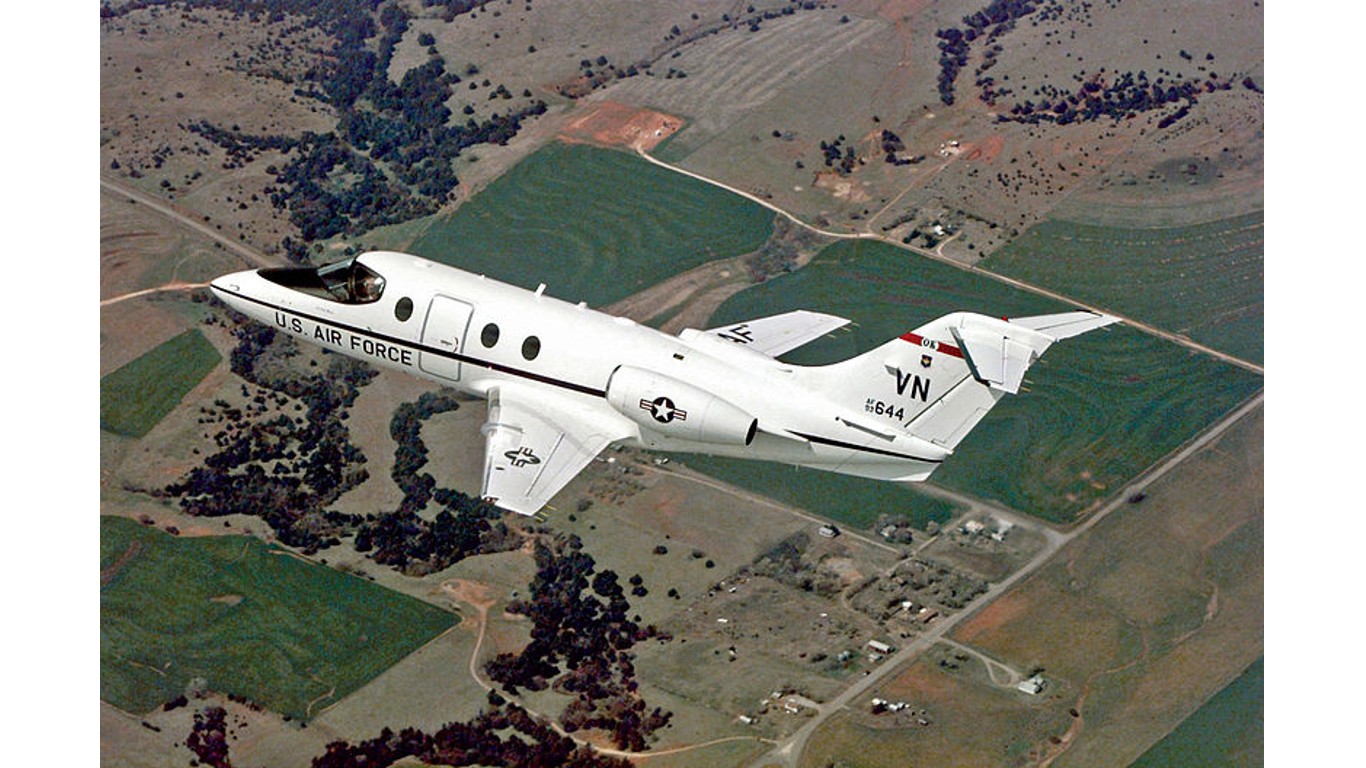
8. T-1 Trainer
> Aircraft being retired: N/A
> Year entered service: 1993
> Category: Trainers
> Role: Training Aircraft
> Crew size: 2
> Max speed: 538 mph
The T-1 Trainer is a medium-range, twin-engine jet trainer used to instruct pilots across the Air Force, Marine Corps, and international services. This aircraft is specifically used for advanced specialized training for those selected to fly airlift or tanker aircraft. With the T-1 being phased out, instructors will turn to the T-6 and new simulation and training gear.
[in-text-ad]
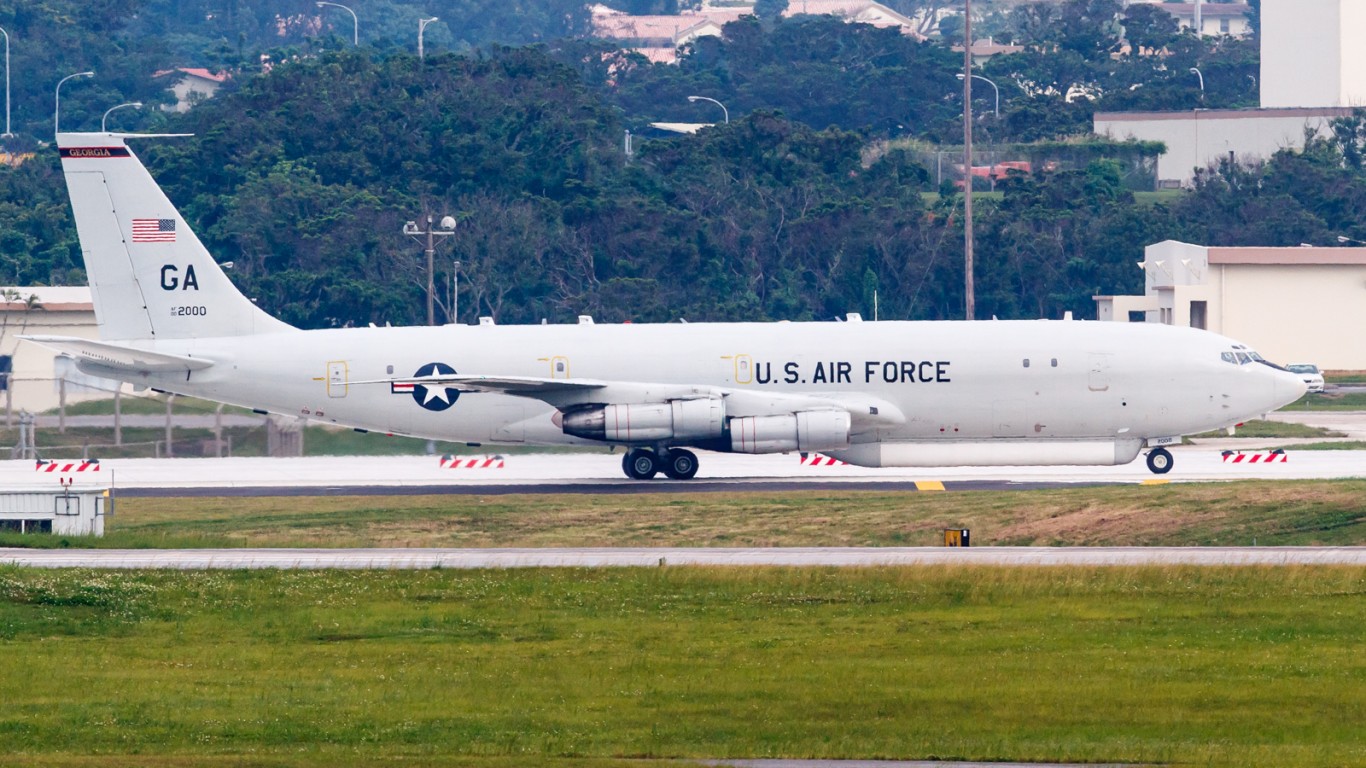
7. E-8 Joint Stars
> Aircraft being retired: 8
> Year entered service: 1996
> Category: Trainers
> Role: Reconnaissance Trainer
> Crew size: 22
> Max speed: 587 mph
The E-8 Joint Stars is a highly-modified version of Boeing’s 707 civil transport plane that provides electronic and aerial surveillance of the battlefield. Information gathered by the E-8 is relayed to ground control to be assessed. With technology growing by leaps and bounds since the 1990s, the E-8 is aging, and a new generation of intelligence, surveillance, and reconnaissance aircraft will replace it.
[recirclink id=1198392]
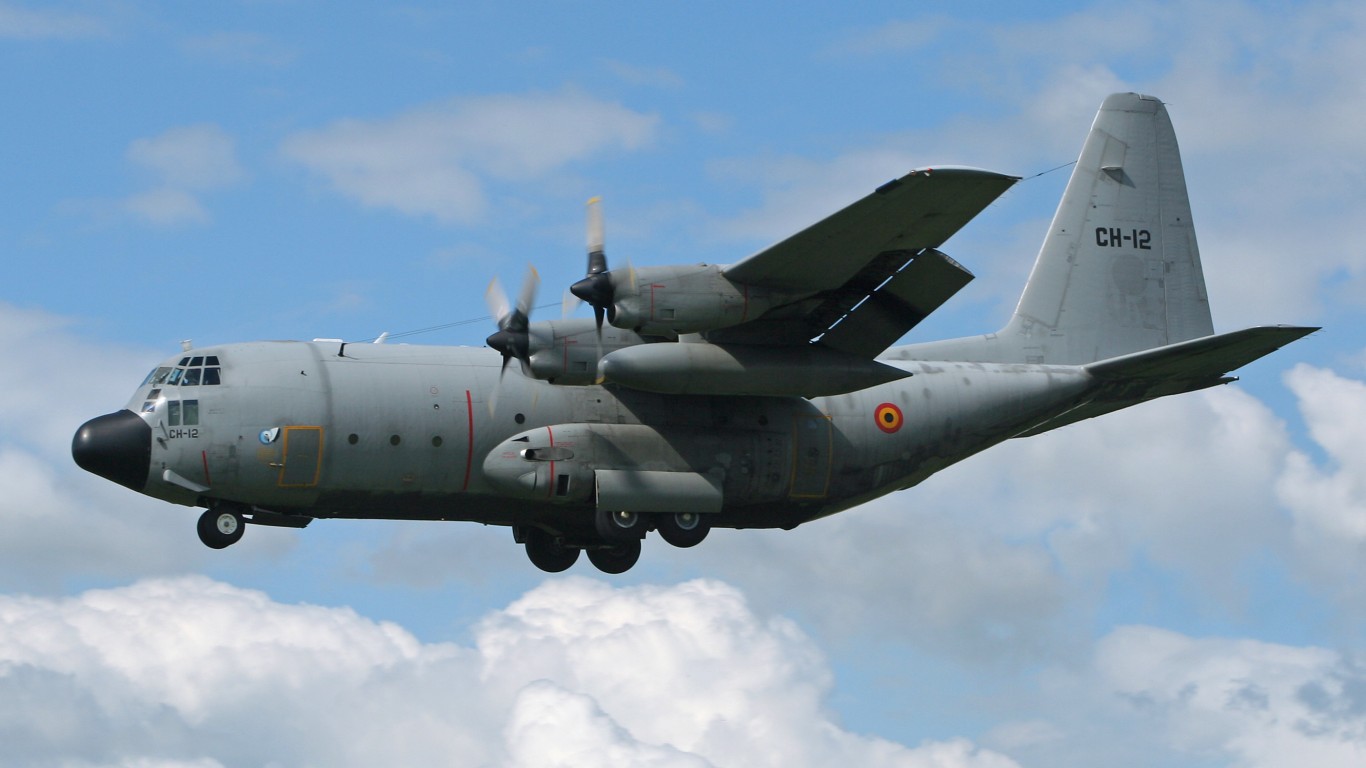
6. C-130H
> Aircraft being retired: 12
> Year entered service: 1959
> Category: Transports
> Role: Tactical
> Crew size: 5
> Max speed: 366 mph
The C-130 Hercules has been a staple of the U.S. military since the 1950s, aiding in the transport of troops, vehicles, and more across the world. This transport has filled a wide range of roles, whether in peace or wartime, airdropping supplies to those in need or troops into hostile areas. The Air Force is getting rid of some of the older C-130Hs and is upgrading to the newer iteration, the C-130-J30.
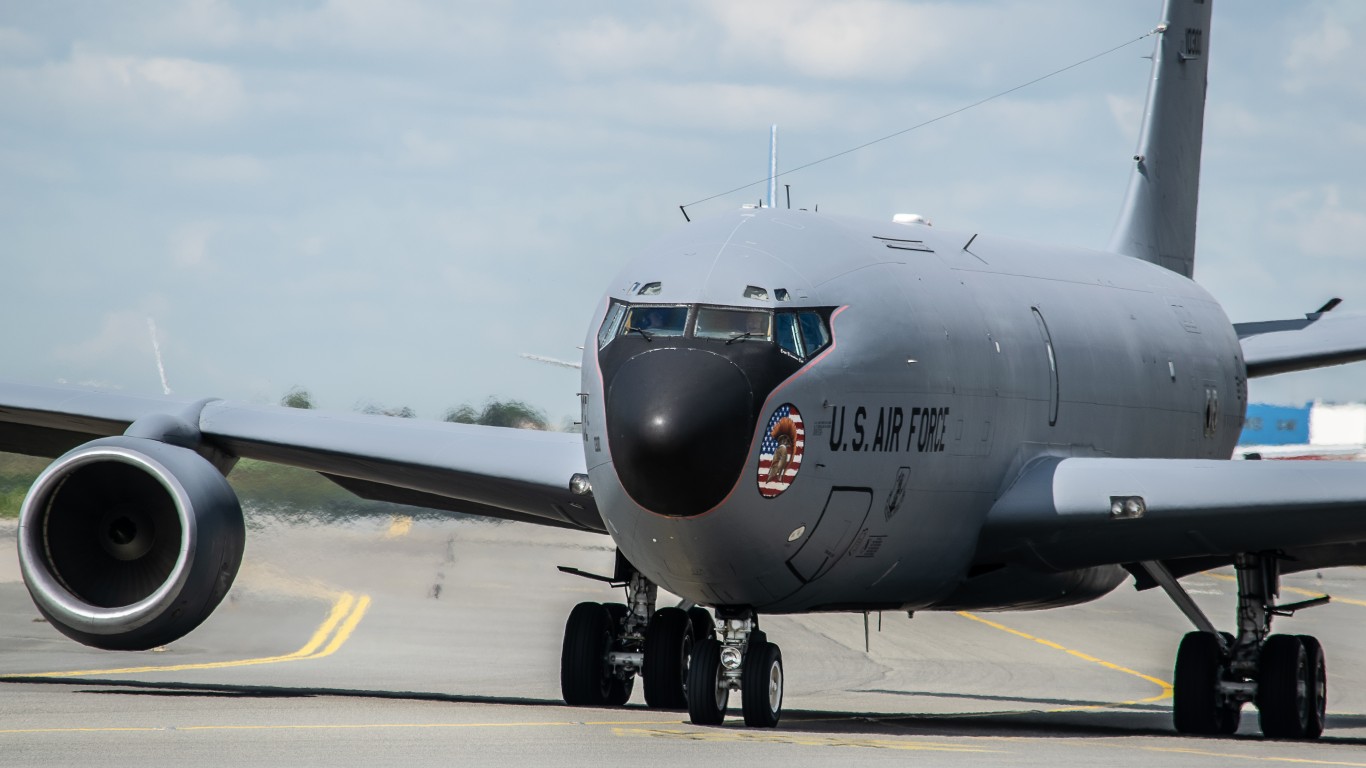
5. KC-135
> Aircraft being retired: 13
> Year entered service: 1957
> Category: Aerial Tankers / Refuelers
> Role: Aerial Refueling
> Crew size: 4
> Max speed: 610 mph
The KC-135 has made a name for itself since the 1950s, when it entered service as a logistical support aircraft capable of in-flight refueling and transportation. Inflight refueling, which was pioneered during the Cold War, allows for a global reach for aircraft. To a degree, this has been a contributing factor to the U.S. Air Force’s dominance, and the KC-135 was the backbone of this.
[in-text-ad-2]

4. E-3 AWACS
> Aircraft being retired: 15
> Year entered service: 1977
> Category: Special-Mission
> Role: Airborne Early Warning
> Crew size: 23
> Max speed: 531 mph
Despite entering service in the 1970s, the E-3 was first truly tested in the Persian Gulf during Operation Desert Shield and Operation Desert Storm. The E-3 proved highly effective in eliminating the Iraqi air force and army. However, the E-3 has become difficult to maintain. The Air Force is looking to potentially replace the E-3 with the E-7.
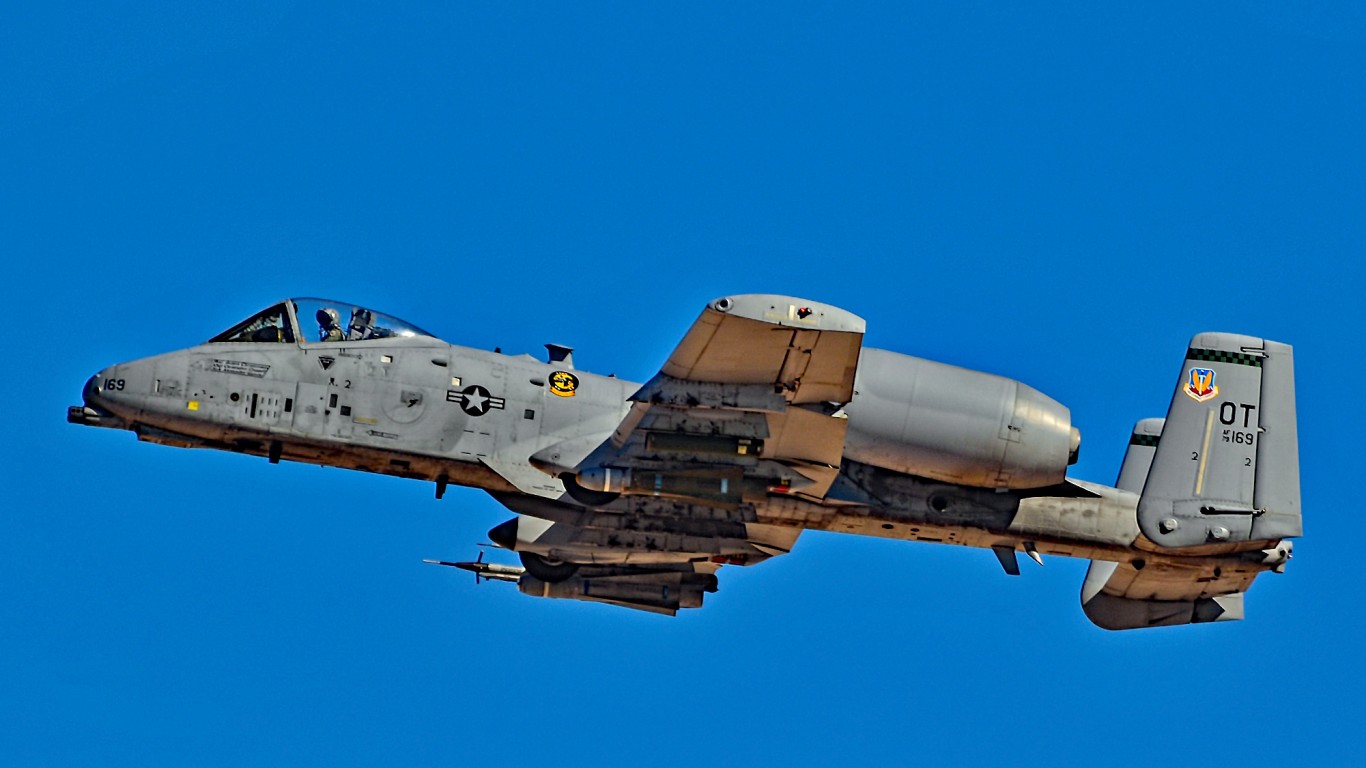
3. A-10
> Aircraft being retired: 21
> Year entered service: 1976
> Category: Close-Air Support
> Role: Close-Air Support
> Crew size: 1
> Max speed: 439 mph
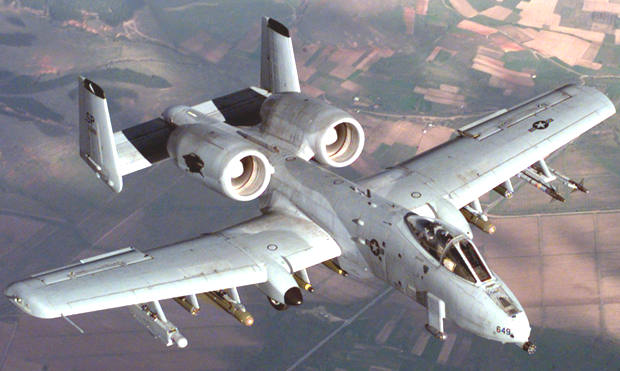
The A-10 Thunderbolt II was originally designed for close-air support, and it proved its value in the Vietnam War and later in Iraq. Eventually, this aircraft would come to be known as the “Warthog” due to its less-than-beautiful outward appearance.
[in-text-ad]
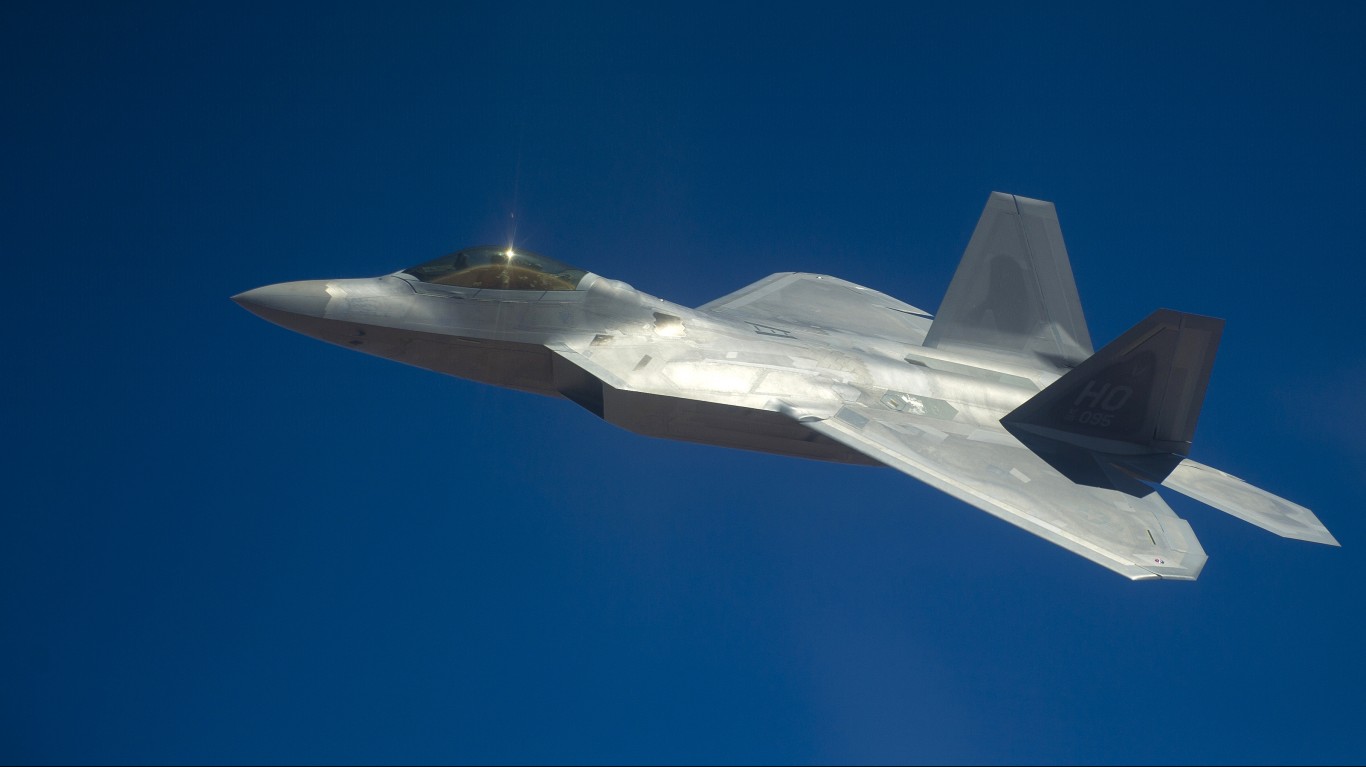
2. F-22
> Aircraft being retired: 33
> Year entered service: 2005
> Category: Fighters
> Role: Air Superiority
> Crew size: 1
> Max speed: 1599 mph
The F-22 was once the pinnacle of air superiority and the most cutting-edge fighter jet on the planet, coming into service in 2005. However, technological issues and cost ineffective upgrades are sidelining this jet for the next generation of fighter jets such as the F-35 Lightning II.
[recirclink id=1194635]
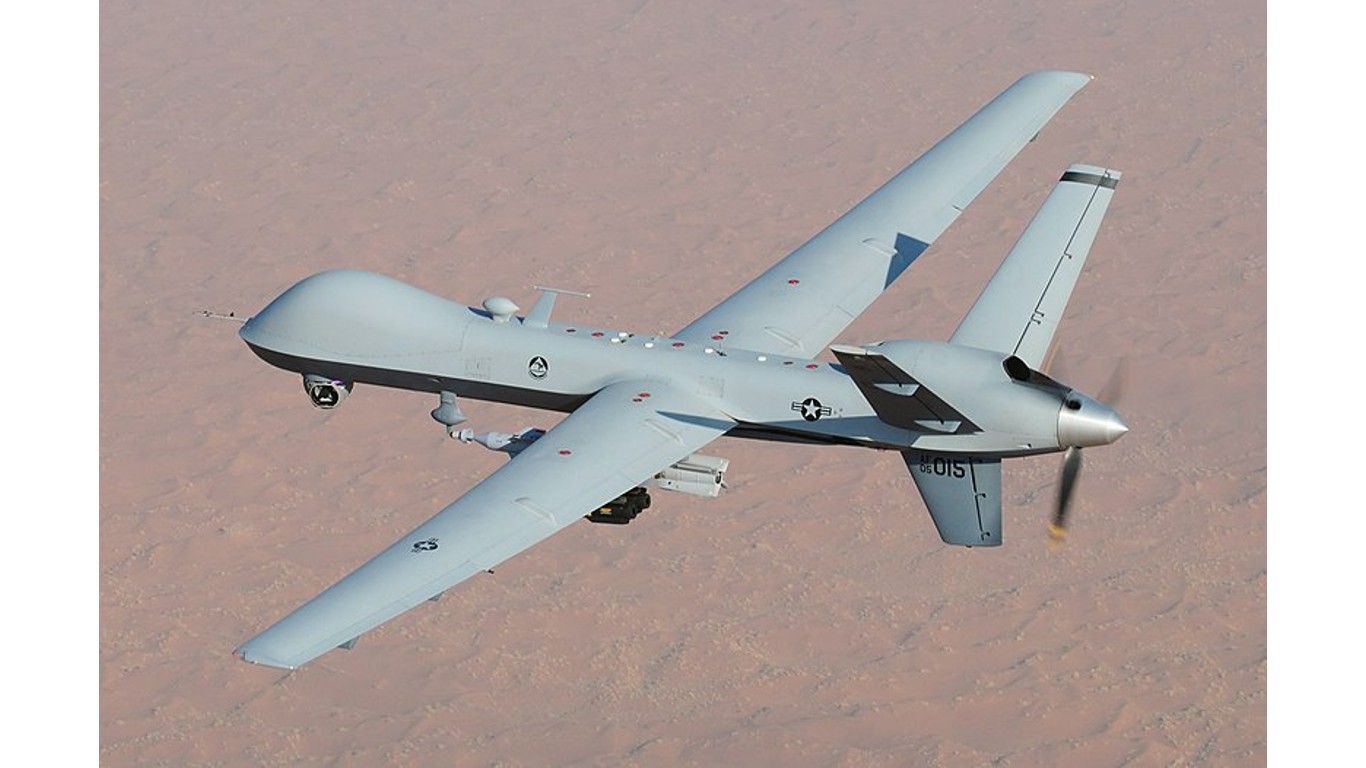
1. MQ-9
> Aircraft being retired: 100
> Year entered service: 2007
> Category: Drone
> Role: Combat Aerial Vehicle
> Crew size: 0
> Max speed: 230 mph
The MQ-9 is a high-level, remotely piloted weapons platform. In other words it is an uncrewed aerial vehicle, or simply a drone. The MQ-9 first entered service in 2007 and proved effective in fighting the War on Terror in both Afghanistan and Iraq. While drones have been controversial, they reduce risk on the battlefield. The Air Force is divesting 100 MQ-9s, but Air Force Secretary Frank Kendall said they were being transferred to another government agency without specifying the agency, according to Air & Space Forces Magazine.








 Top Gaining Stocks
 Top Losing Stocks