


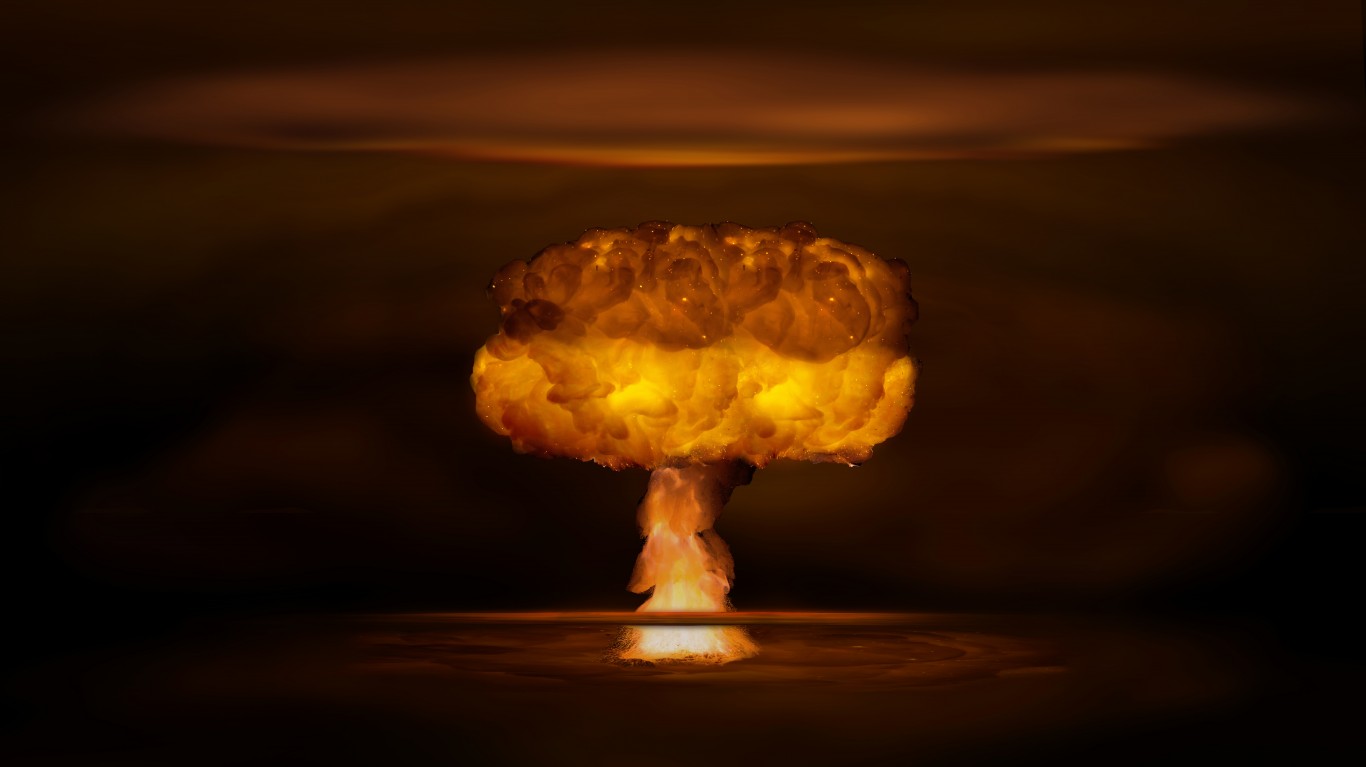
With many countries expanding their nuclear arms, exact estimates of the global count of nuclear weapons are difficult to calculate. According to The Federation of American Scientists, in an estimate from early 2022, there were approximately 12,700 warheads, with over 3,000 of them being retired. However, their most recent data on several countries indicates that many nations have a growing arsenal, with the United States and Russia still holding the vast majority. (These are the countries that control the world’s nuclear weapons.)
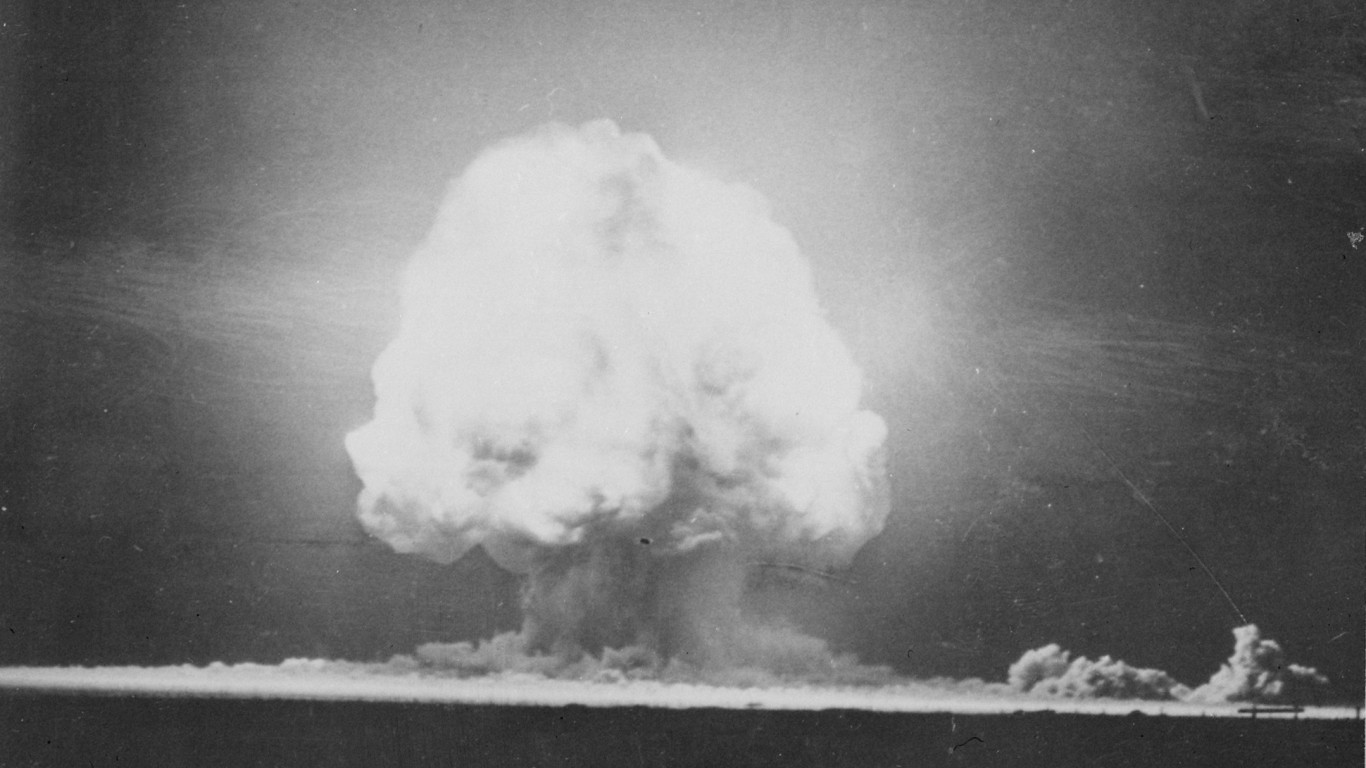
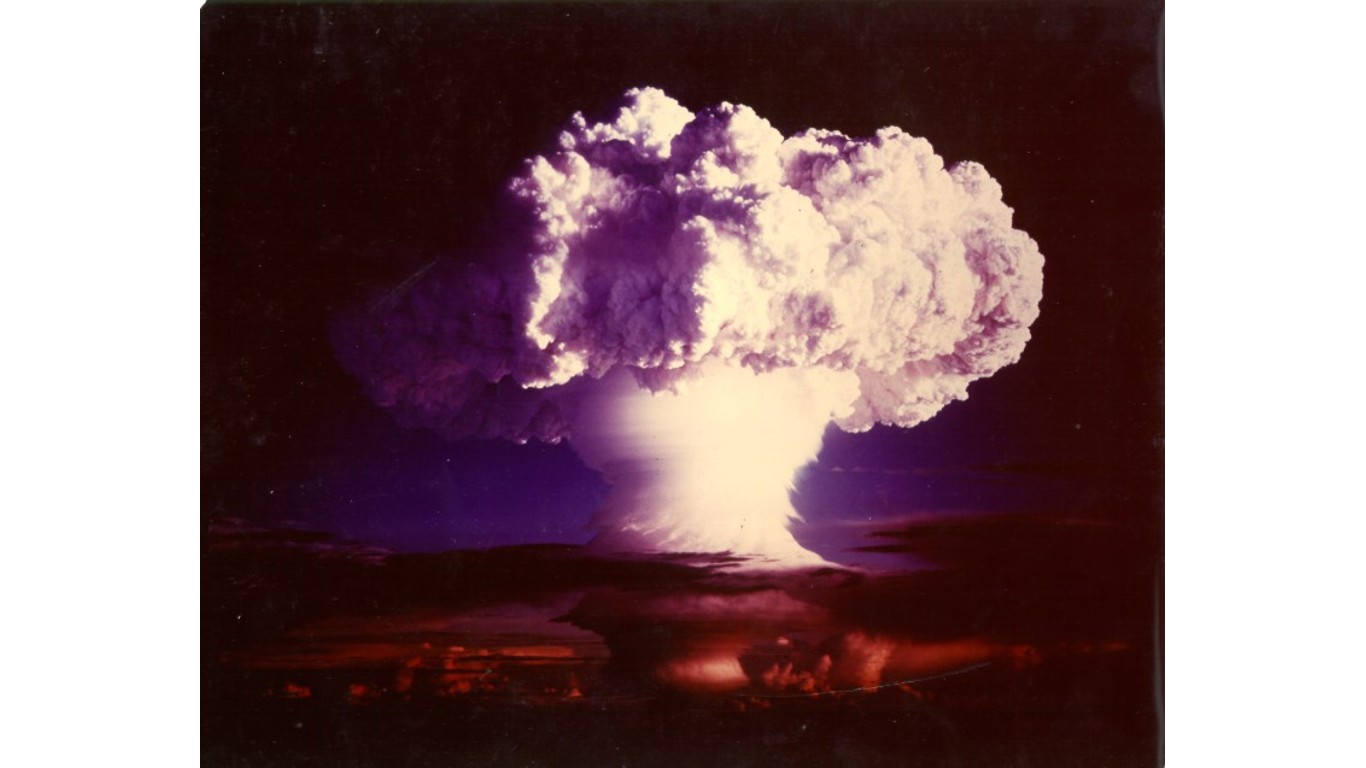
To date, the largest nuclear explosion ever detonated was the Soviet Union’s 50-megaton hydrogen bomb, RDS-220, or Tsar Bomba. That test explosion took place over an Arctic Ocean island on Oct. 30, 1961. By comparison, the bombs dropped on Hiroshima and Nagasaki, known as Little Boy and Fat Man, respectively, in August 1945 had a combined yield of about 40 kilotons. The Bulletin of Atomic Scientists puts the death toll from those bombings between 110,000 and 210,000 people.
24/7 Wall St. used Nukemap, a site that simulates the detonation of nuclear bombs to find out what a nuclear blast would do to major cities worldwide (G20 nations plus Israel, North Korea, and Pakistan, which also have nuclear weapons). We have chosen two typical warhead yields, the equivalent of 100 kilotons and 800 kilotons of TNT, detonated in the air over these cities. Countries are ordered alphabetically. For South Africa, we have chosen Pretoria, the seat of the executive branch.
The thermonuclear warheads of today provide an immensely more powerful punch than World War II’s Little Boy and Fat Man. A 100-kiloton bomb dropped on Capitol Hill would kill an estimated 177,650 people instantly and injure more than 383,210, with 21% of Washington D.C.’s population in the blast range. An 800-kiloton bomb would kill or injure 1.3 million people, and nearly half of the population would be within the blast range.
Moscow, the considerably larger Russian capital, would suffer over 250,000 deaths if a 100-kiloton yield nuclear bomb detonated over the Kremlin. If an 800-kiloton were to be detonated, more than 1 million people would be killed and another 2.3 million injured. The casualties would be much higher in more densely populated cities.
An 800-kiloton thermonuclear weapon dropped on the Chinese capital of Beijing would cause nearly 1.3 million deaths and nearly 3 million injuries. Such a bomb dropped on the Indian capital of New Delhi would kill 2.1 million people instantly and injure 5.8 million. (Also check out: The Countries With the Most Nuclear Disasters.)
Here is what a nuclear attack would do to a major global city
Argentina, Buenos Aires, Central Business District
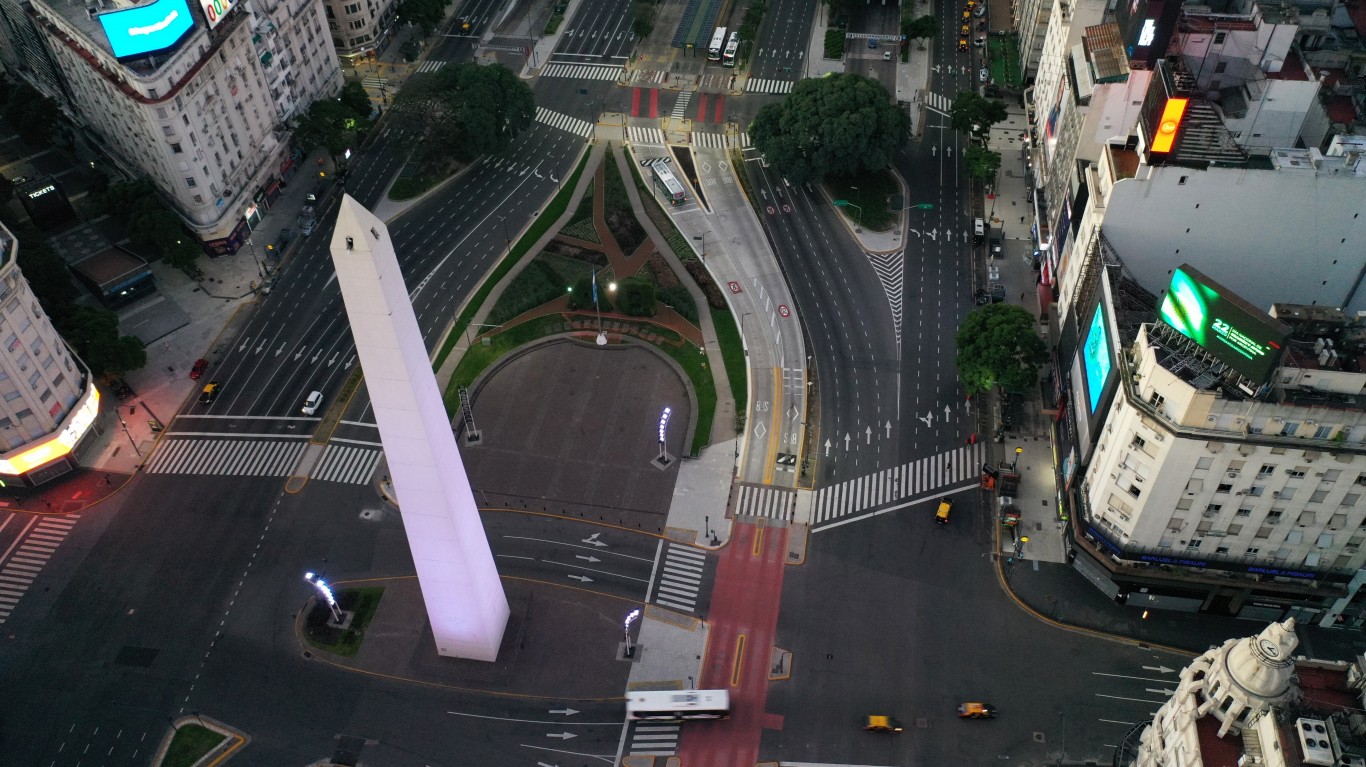
- Casualties from 100 kiloton detonation: 312,960 deaths; 772,020 injuries
- Population within blast range of 102.3 sq. miles: 2.3 million (15%)
- Casualties from 800 kiloton detonation: 831,990 deaths; 2,089,840 injuries
- Population within blast range of 409.3 sq. miles: 6.2 million (42%)
- Population: 14,967,000 (urban agglomeration)
Australia, Canberra, Capital Hill
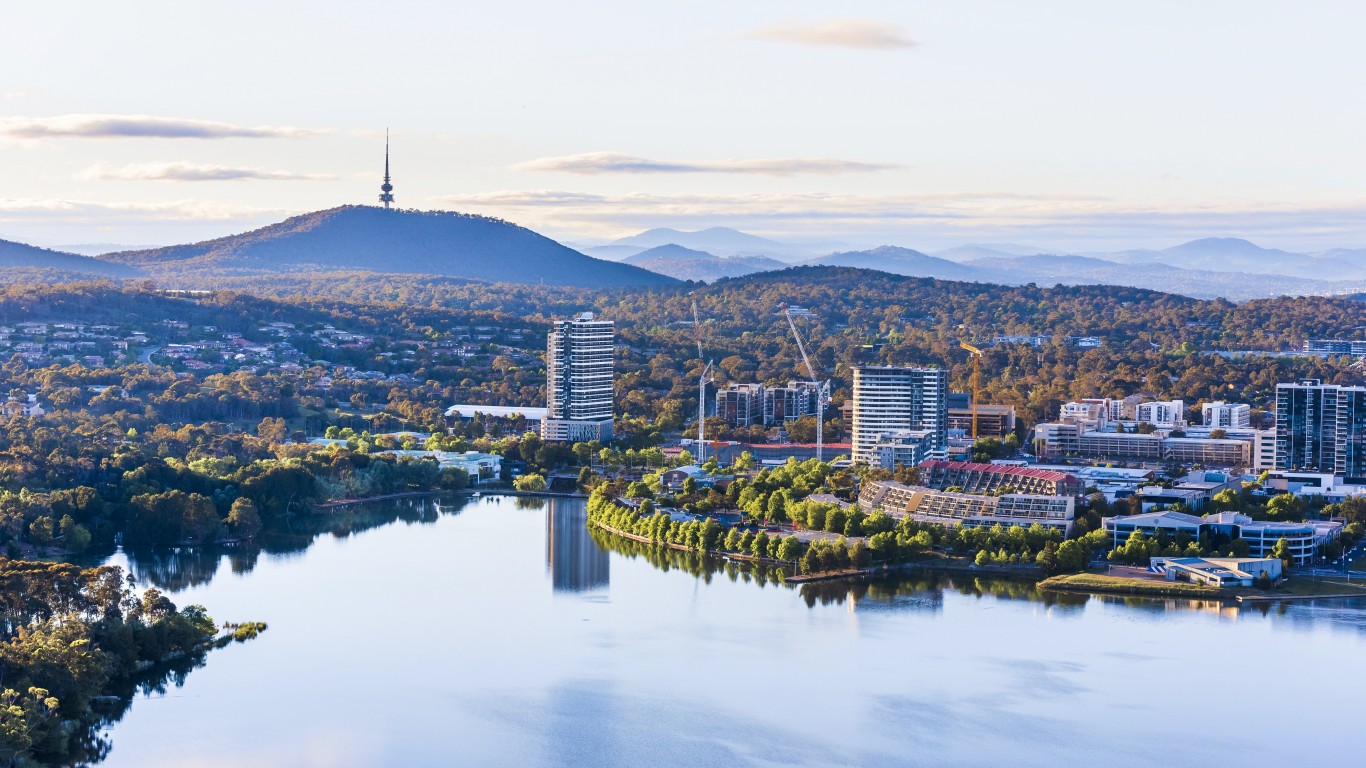
- Casualties from 100 kiloton detonation: 16,180 deaths; 52,790 injuries
- Population within blast range of 102.3 sq. miles: 157,315 (35%)
- Casualties from 800 kiloton detonation: 55,060 deaths; 145,170 injuries
- Population within blast range of 409.3 sq. miles: 392,622 (88%)
- Population: 448,000 (N/A)
Brazil, Brasília, Sector Hoteleiro
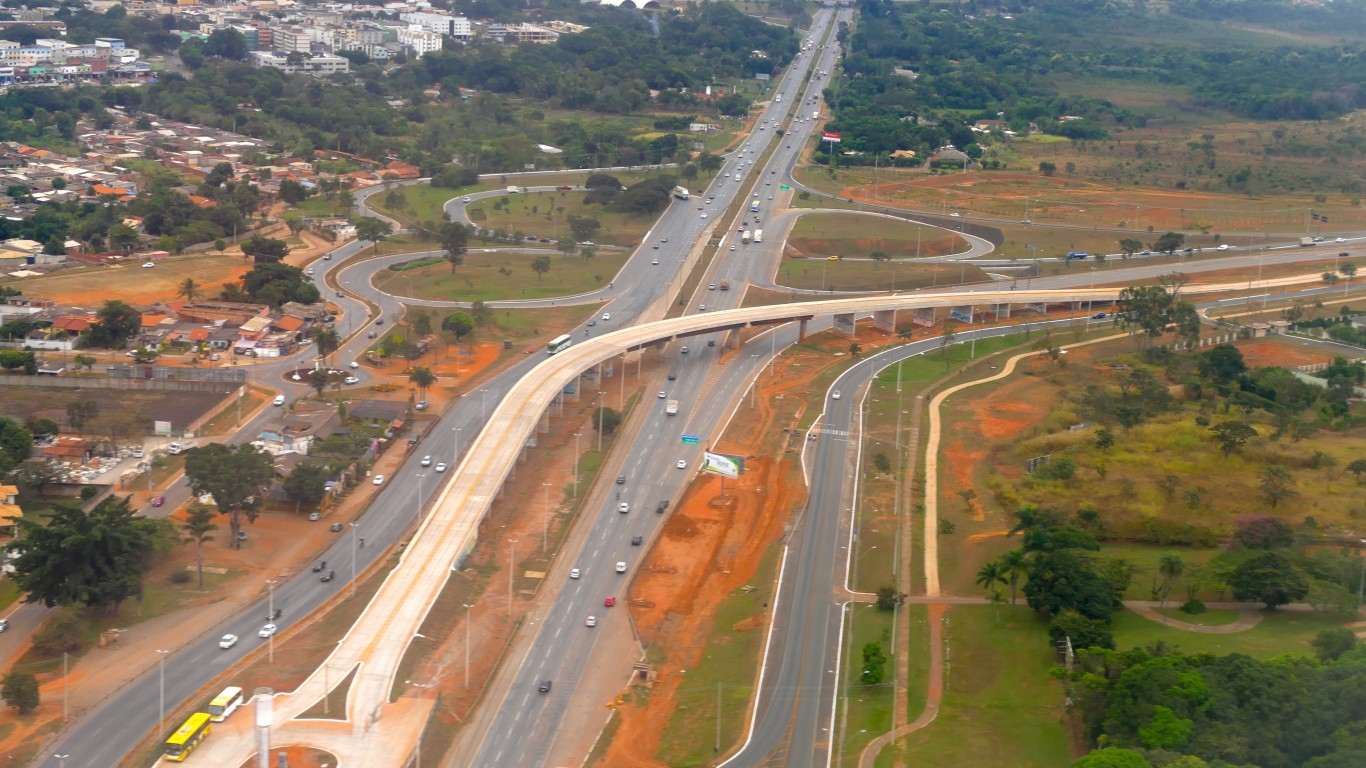
- Casualties from 100 kiloton detonation: 220,740 deaths; 429,510 injuries
- Population within blast range of 102.3 sq. miles: 1.2 million (26%)
- Casualties from 800 kiloton detonation: 556,820 deaths; 573,280 injuries
- Population within blast range of 409.3 sq. miles: 1.6 million (36%)
- Population: 4,470,000 (metropolitan area)
Canada, Ottawa, Centretown
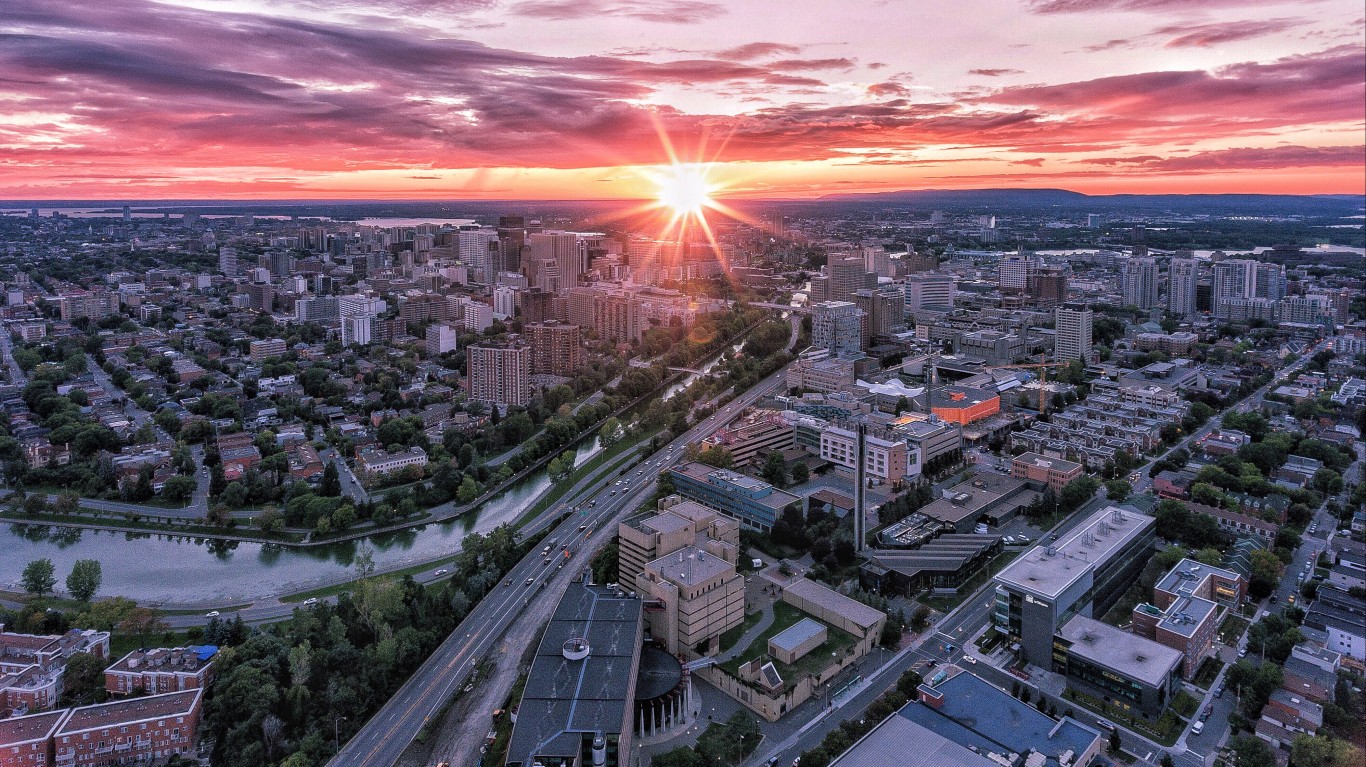
- Casualties from 100 kiloton detonation: 84,710 deaths; 212,810 injuries
- Population within blast range of 102.3 sq. miles: 611,366 (45%)
- Casualties from 800 kiloton detonation: 238,740 deaths; 343,530 injuries
- Population within blast range of 409.3 sq. miles: 925,666 (68%)
- Population: 1,363,000 (metropolitan area)
China, Beijing, Forbidden City
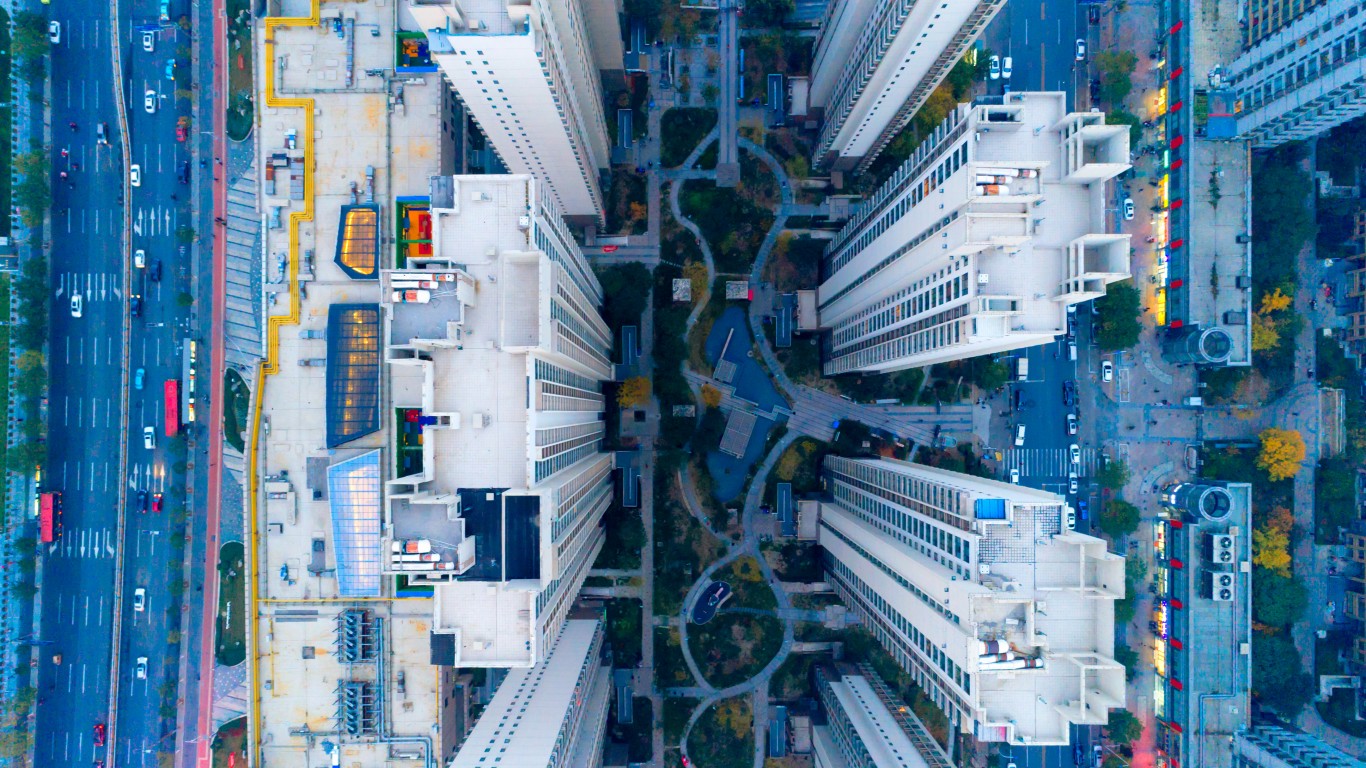
- Casualties from 100 kiloton detonation: 356,050 deaths; 1,223,310 injuries
- Population within blast range of 102.3 sq. miles: 3.6 million (19%)
- Casualties from 800 kiloton detonation: 1,255,740 deaths; 2,996,910 injuries
- Population within blast range of 409.3 sq. miles: 8.3 million (42%)
- Population: 19,618,000 (urban agglomeration)
EU, Brussels, European Parliament

- Casualties from 100 kiloton detonation: 224,660 deaths; 435,950 injuries
- Population within blast range of 102.3 sq. miles: 1.2 million (57%)
- Casualties from 800 kiloton detonation: 532,970 deaths; 549,830 injuries
- Population within blast range of 409.3 sq. miles: 1.6 million (78%)
- Population: 2,050,000 (metropolitan area)
France, Paris, Eiffel Tower
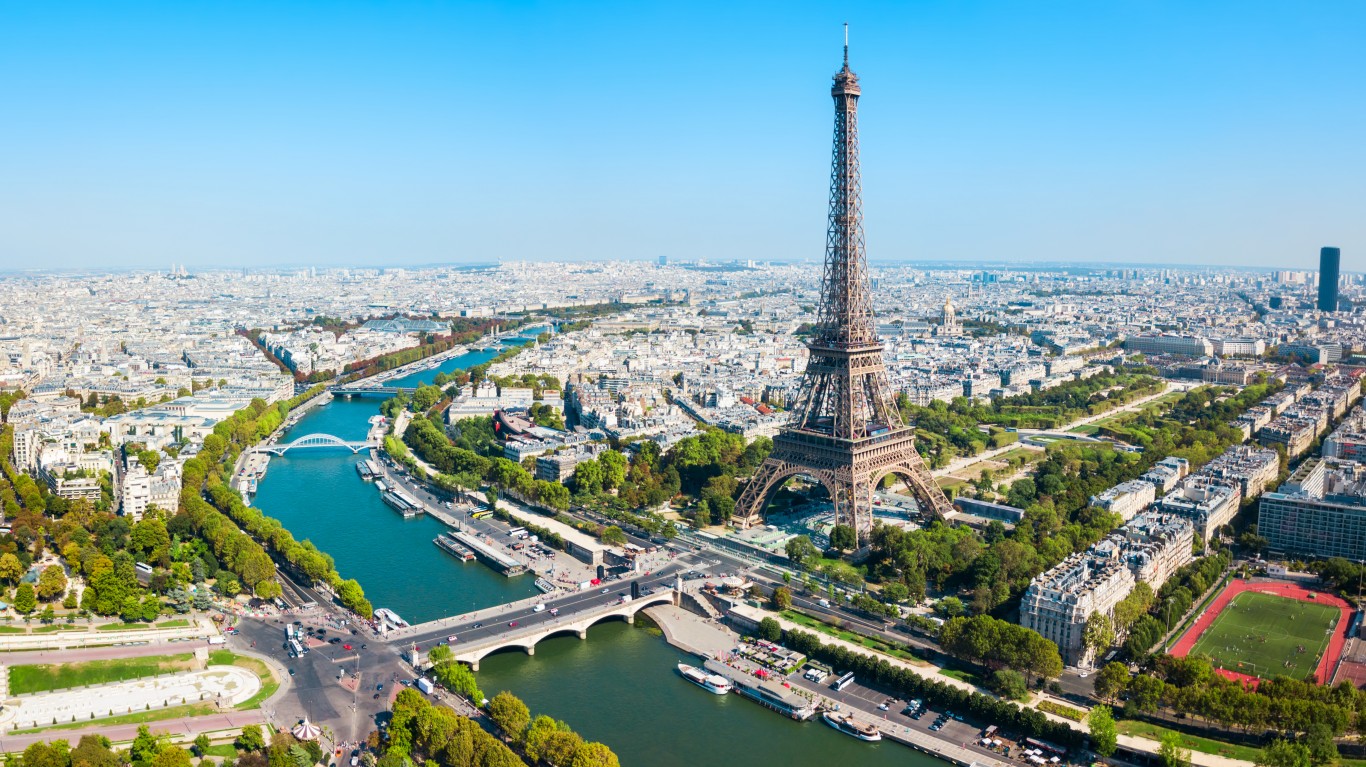
- Casualties from 100 kiloton detonation: 520,330 deaths; 1,387,830 injuries
- Population within blast range of 102.3 sq. miles: 4.0 million (36%)
- Casualties from 800 kiloton detonation: 1,540,280 deaths; 2,718,630 injuries
- Population within blast range of 409.3 sq. miles: 7.6 million (70%)
- Population: 10,901,000 (urban agglomeration)
Germany, Berlin, Brandenburg Gate
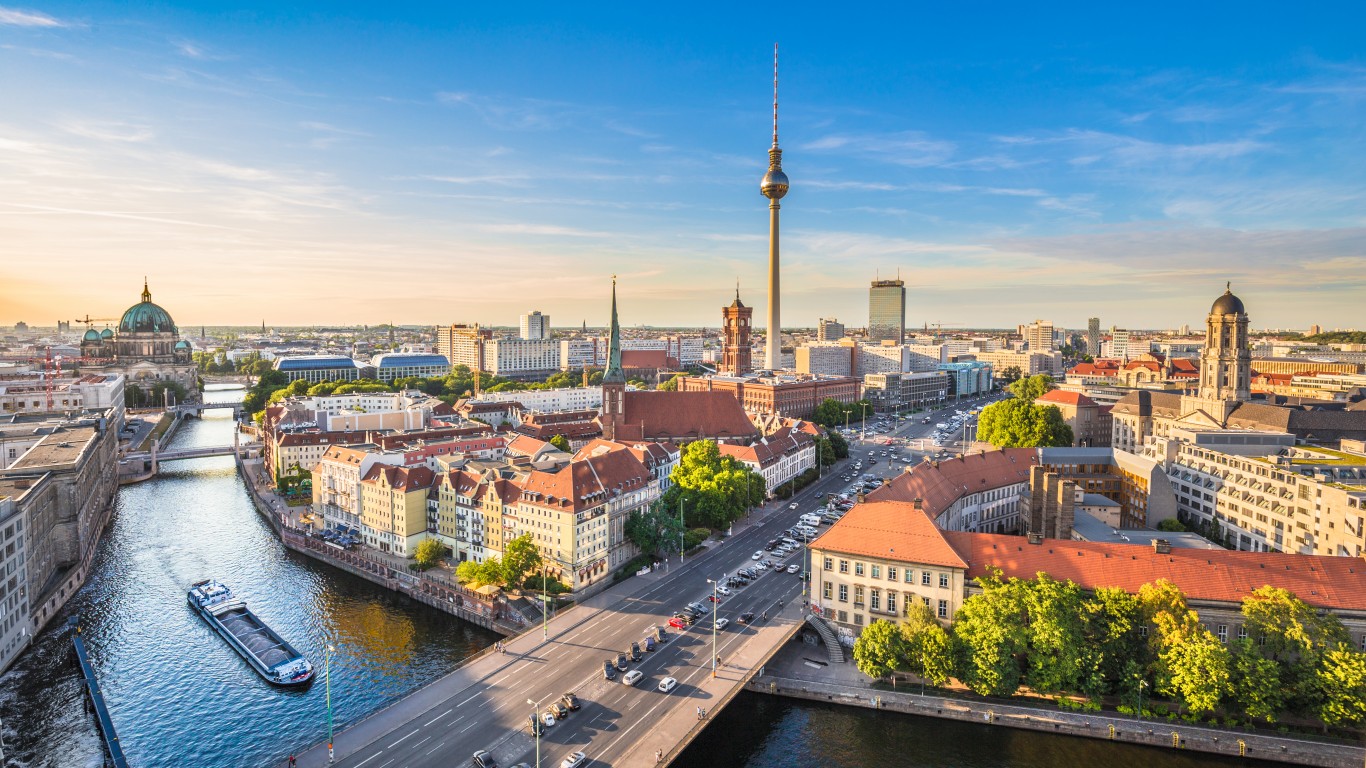
- Casualties from 100 kiloton detonation: 166,520 deaths; 613,320 injuries
- Population within blast range of 102.3 sq. miles: 1.8 million (51%)
- Casualties from 800 kiloton detonation: 638,850 deaths; 1,282,900 injuries
- Population within blast range of 409.3 sq. miles: 3.5 million (97%)
- Population: 3,552,000 (city proper)
India, New Delhi, Rakab Ganj
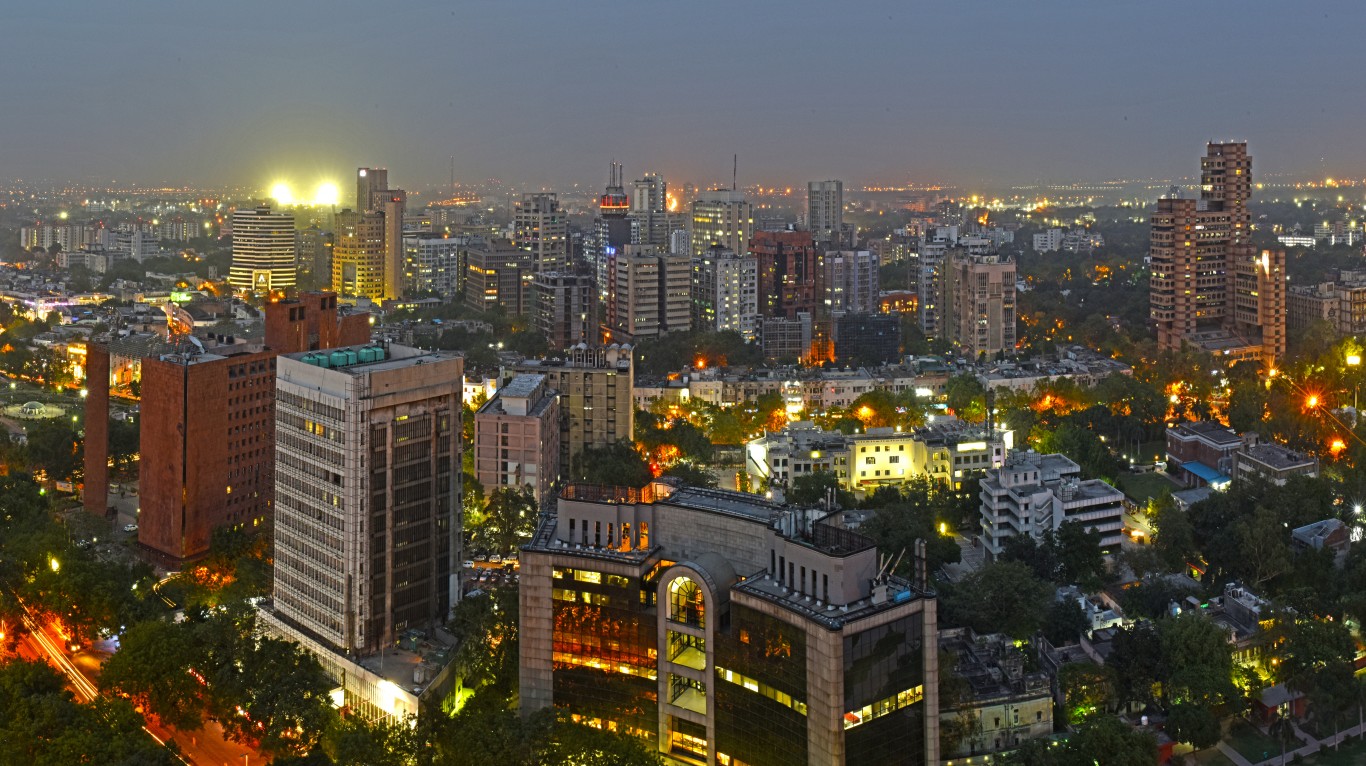
- Casualties from 100 kiloton detonation: 614,290 deaths; 2,140,370 injuries
- Population within blast range of 102.3 sq. miles: 6.6 million (23%)
- Casualties from 800 kiloton detonation: 2,124,130 deaths; 5,806,960 injuries
- Population within blast range of 409.3 sq. miles: 16.0 million (56%)
- Population: 28,514,000 (metropolitan area)
Indonesia, Jakarta, Tomang
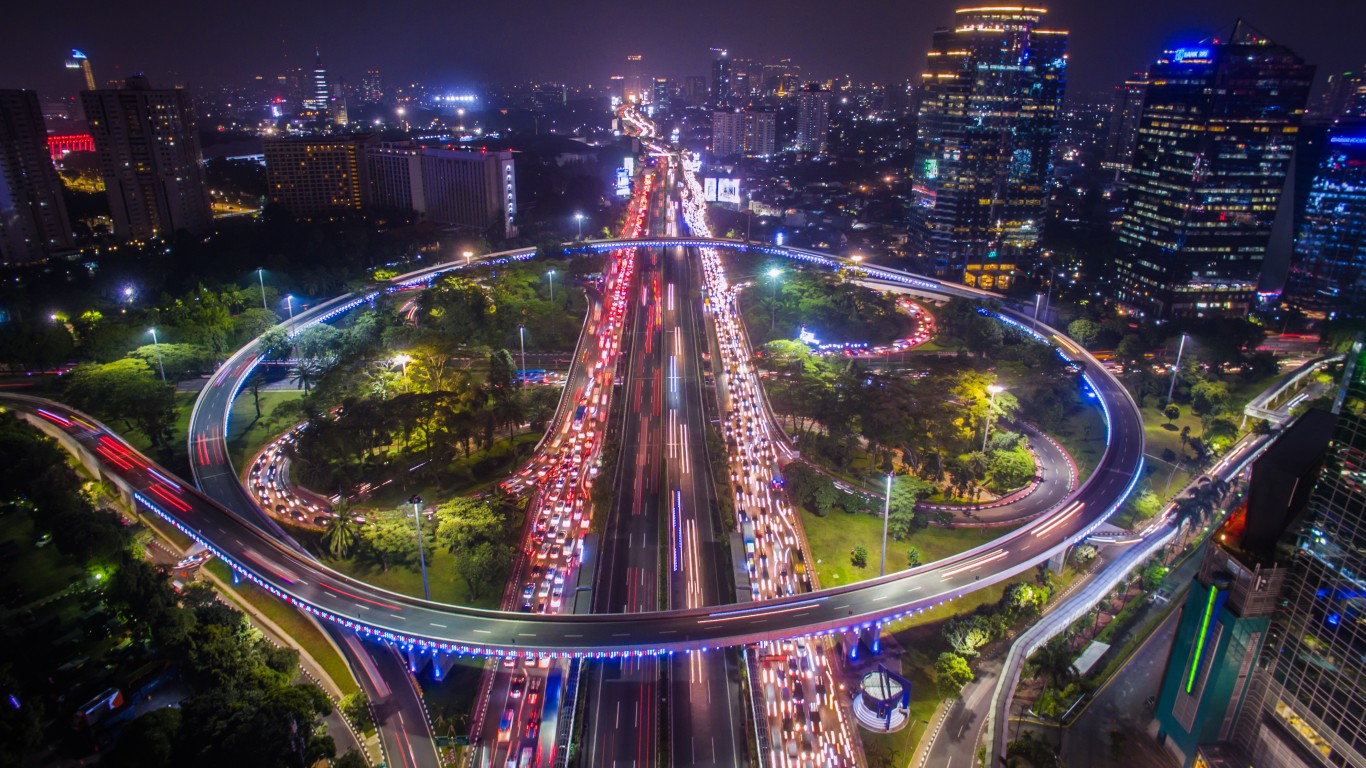
- Casualties from 100 kiloton detonation: 705,640 deaths; 1,622,580 injuries
- Population within blast range of 102.3 sq. miles: 4.7 million (45%)
- Casualties from 800 kiloton detonation: 1,810,860 deaths; 3,751,030 injuries
- Population within blast range of 409.3 sq. miles: 10.7 million (102%)
- Population: 10,517,000 (metropolitan area)
Israel, Jerusalem, Knesset
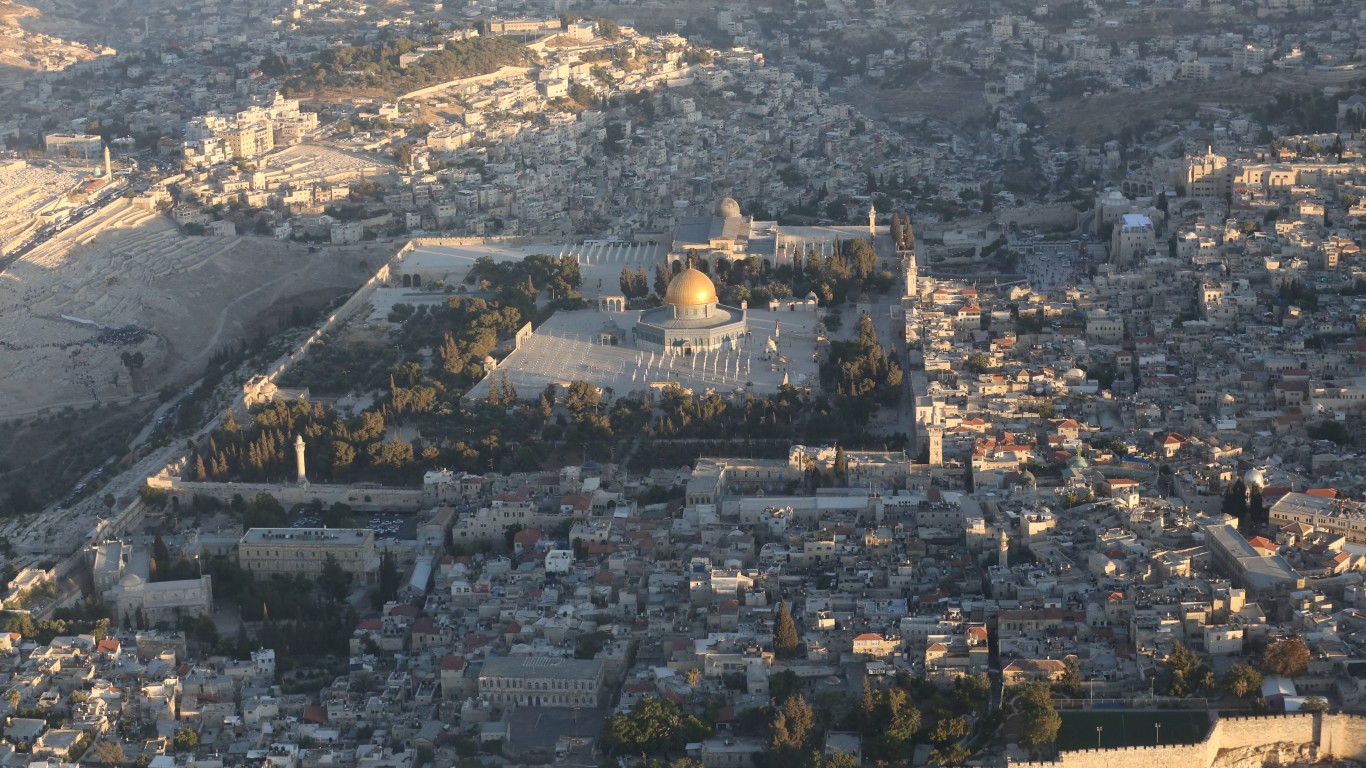
- Casualties from 100 kiloton detonation: 414,200 deaths; 482,210 injuries
- Population within blast range of 102.3 sq. miles: 1.3 million (143%)
- Casualties from 800 kiloton detonation: 669,620 deaths; 539,860 injuries
- Population within blast range of 409.3 sq. miles: 1.6 million (177%)
- Population: 907,000 (N/A)
Italy, Rome, Old Rome
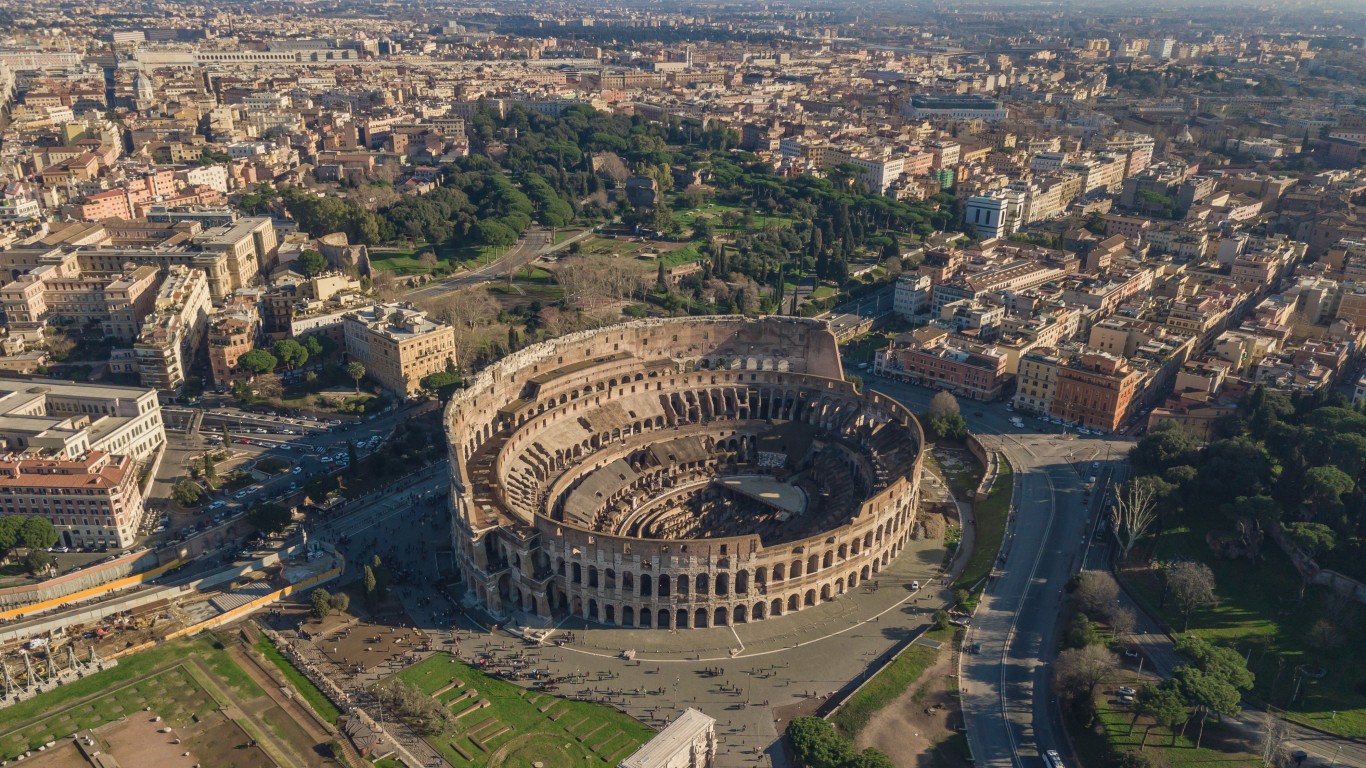
- Casualties from 100 kiloton detonation: 280,500 deaths; 676,160 injuries
- Population within blast range of 102.3 sq. miles: 1.9 million (45%)
- Casualties from 800 kiloton detonation: 770,130 deaths; 1,035,840 injuries
- Population within blast range of 409.3 sq. miles: 2.8 million (66%)
- Population: 4,210,000 (metropolitan area)
Japan, Tokyo, Tokyo Prefectural Government
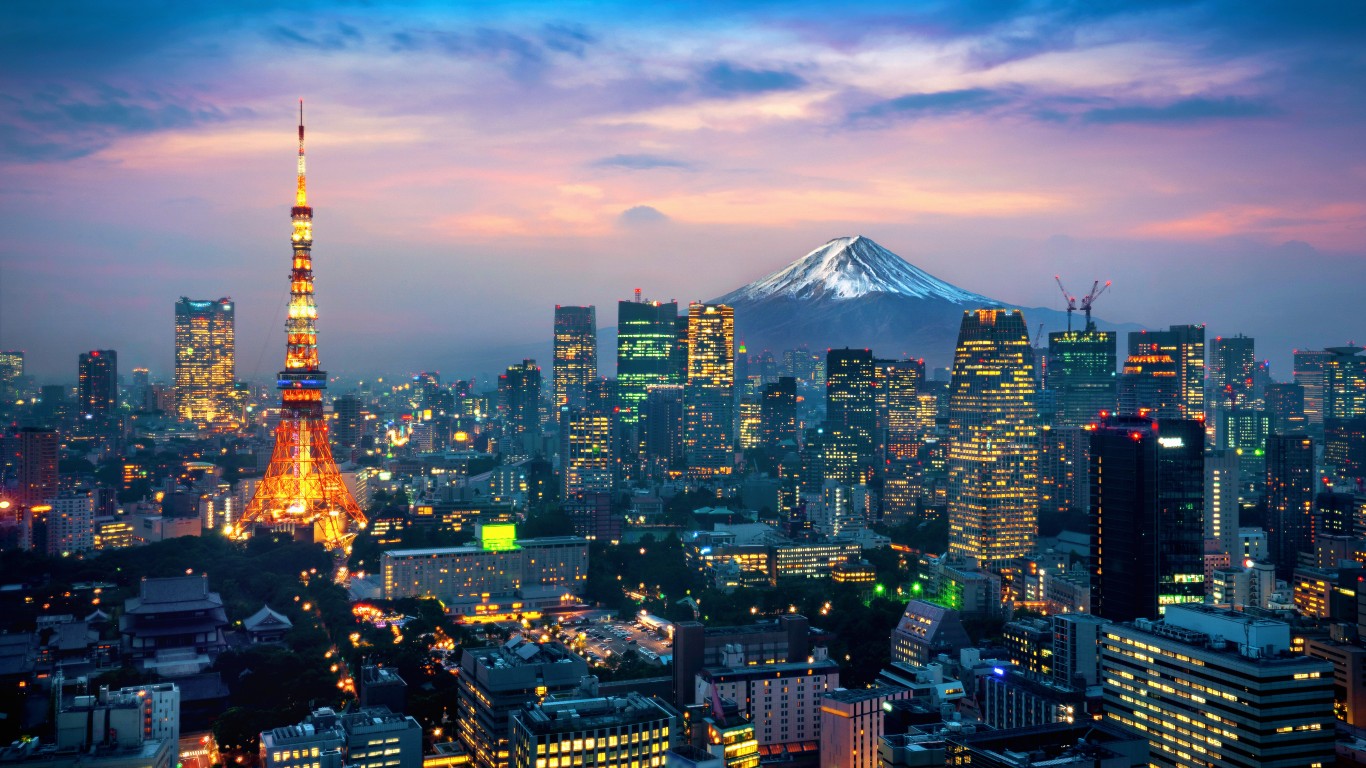
- Casualties from 100 kiloton detonation: 355,060 deaths; 1,333,850 injuries
- Population within blast range of 102.3 sq. miles: 4.1 million (11%)
- Casualties from 800 kiloton detonation: 1,339,000 deaths; 4,294,920 injuries
- Population within blast range of 409.3 sq. miles: 12.6 million (34%)
- Population: 37,468,000 (metropolitan area)
Mexico, Mexico City, Colonia Doctores
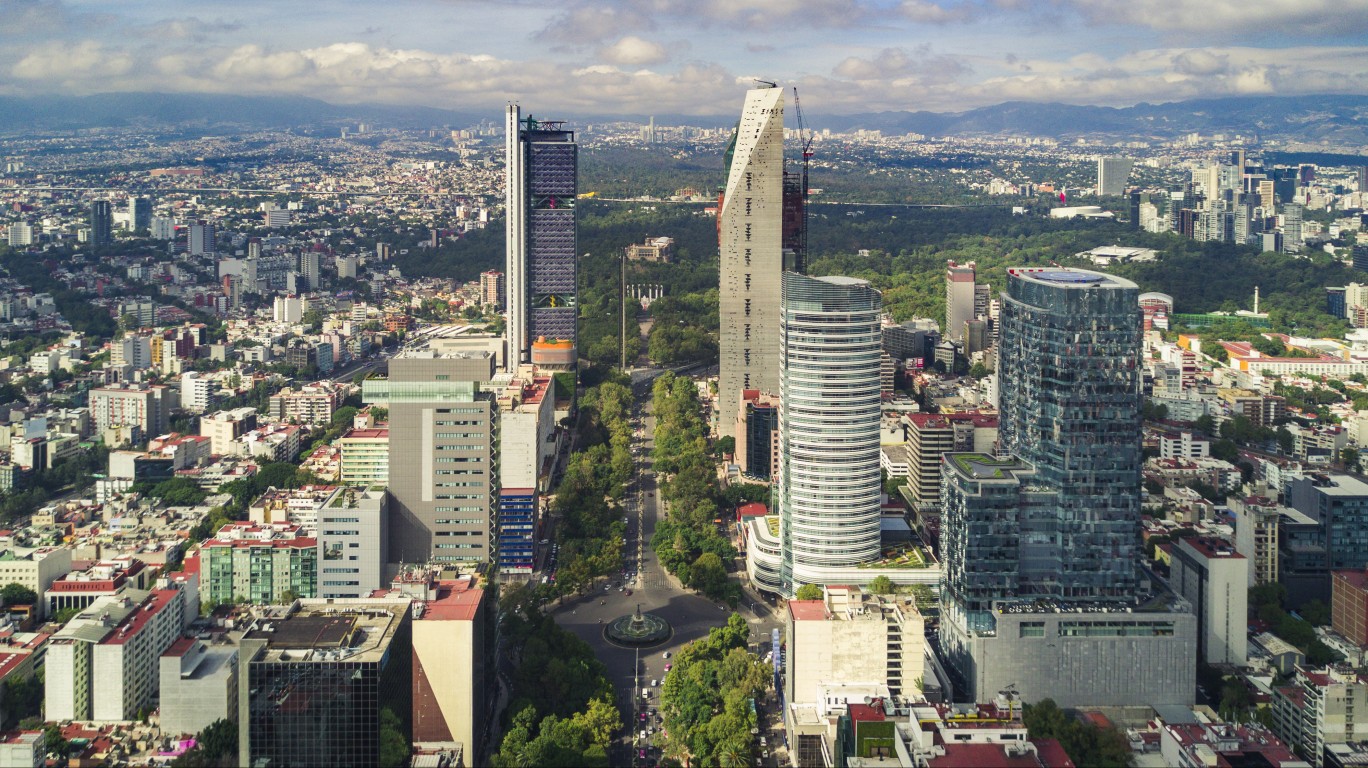
- Casualties from 100 kiloton detonation: 327,010 deaths; 1,295,980 injuries
- Population within blast range of 102.3 sq. miles: 3.9 million (18%)
- Casualties from 800 kiloton detonation: 1,345,650 deaths; 4,162,290 injuries
- Population within blast range of 409.3 sq. miles: 12.2 million (57%)
- Population: 21,581,000 (metropolitan area)
North Korea, Pyongyang, Mansudae Assembly
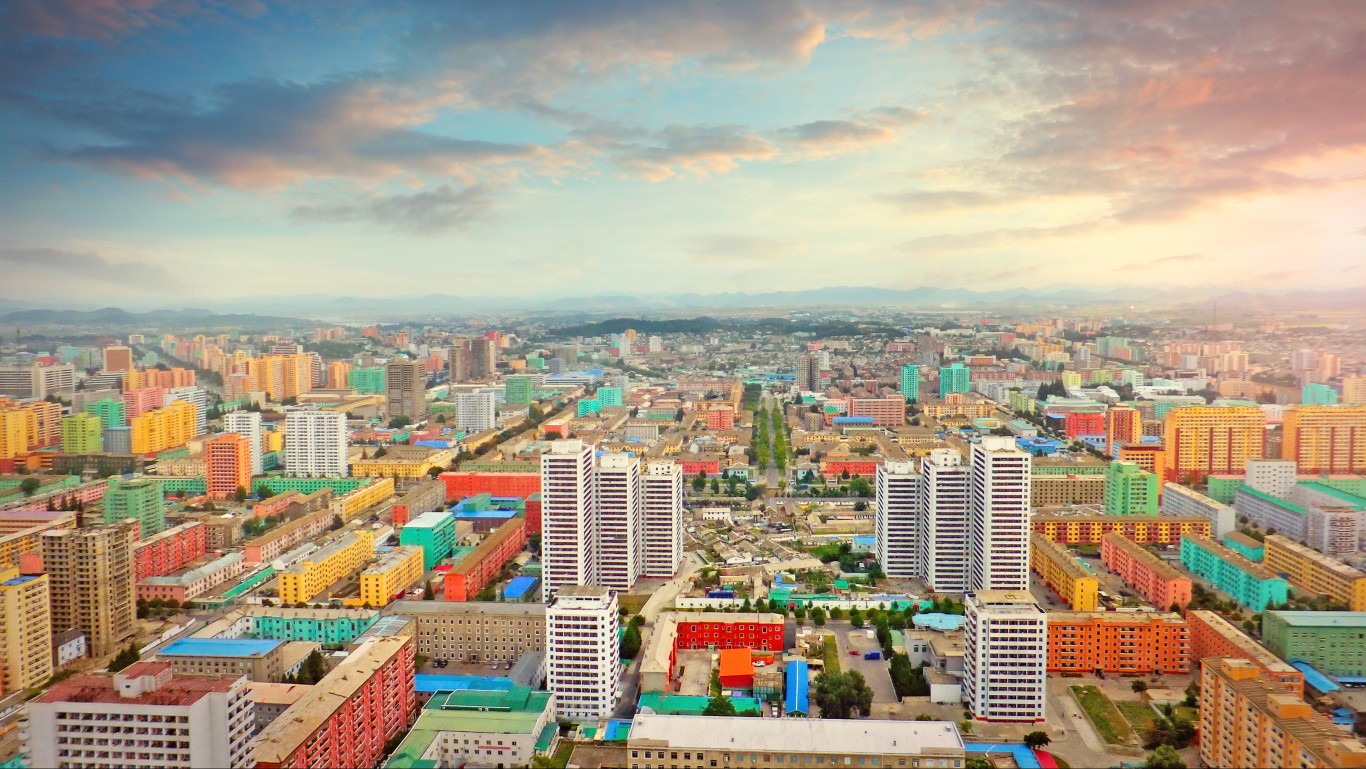
- Casualties from 100 kiloton detonation: 507,520 deaths; 960,770 injuries
- Population within blast range of 102.3 sq. miles: 2.6 million (84%)
- Casualties from 800 kiloton detonation: 1,150,500 deaths; 1,098,320 injuries
- Population within blast range of 409.3 sq. miles: 2.9 million (96%)
- Population: 3,038,000 (city proper)
Pakistan, Islamabad, National Assembly
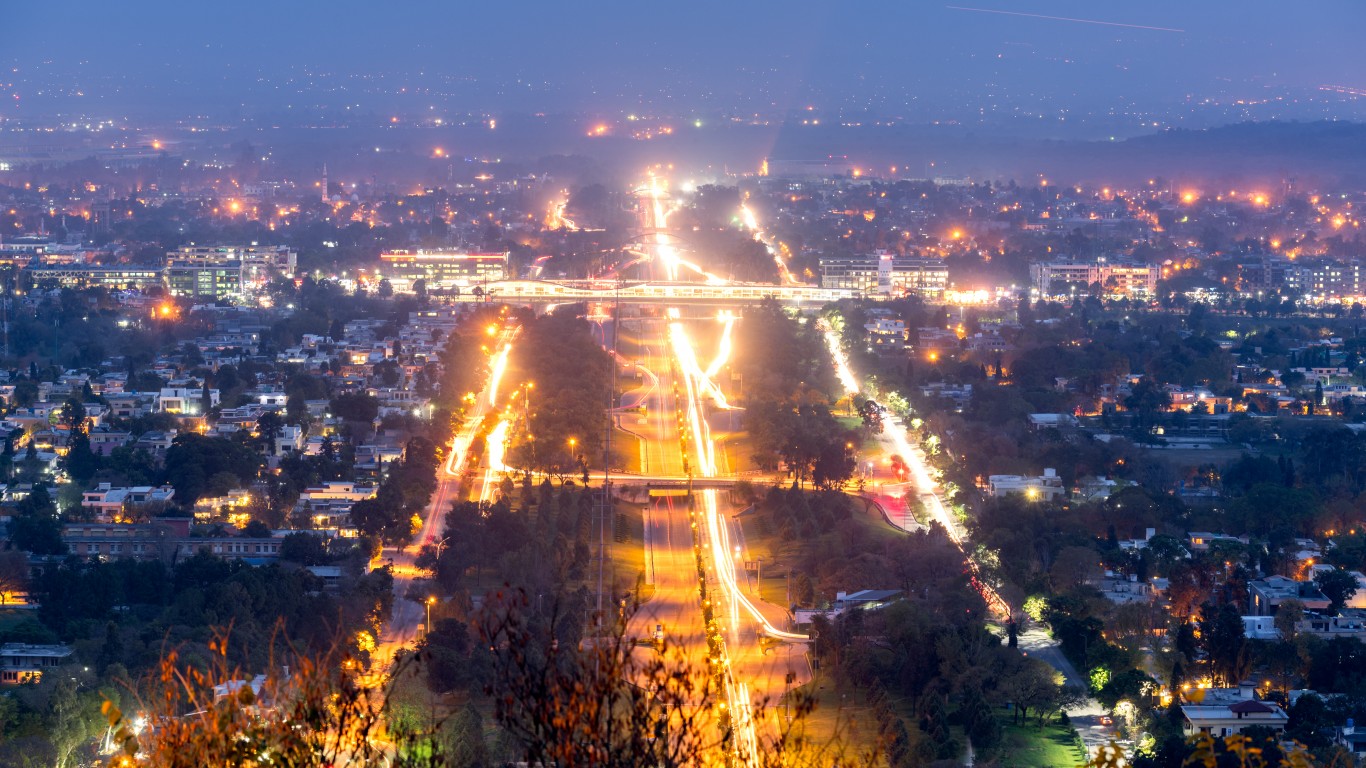
- Casualties from 100 kiloton detonation: 123,210 deaths; 250,330 injuries
- Population within blast range of 102.3 sq. miles: 754,806 (71%)
- Casualties from 800 kiloton detonation: 293,160 deaths; 972,420 injuries
- Population within blast range of 409.3 sq. miles: 3.0 million (281%)
- Population: 1,061,000 (city proper)
Russia, Moscow, Kremlin
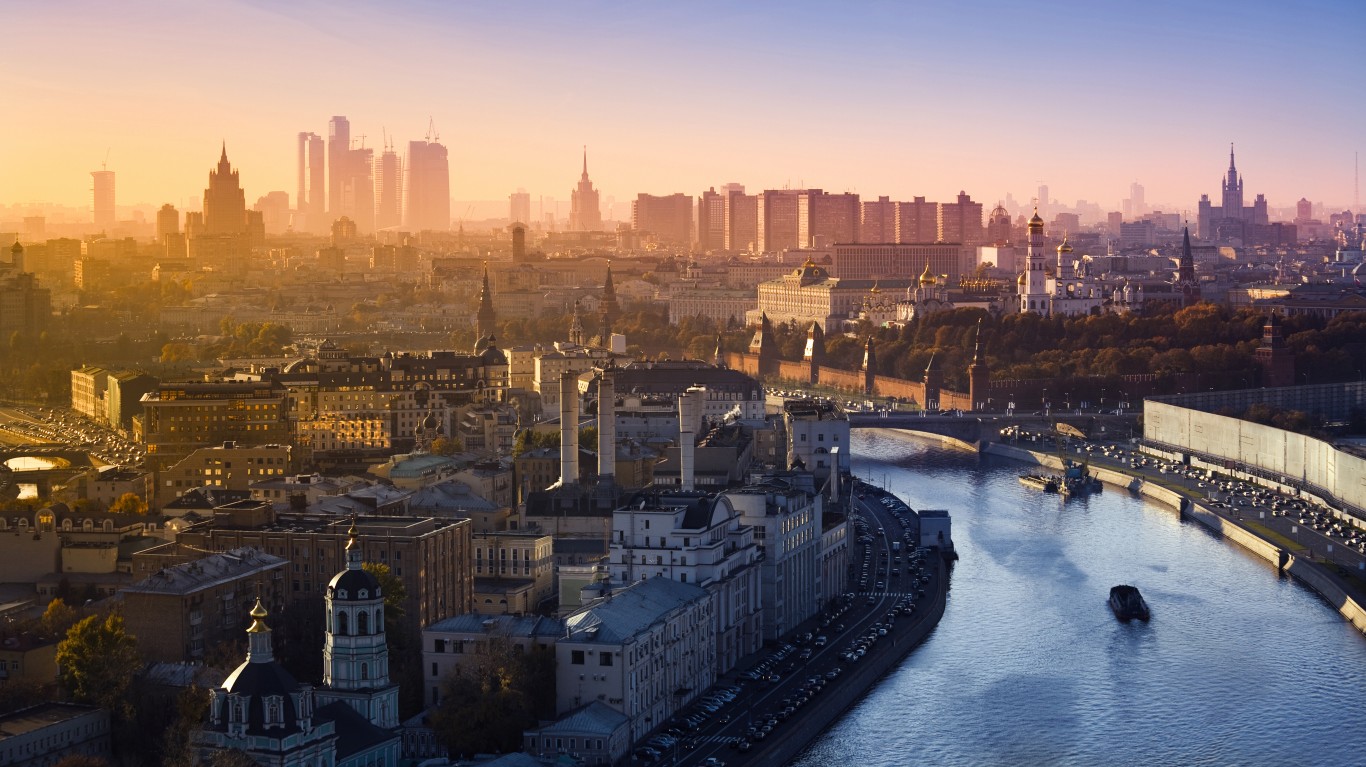
- Casualties from 100 kiloton detonation: 251,800 deaths; 1,098,310 injuries
- Population within blast range of 102.3 sq. miles: 3.4 million (28%)
- Casualties from 800 kiloton detonation: 1,050,270 deaths; 3,332,670 injuries
- Population within blast range of 409.3 sq. miles: 9.5 million (76%)
- Population: 12,410,000 (city proper)
Saudi Arabia, Riyadh, Ad Dirah
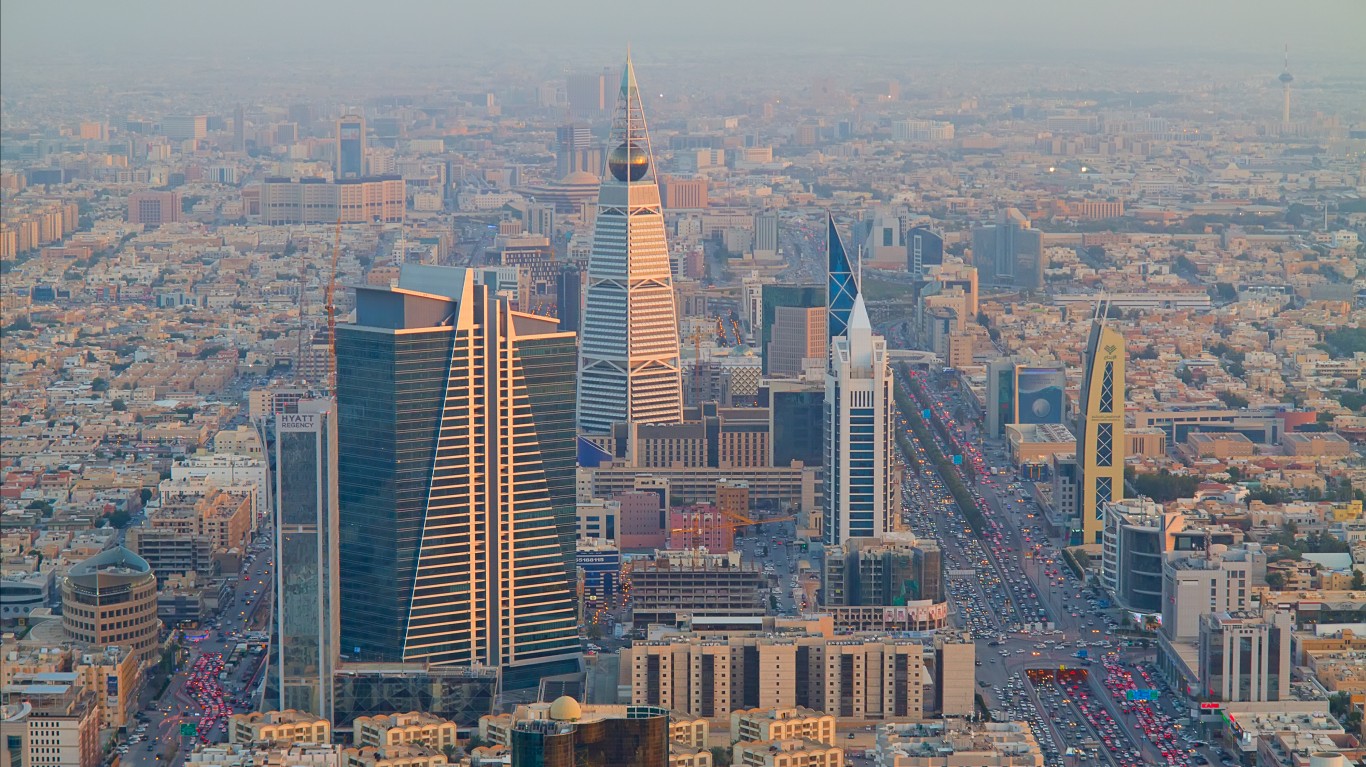
- Casualties from 100 kiloton detonation: 405,890 deaths; 955,860 injuries
- Population within blast range of 102.3 sq. miles: 2.8 million (40%)
- Casualties from 800 kiloton detonation: 1,053,850 deaths; 1,727,970 injuries
- Population within blast range of 409.3 sq. miles: 4.7 million (69%)
- Population: 6,907,000 (city proper)
South Africa, Pretoria, Pretoria West
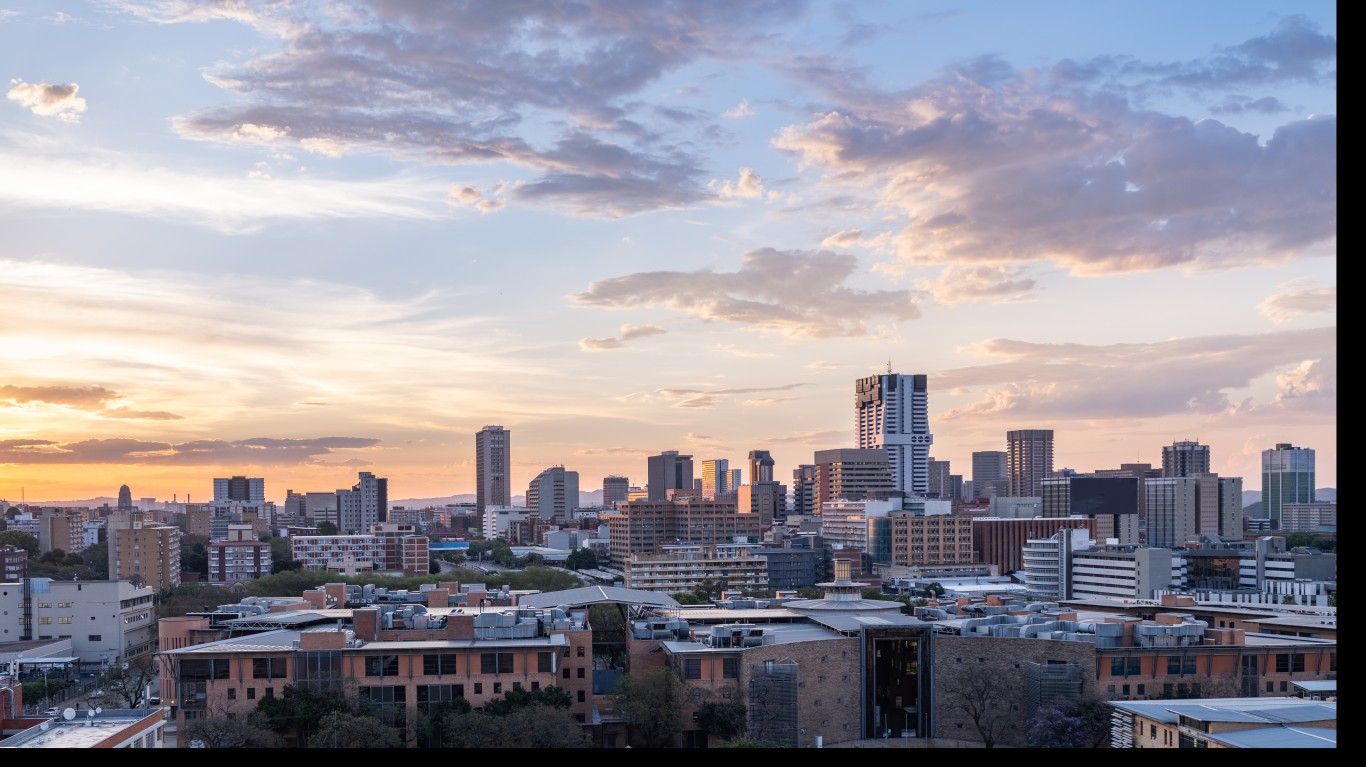
- Casualties from 100 kiloton detonation: 56,680 deaths; 208,850 injuries
- Population within blast range of 102.3 sq. miles: 615,147 (26%)
- Casualties from 800 kiloton detonation: 216,210 deaths; 553,360 injuries
- Population within blast range of 409.3 sq. miles: 1.5 million (65%)
- Population: 2,378,000 (urban agglomeration)
South Korea, Seoul, Seoul City Hall
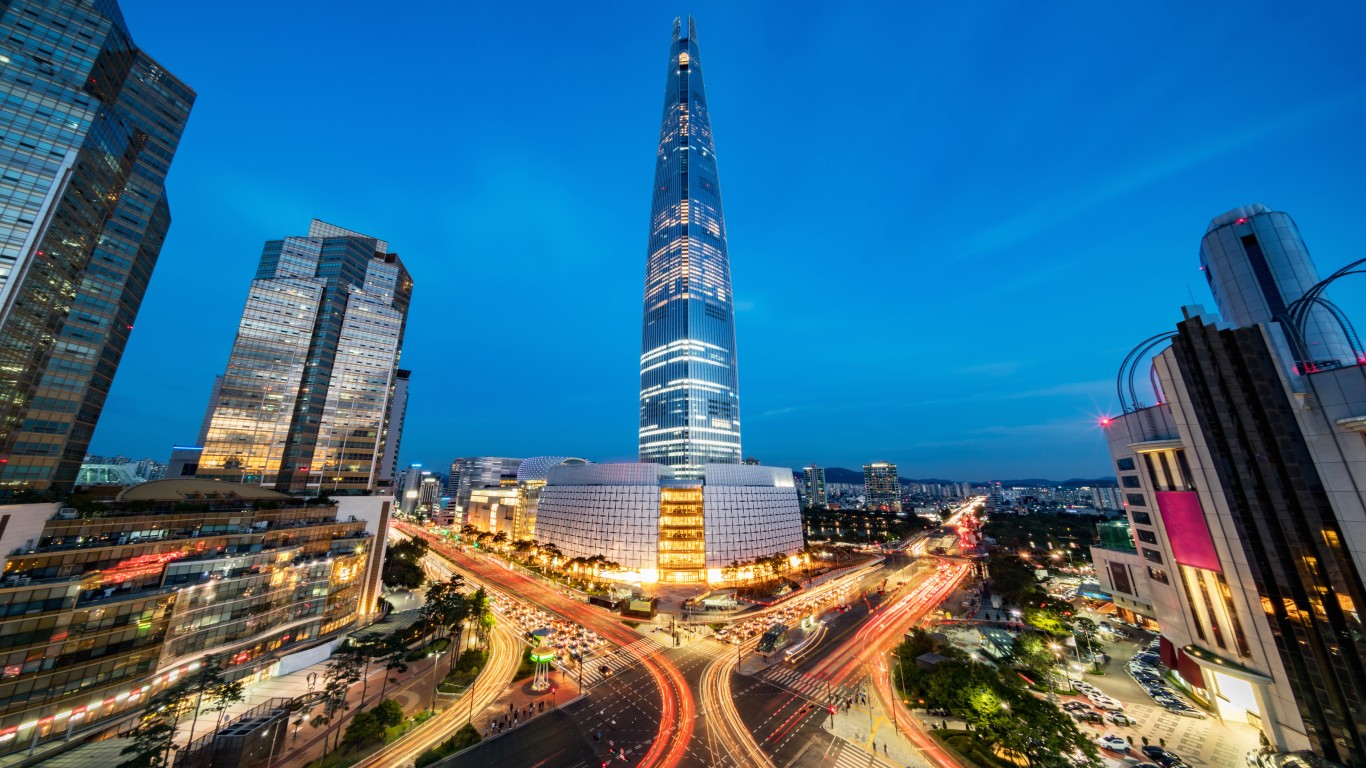
- Casualties from 100 kiloton detonation: 306,590 deaths; 1,394,730 injuries
- Population within blast range of 102.3 sq. miles: 4.4 million (44%)
- Casualties from 800 kiloton detonation: 1,365,260 deaths; 4,335,280 injuries
- Population within blast range of 409.3 sq. miles: 12.0 million (120%)
- Population: 9,963,000 (urban agglomeration)
Turkey, Ankara, Kizilay Mah
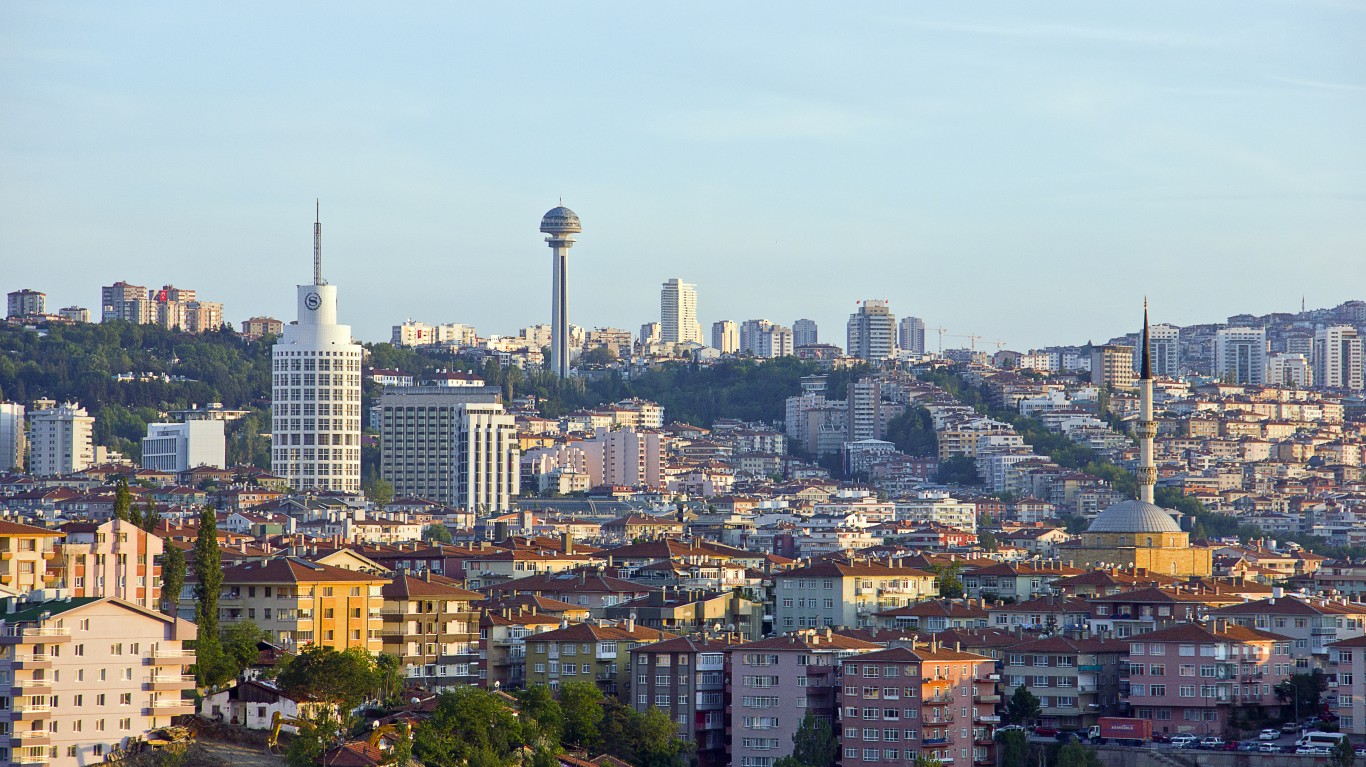
- Casualties from 100 kiloton detonation: 298,910 deaths; 907,530 injuries
- Population within blast range of 102.3 sq. miles: 2.5 million (51%)
- Casualties from 800 kiloton detonation: 993,990 deaths; 1,336,050 injuries
- Population within blast range of 409.3 sq. miles: 3.5 million (70%)
- Population: 4,919,000 (urban agglomeration)
United Kingdom, London, Westminster Palace
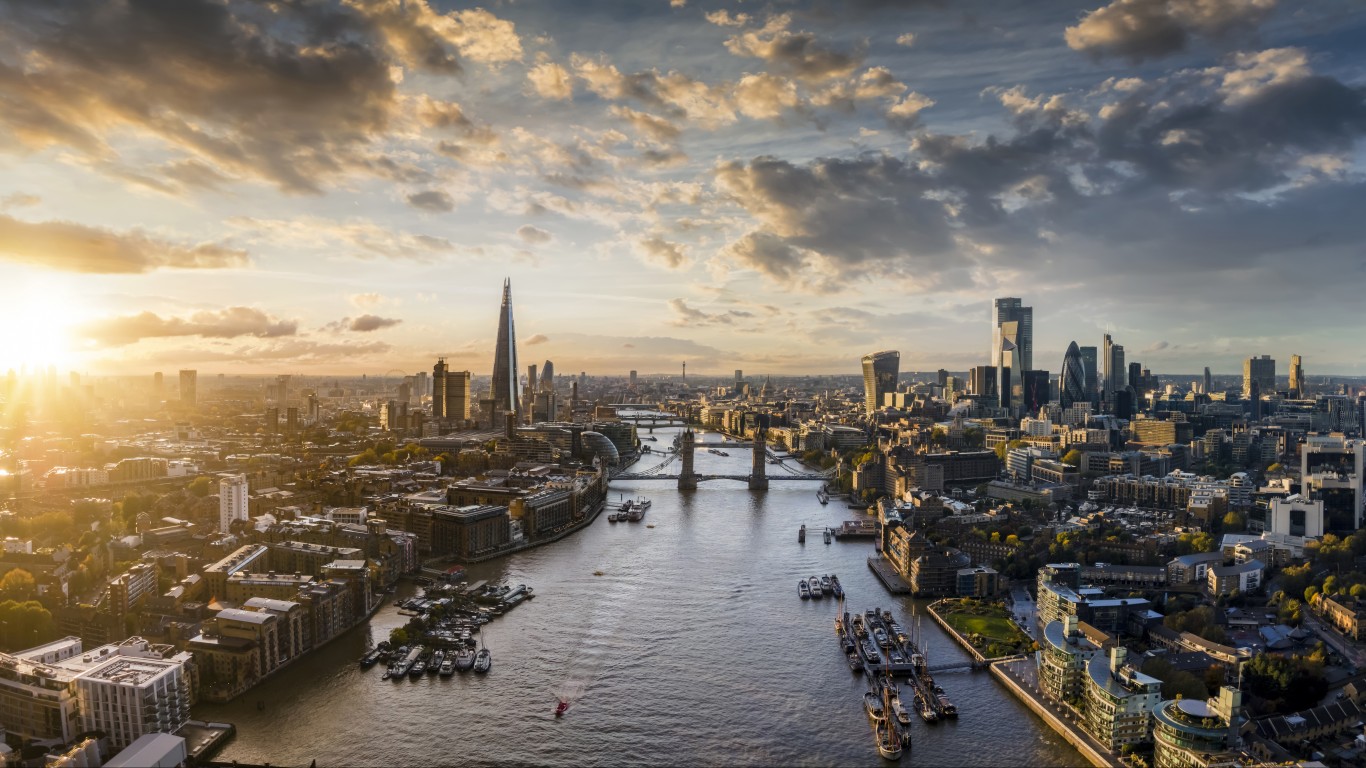
- Casualties from 100 kiloton detonation: 258,680 deaths; 892,760 injuries
- Population within blast range of 102.3 sq. miles: 2.6 million (29%)
- Casualties from 800 kiloton detonation: 929,380 deaths; 2,290,830 injuries
- Population within blast range of 409.3 sq. miles: 6.6 million (73%)
- Population: 9,046,000 (urban agglomeration)
United States, Washington DC, US Capitol

- Casualties from 100 kiloton detonation: 177,650 deaths; 383,210 injuries
- Population within blast range of 102.3 sq. miles: 1.1 million (21%)
- Casualties from 800 kiloton detonation: 445,360 deaths; 838,400 injuries
- Population within blast range of 409.3 sq. miles: 2.4 million (47%)
- Population: 5,207,000 (urban agglomeration)
Methodology
To find how a nuclear detonation could affect the 23 capitals of the G20 nations and those with a nuclear arsenal, 24/7 Wall St. used Nukemap, a site that simulates the detonation of nuclear bombs. We have chosen two typical warhead yields, 100 kilotons and 800 kilotons, detonated in the air over the center, or important landmarks in these cities. Countries are ordered alphabetically. Of the three capital cities of South Africa, we have chosen Pretoria, the seat of the executive branch.
- Nuclear bombs with 100-kiloton yield detonated in the air at 0.9 miles altitude have a fireball radius of 0.24 miles and a light blast damage radius of 5.7 miles, for a total affected area of 102.3 square miles.
- Nuclear bombs with 800-kiloton yield detonated in the air at 1.8 miles altitude have a fireball radius of 0.55 miles and a light blast damage radius of 11.4 miles, for a total affected area of 409.3 sq. miles.
We also added the average population within the light damage blast range averaged over 24 hours. Light damage can be caused by an overpressure – the pressure caused by a shock wave exceeding normal atmospheric pressure – of 1 psi. (Psi is a measure of pressure equaling a pound of force per square inch.) All data is from Nukemap, except for population figures.
Population figures came from the United Nations’ Population Division The World’s Cities in 2018. Each city population is either within the “city proper” (the administrative boundary), “urban agglomeration” area (the contiguous urban area, or built-up area), or “metropolitan area” (the nearby areas with economic and social interconnectedness).





 Top Gaining Stocks
 Top Losing Stocks