


By Gene Munster of Loup Ventures
As we hit the halfway point of 2018, we wanted to check in on one of our boldest predictions for the year: Amazon will acquire Target in 2018. So far, we’ve been wrong. Getting the timing correct is difficult, and every business day that passes it becomes 0.38% less likely that our prediction comes to fruition. That said, we remain adamant that this combination makes sense.
We predicted that Amazon will buy Target for 3 reasons.
- Offline sales will always be a big part of retail. E-commerce is slowly killing brick and mortar business across almost every industry. Today, however, only about 10% of total US retail sales are online. We see this number going to 55%, but that still leaves a considerable market for physical retail. This is based on the concept of empathic retail – Human retailers are uniquely qualified to create personalized service based on empathy.
- They pursue a shared demographic. Amazon’s Whole Foods acquisition confirmed their focus on the high-income consumer. The median household income for an Amazon shopper is $90,100, similar to Whole Foods at $95,200. Target reports its average shopper earns $87,000. These far exceed the U.S. median household income of $55,322. In our experience observing tech companies, owning a demographic yields the best results.
- Brick and mortar retail must get more advanced. Retailers like Target must get more advanced to survive in the new world of commerce. Our data suggests that traditional retailers are struggling to transform, ostensibly because tech is not in their DNA. Additionally, the economics and the expectations of a traditional retailer are very different than those placed on their largest competitor: Amazon. Amazon has the flexibility to grow without generating a profit and does not carry the real estate burden of a brick and mortar footprint. An Amazon acquisition would change the rules of the game for Target, and further Amazon’s effort in brick and mortar.
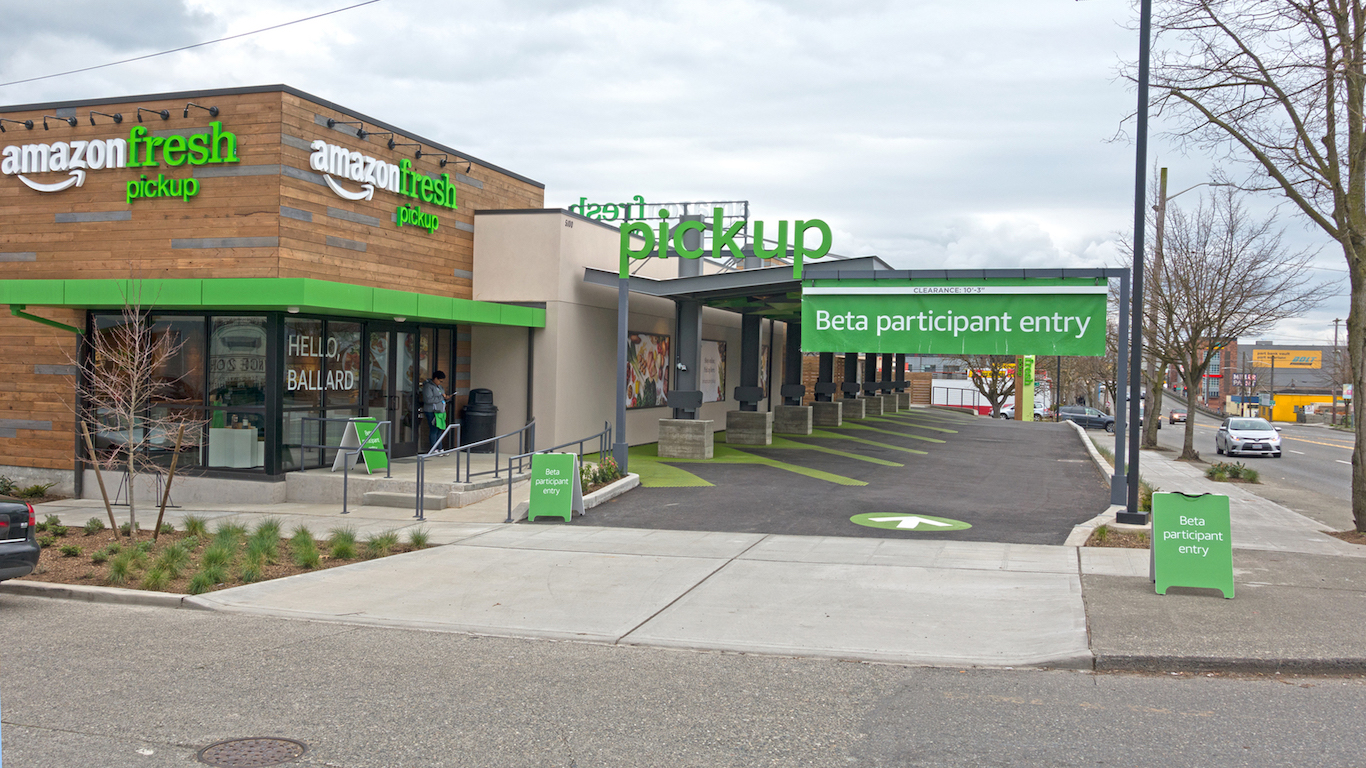
An update on Amazon’s brick and mortar strategy. Since we made the prediction in January, Amazon has shown that it is serious about integrating with Whole Foods and expanding its brick and mortar reach. The first Amazon Go store has opened to the public, and Amazon is reportedly planning 6 more Go stores to be launched later this year. The Whole Foods integration has progressed nicely with reduced pricing on some staples, rewards and discounts for Prime members, and free delivery for Prime members on orders over $35 in select cities. All of this points to Amazon’s concerted effort in brick and mortar as a critical channel for their business.
For these reasons we continue to believe that it makes sense for Amazon to acquire Target. In order to make their vision a reality, a broader reach in physical retail is important, and Target offers the reach that Whole Foods does not fulfill completely.
Disclaimer: We actively write about the themes in which we invest: virtual reality, augmented reality, artificial intelligence, and robotics. From time to time, we will write about companies that are in our portfolio. Content on this site including opinions on specific themes in technology, market estimates, and estimates and commentary regarding publicly traded or private companies is not intended for use in making investment decisions. We hold no obligation to update any of our projections. We express no warranties about any estimates or opinions we make.
[recirclink id=471676]
[wallst_email_signup]









 Top Gaining Stocks
 Top Losing Stocks