


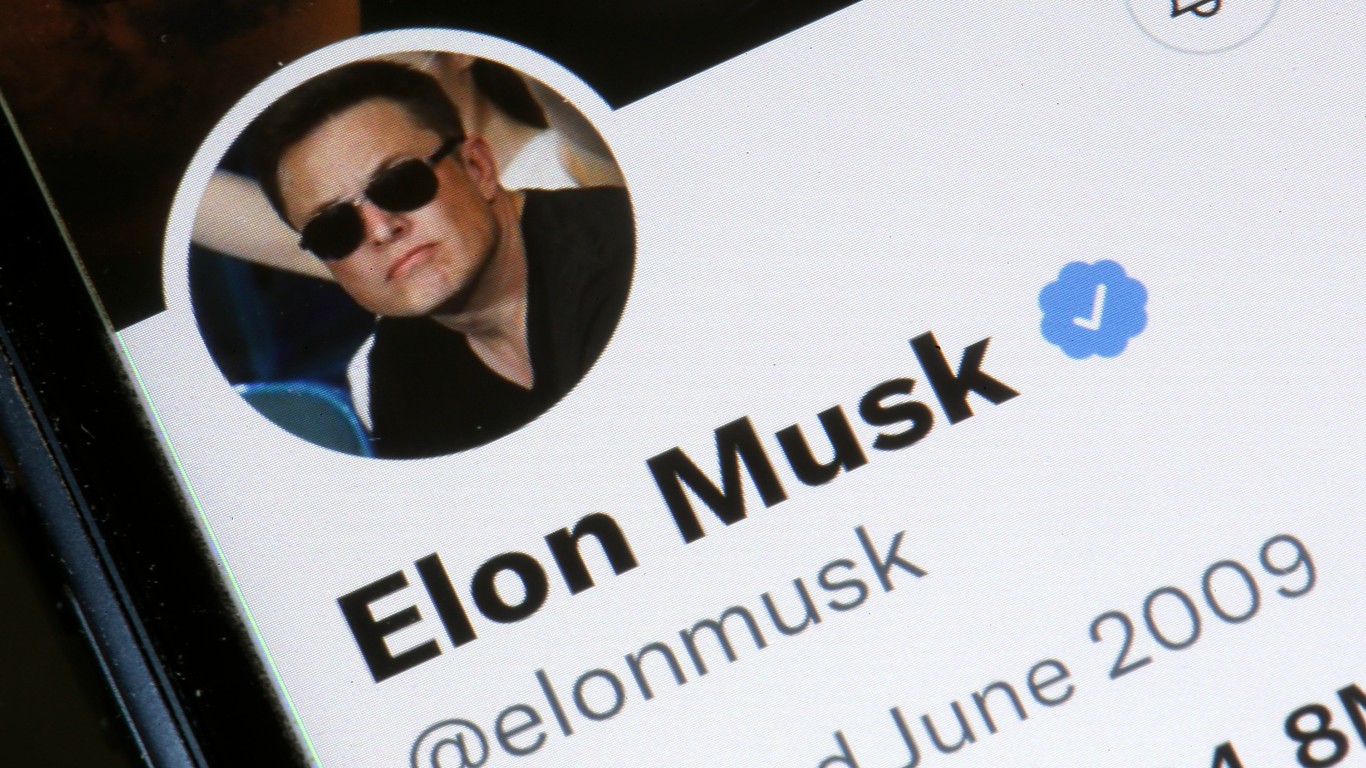
Elon Musk, the richest man in the world and the founder of Tesla and SpaceX, paid $44 billion for Twitter last month. Most M&A and social media experts believe the decision will be among the worst disasters in American business history. His approach of sharp staff cuts, however, may work. It buys him months, perhaps years, to get revenue above expenses.
It is worth remembering that in Twitter’s last quarter as a public company, it had an adjusted EBITDA of $112 million. Revenue for the period was flat at $1.2 billion. His staff cuts could have dropped expenses by $400 million a quarter. That would move adjusted EBITDA closer to $500 million per quarter. This leaves a large buffer as its revenue shrinks because marketers have pulled advertising.
One of Musk’s arguments for his eventual success is that daily active users will surge much higher than their recent daily average of 238 million, which rose at a rate of 17% year over previous year in the last quarter. A larger audience means Musk can charge marketers (those who stay) a larger sum. Musk’s gamble is that the number of advertisers who leave is more modest than press reports guess (and what he hints). Alternatively, many could return if they see that Musk has come up with ways to keep hate speech and other highly objectionable content largely off the social network platform.
[nativounit]
Musk’s bet on how to keep unacceptable content off Twitter is one of his greatest gambles. The staff that handles this has been decimated. That leaves algorithms to do the job with very modest human assistance. It will be months before there is definitive evidence, one way or the other.
Another question is how much advertising Musk has lost. Any figures estimated outside the company are a guess. He can afford to lose tens of millions of dollars, even if that money does not come back.
Many tech companies have chopped costs recently. Some of these cuts are as high as 20%. Management at these firms believes they can sustain revenue at current employee levels. Musk’s cuts are larger, but are part of an industry trend.
[wallst_email_signup]
Outsiders worry Musk has slashed essential employees. Time will tell. And Musk has some control over his employee base. Many need paychecks. Not all can simply walk out the door with no income. This means Musk has some leverage over who stays and who leaves.
Users of Twitter have no alternatives. Smaller social media platforms like Hive and Mastodon have gained a few million subscribers. That does not make them competitors at all.
Twitter’s most important users have not left, with few exceptions. CBS is the only major media entity that has criticized Musk to have dropped off. Millions will continue to turn to Twitter for breaking news. Most major celebrities and politicians remain on the service because they cannot reach tens of millions of people any other way. Twitter’s most important users have not abandoned it.
The hate-speech argument against Twitter is among the most powerful as a probable cause of the business models falling apart. Once again, the issue is whether Musk can partially control this content. It remains a part of Facebook and YouTube content. That means the problem is a matter of degree.
[recirclink id=1099340]
Musk has taken on heavy debt to buy the company. Do these financial firms want to push Twitter into bankruptcy if it does not stay current on payments? No. None of them want to own the company or any of its controversial assets. They will renegotiate obligations and hope to recoup their loans over time.
Musk is not painted into as much of a corner as many people think. That gives him a chance to make his buyout successful, even if it is a long shot.







 Top Gaining Stocks
 Top Losing Stocks