


 There was one issue which concerned us the most after Google Inc. (NASDAQ: GOOG) entered the smartphone market, and that was that this might create a race to zero via an old-fashioned price war. Not just at the level of those who make smartphones, but also on the carrier side. When the smartphone makers start getting too competitive with each other and start offering subsidized phone plans for phones which might cost $400.00 or more otherwise, do not think for a second that this does not start to work its way down to the carrier level. We saw some headlines this week about T-Mobile, part of Deutsche Telekom (NYSE: DT), cutting plan prices. Then the same from Verizon Communications (NYSE: VZ), and then from AT&T Inc. (NYSE: T).
AT&T Inc. (NYSE: T) has the exclusive for the Apple Inc. (NASDAQ: AAPL) iPhone, for now. Sprint Nextel Corp. (NYSE: S) had the exclusive for a while on the Palm Inc. (NASDAQ: PALM) Pre and then on the Pixi for a short period. Research in Motion Ltd. (NASDAQ: RIMM) sells its multiple lines of Blackberry smartphones to just about every carrier. Motorola Inc. (NYSE: MOT) made the first Droid phone for Google but now Google is already in short order going around it by making its own phones for Nexus.
Verizon Wireless is the US’s largest carrier and it is starting a plan at $70.00 per month for unlimited calling, which has effectively cost $100.00 before (depending upon whether or not promotions were given and depending upon local deals). This now brings the data plans for the smartphones to where the total plan costs $100.00 for voice and data.
AT&T Inc. is the number two carrier in the US and it is also going to charge right at $70.00 for its unlimited calling plan and will offer some plans for $100.00 (versus about $130) all-in for unlimited voice and data in the iPhone.
This really leaves Nokia Corp. (NYSE: NOK) in the lurch in the US, and ditto for LM Ericsson Telephone Co. (NASDAQ: ERIC) except for the notion that I cannot recall seeing ANY Ericsson cell phones used by anyone here inside the United States in years.
The obvious answer here was Google as the most recent catalyst. The company wants its respect and wants its place in the mobile internet. You just have to ask Jim Cramer about that. But when price wars and subsidies start coming into play this deep on the smartphone supply side via subsidies, that ends up translating into a price war on the carrier level.
This is a win for Joe Public, particularly if someone has been on the fence about which phone to sign up for. Unfortunately, this becomes the great margin squeeze for the phone makers and then for the carriers themselves. If you have been like myself and like most other smartphone users, you have likely complained about bandwidth bottlenecks and bandwidth voids regardless of how close to a tower you have been.
Imagine if Google wanted the mobile web ad market so much that it just gave the phones away for ad-maximization. Or imagine if things got so tight that Steve Jobs started giving away iPhones for free, if you buy a Mac. Those are far from likely, but something in the middle might not be. That is why they call price wars a race to zero.
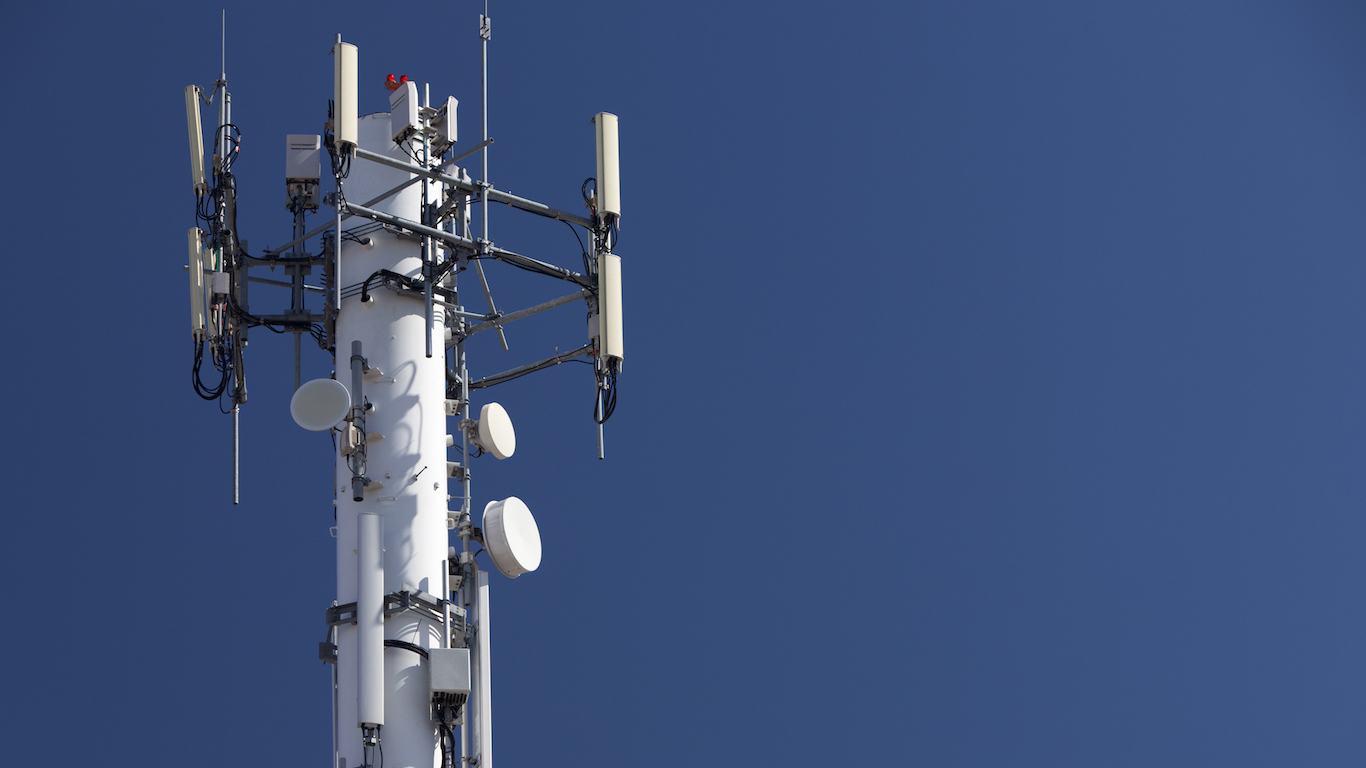
If there is one more round of exchanges in the price war, then you can be certain that the carriers won’t be increasing that capital spending by buying more and more bandwidth for cell towers. This will be a win for the public on the cost-side of the equation, but if the networks become too bogged down then this becomes a no-win for everyone.
JON C. OGG





 Top Gaining Stocks
 Top Losing Stocks