


Sunday’s announced all-stock merger between aerospace and defense giants United Technologies Corp. (NYSE: UTX) and Raytheon Co. (NYSE: RTN) creates the world’s second-largest defense contractor. The country’s largest defense contractor is Lockheed Martin Corp. (NYSE: LMT | LMT Price Prediction), and Boeing Co. (NYSE: BA) is third.
Like Boeing, the merged firm, which will be named Raytheon Technologies, will have a commercial and a defense side, and the firms expect about half of sales to come from each side of Raytheon Technologies. Boeing’s commercial division sales ($60.7 billion) more than doubled its defense sales ($23.2 billion) last year.
Consolidation in the defense business got rolling about a year and a half ago when United Technologies acquired Rockwell Collins. Since then, General Dynamics Corp. (NYSE: GD), the country’s fourth-largest federal contractor, paid more than $9 billion for federal IT contractor CSRA. Northrop Grumman Corp. (NYSE: NOC) acquired Orbital ATK for more than $9 billion, while L3 Technologies Inc. (NYSE: LLL) and Harris Corp. (NYSE: HRS) announced last October a merger of equals that will create a $33.5 billion defense firm. The Rockwell Collins acquisition was never enough to put United Technologies into this league, and it had to do something to keep from being marginalized.
[nativounit]
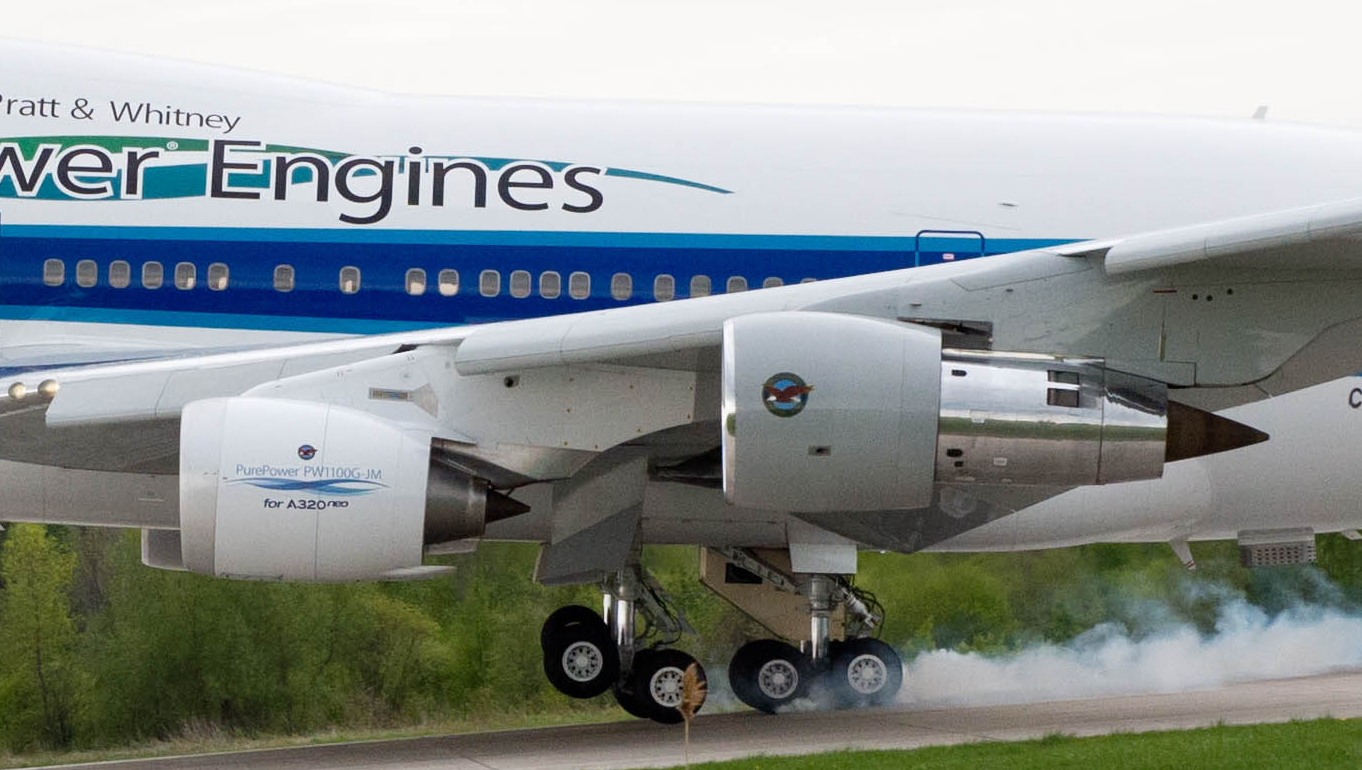
United Technologies announced earlier this year that its Otis elevator and Carrier HVAC businesses would be spun out next year, and the merger with Raytheon will not change that. In 2018, Otis generated $12.9 billion in net sales, while Carrier accounted for $18.9 billion. The largest portion of the company’s revenue, $19.4 billion, came from its Pratt & Whitney engine division, while it’s Collins Aerospace Systems business generated $16.6 billion. All told, segment revenue totaled $67.86 billion.
Raytheon’s 2018 net sales totaled $27.1 billion, of which about two-thirds, $18.45 billion, were sales to the U.S. government. Nearly all, $17.63 billion, of its sales to the federal government were made to the Department of Defense.
In the merger announcement, the companies said that pro forma 2019 revenues would be approximately $74 billion, and if half of that is defense business, then the other $37 billion is commercial. Assuming most of the Collins business and all the Raytheon defense business is being included in the pro forma number, that leaves about $3 billion in odds and ends to reach half the estimated total.
Lockheed received nearly $39 billion in new U.S. defense contracts last year, more than a third higher than the $27.5 billion Boeing won and more than double the $18.1 billion in new awards to Raytheon. United Technologies nabbed $6.2 billion in new defense contracts last year. The U.S. General Services Administration provides much additional detail on federal spending for defense.
The product overlap between United Technologies and Raytheon are about 1%, according to a comment from United Technologies CEO Greg Hayes cited by Defense News. Analyst Byron Callan said the merger might require some “small” divestitures down the road, but there do not appear to be any showstoppers.
Well, except maybe one. On CNBC this morning, the U.S. president said he was a “little concerned” about possible lack of competition following the creation of Raytheon Technologies.
Shareholder reaction has been predictable. United Technologies shares traded down about 2% Monday morning, at $129.47 in a 52-week range of $100.48 to $144.40. Raytheon’s shares traded up about 1.7% to $189.06, in a 52-week range of $144.26 to $214.66.
[recirclink id=552927]
[wallst_email_signup]






 Top Gaining Stocks
 Top Losing Stocks