


It’s not even Inauguration Day yet, but Donald Trump is making headlines across the financial world. Friday night he launched a meme coin – $TRUMP – that quickly skyrocketed to a fully diluted valuation of $75 billion. (No, that’s not a typo)
And this weekend, rumors continue to build that Trump’s team may be arranging a buyout of Intel (Nasdaq: INTC) that could be funded by Elon Musk. Leaks of the rumor sent Intel up 9.25% in trading Friday, and its stock continued rising after the closing bell. Let’s analyze these rumors to see what an Intel buyout could look like and whether there’s any credibility to them.
Where Are The Intel Buyout Rumors Coming From
One of the most widely followed semiconductor analysts is Dylan Patel who runs the research firm Semi Analysis. On Friday he tweeted:
Elon’s jet is in Florida.
— Dylan Patel (@dylan522p) January 17, 2025
Global Foundries jet is in Florida.
Qualcomm’s jet is in Florida.
In case anyone was wondering what’s going on with Intel…
They are at Mar-a-Lago.
Make America Great Again can only be true if Intel is saved.
Other sites have reported something may be brewing. Semi Accurate reported they’re “90% confident” a large company is attempting to acquire Intel. Of course, this rumor mill follows the recent resignation of Intel CEO Paul Gelsinger.
Let’s investigate why Donald Trump could be looking to arrange a buyout for Intel and whether these rumors have any merit.
Why Does Intel Need a Buyout?
Intel was one of the worst-performing stocks in the market in 2024. Even after Friday’s 9% jump, its stock is down 54% in the past year. Going back further, the company’s stock is down 69% since a recent peak in April 2021.
Intel is struggling on two fronts. Its data center business boomed throughout the 2010s, but the rise of AI has led cloud computing companies to shift spend away from CPUs from Intel and toward GPUs from NVIDIA (Nasdaq: NVDA). In addition, the company has hoped to compete with Samsung and Taiwan Semiconductors (NYSE: TSM) manufacturing chips for other companies. However, this foundry business has struggled to stay on the leading edge of technology and win new customers.
One key point of debate in the semiconductor industry is whether Intel needs to split up its ‘Integrated Device Manufacturer’ model where it designs its own chips and also offers manufacturing services to other companies.
Taiwan Semiconductor has achieved a dominant market share in large part thanks to only manufacturing chips. If you’re an Advanced Micro Devices (Nasdaq: AMD), manufacturing your chips at Intel is a huge risk since their chip design business also competes with you. If AMD uses Taiwan Semiconductor instead, there’s no risk of them studying their designs and competing.
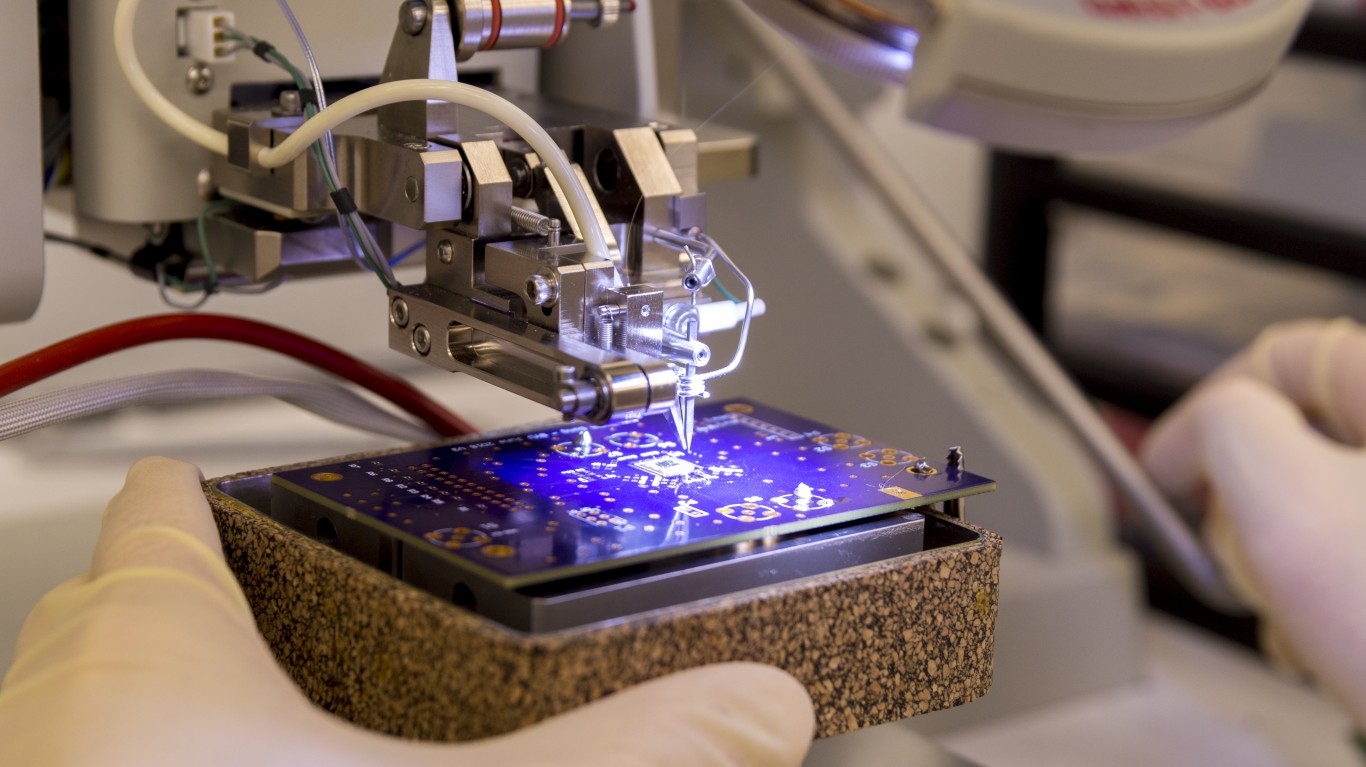
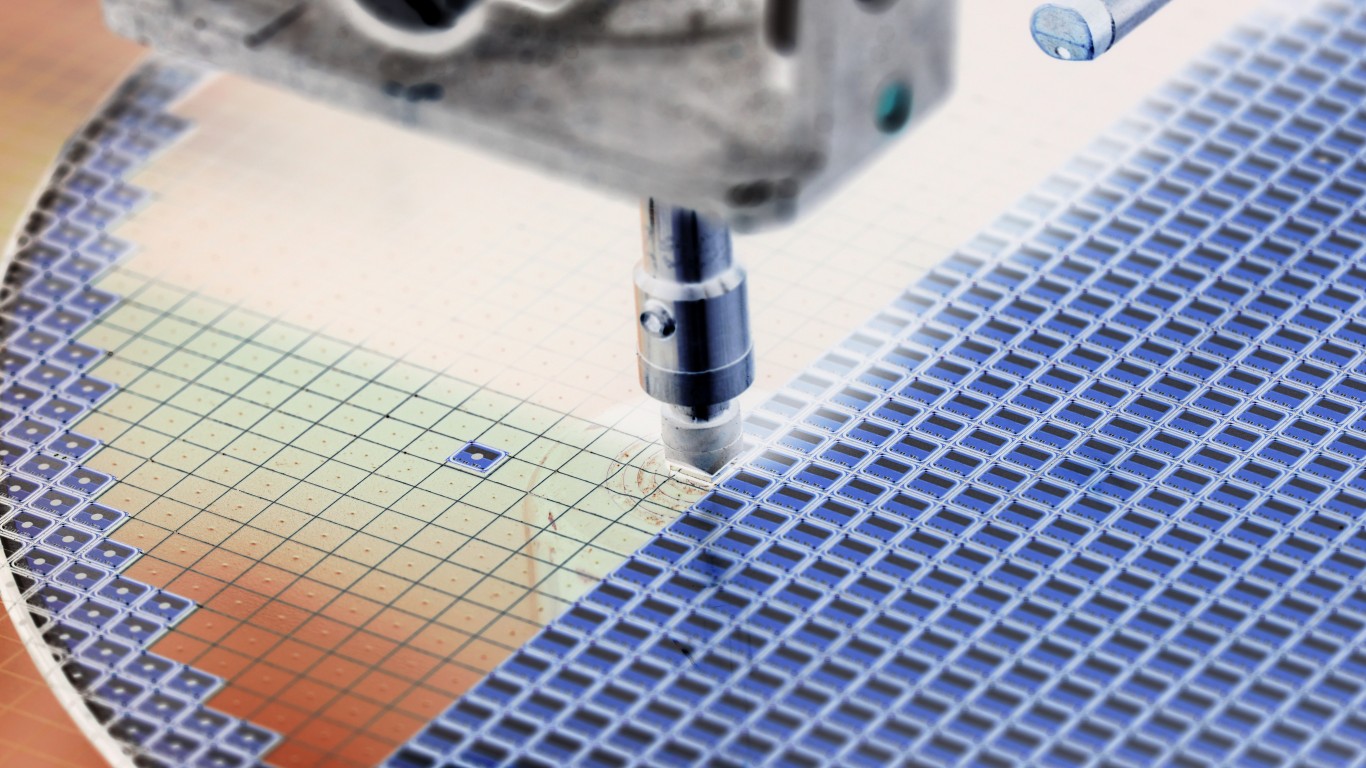
It’s this manufacturing business (or ‘foundry’ business) that’s most important from a political perspective. While many foundries exist across the world and inside the U.S., only three companies continue investing up to the cutting edge of chip technology. Those companies are: Taiwan Semiconductor, Samsung, and Intel.
With Taiwan Semiconductor on an island that is a geopolitical flashpoint, Intel failing would create a significant weakness for the United States. Simply put, if China invaded Taiwan and Intel had failed, the U.S. would have few options to produce chips for the most advanced applications like artificial intelligence. Building out advanced foundries from scratch and without a company with significant prior knowledge would take years and cost hundreds of billions in capital.
Intel Needs More Capital
So, if Intel is struggling to attract customers to its ‘foundry,’ why hasn’t it simply split up its business already? The answer is they probably should have long ago, but today they’re in a difficult position.
The company’s only profitable business is designing chips, which can be used to spend more on building foundries. However, there’s a reason only three companies in the world are still at the cutting-edge: building a next-generation of chips is horrendously expensive.
For example, Taiwan Semiconductor plans to spend $40 billion in capital expenditures on chip-building equipment and plants this year. Intel spent $26 billion in 2023 and $25 billion in 2022. The company now has only $24 billion in cash against $50 billion in debt.
Its operating cash flow (which is used to fund capital expenditures) has plummeted from $36 billion in 2020 to $9.7 billion in the past twelve months.
Simply put, Intel can’t afford to keep investing in its foundry business.
And while many will point to government programs like the CHIPS Act as potential saviors for Intel, the $7.865 billion that had been awarded to the company wasn’t enough to get them through this current crisis.
Could The Trump Administration Have a Buyer Lined Up?
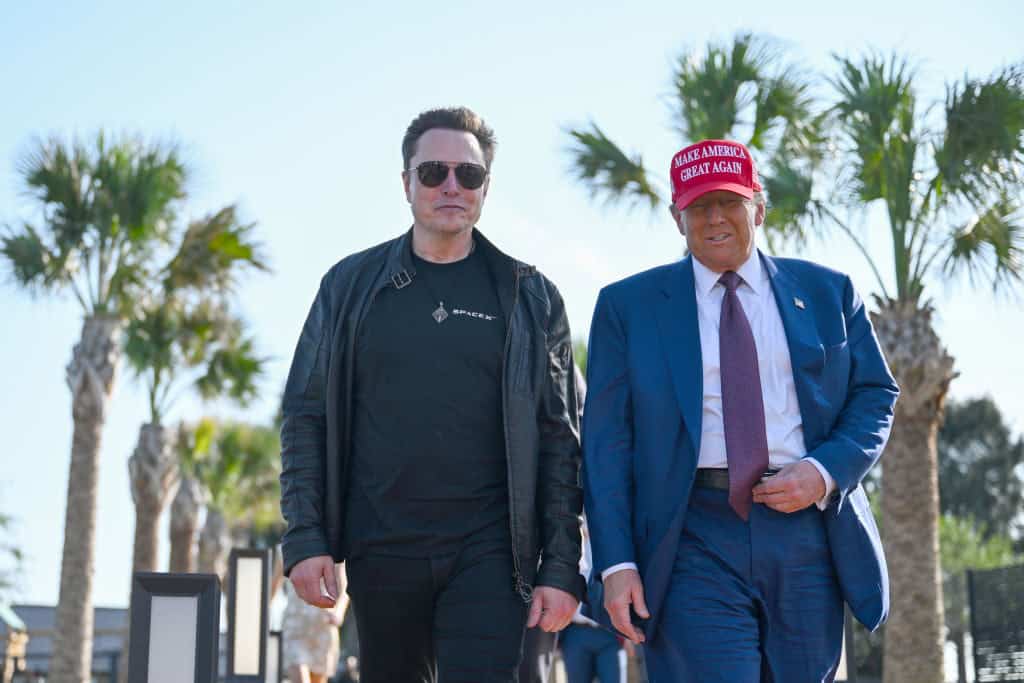
This all takes us back to the original rumor driving Intel shares up. Could the Trump Administration be lining up a buyer?
Elon Musk’s involvement makes sense. He recently founded xAI – an artificial intelligence valued at $40 billion – that has aspirations to build a data center with one million networked GPUs. Musk firmly understands the risks of not having domestic capacity for manufacturing advanced chips, and as a technology matter, Donald Trump would use him for guidance on this matter.
The biggest question is whether Musk is involved in buying Intel himself or helping shepherd a deal for a third party. Musk certainly isn’t afraid to add another business to his sprawling empire. Just this week, rumors popped up that he could purchase TikTok.
If Musk along with representatives from Qualcomm and Global Foundries are all in Florida discussing Intel, there could be a number of potential solutions.
It’s been rumored Qualcomm has an interest in parts of Intel’s business. Perhaps a deal could be structured where Qualcomm buys Intel’s design business, then signs a deal to move their chip manufacturing to Intel’s foundry (giving the foundry a valuable customer to gain momentum), and Musk himself could add more capital to the foundry business to give it enough capital to make it through a rocky next few years.
This is of course all speculation, but it’s exactly the kind of deal that could solve Intel’s current quagmire.
Now, it’s worth noting that with the inauguration tomorrow, there are a lot of business leaders in Trump’s orbit. So, tracking private jets to Mar-a-Lago doesn’t necessarily mean a deal is imminent.
Also, a deal needs to be attractive enough for Intel’s board to approve it.
However, if the Trump Administration is focused on ensuring the survival of Intel’s foundry, there are always incentives to be offered and deep-pocketed companies that could have interest if the right deal was presented.









 Top Gaining Stocks
 Top Losing Stocks