


The fate of the new Wii U shows how fickle the public can be in terms of the demand for consumer electronic devices, in this case game consoles. Nintendo announced forecast earnings for the current year. It will lose $336 million. Wii U sales predictions for the period were cut by about 70% to 2.8 million. According to the Reuters, Nintendo’s president, Satoru Iwata, said, “There will be no major management shake-up in the short term.” Under the circumstances, the “short term” is likely to be very short.
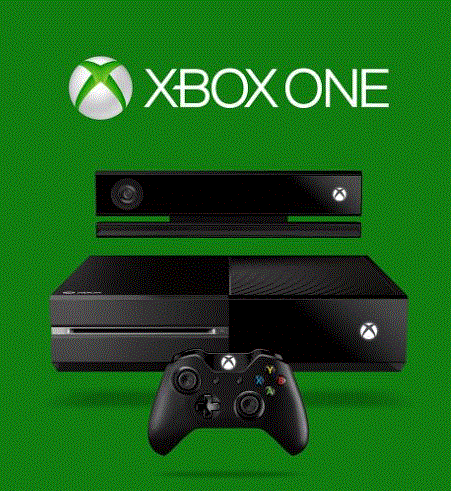
At about the same time as Nintendo made its announcement, research firm NPD Group reported video game console sales rose by about half in the United States during the December, a period when companies in the industry must do well because of the holiday shopping season. The Los Angeles Times quoted NPD Group analyst Liam Callahan who said, “The newest consoles from Microsoft and Sony are off to a tremendous start.” The Xbox One finished first in sales for December, followed closely by the new PS4. Nintendo was rescued a bit by strong sales of its handheld 3DS. That could hardly offset the disappointment over sales for its flagship product.
Experts are left to ponder why the Wii U has done so poorly. The easy answer is that it was badly designed and did not catch the public’s attention. But the real reason may rest with the broad array of features the Sony and Microsoft products have.
Lack of spectacular success in sales of earlier versions of the PS4 and Xbox sent Microsoft and Sony back to the drawing board. The Xbox One has features that run in the cloud, so people can sign on to any of the Microsoft consoles and access their own accounts. The product also continues to act as a HD Blu-ray player. It has augmented that with a library of content, which has allowed it to compete with similar services from Amazon.com Inc. (NASDAQ: AMZN). Xbox One moves Microsoft further down the road toward being at the core of home entertainment devices.
The PS4 is remarkably like the Xbox One. It is priced $100 less than the Microsoft machine — at $399. The graphics capability of the two products is similar. Each has entertainment and interactive features that take them well beyond the previous generations of consoles and will allow them to compete with consumer electronics devices like cable TV boxes.
The Wii U development may have gotten lost along the way, and Microsoft and Sony co-opted some of its features. It also is possible that Microsoft and Sony are too big as companies to be flanked by modest competition. Each has leverage to drive video game programmers to build them exclusive games. And both companies have huge marketing budgets.
The Wii bested Microsoft and Sony for years. That probably will not happen again. The two have learned too much about what made the earlier versions of the Wii successful. And what features the Wii lacked that over time hurt its prospects.






 Top Gaining Stocks
 Top Losing Stocks