


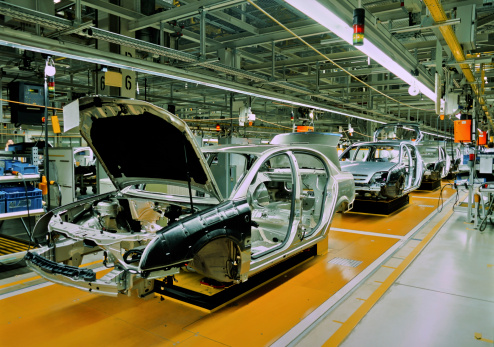
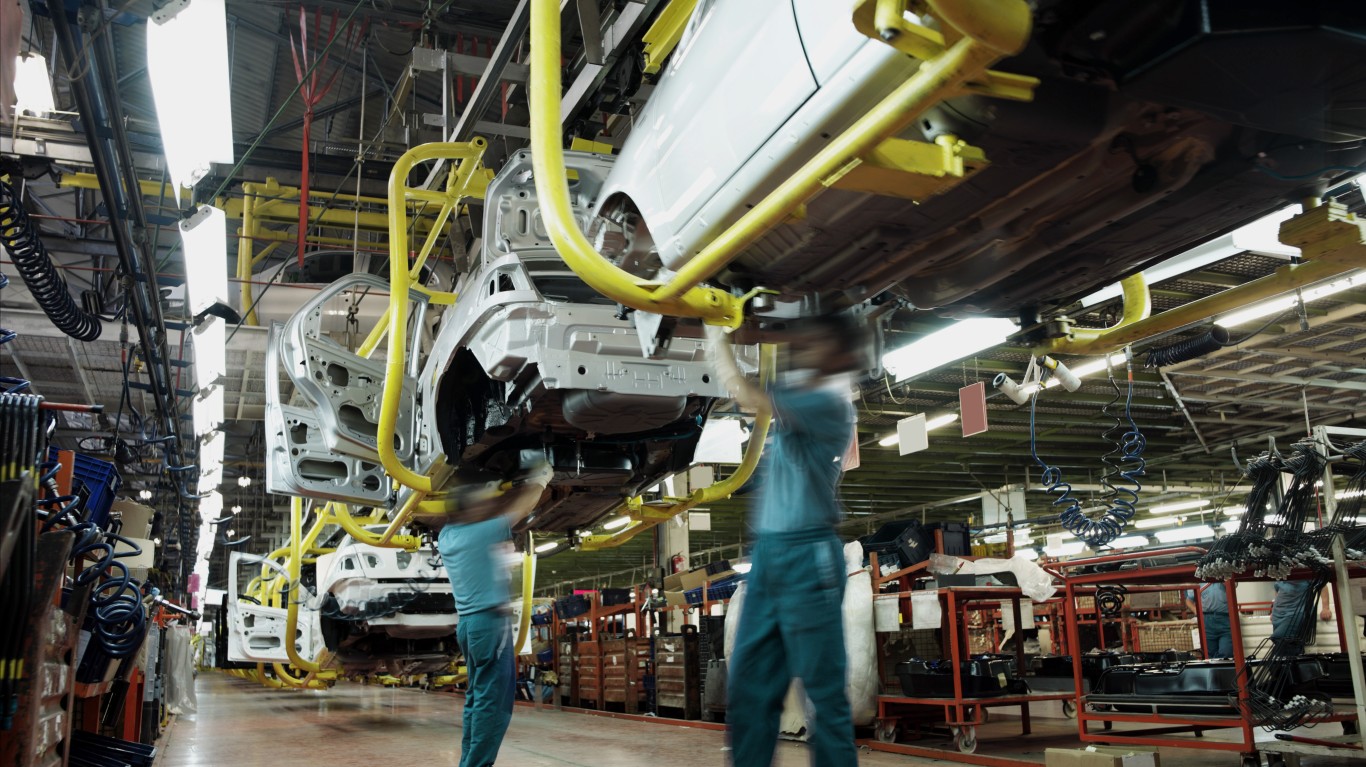
Under the two-tier system approved in 2007, union workers hired prior to 2008 were paid an average of $28 an hour to start, and workers hired later were paid $15.78. In 2011 that contract clause was extended and workers also abandoned a demand for a wage increase in exchange for a profit-sharing and bonus system. The UAW plans to address the two-tier system and the wage increase issue in negotiations with the Detroit Three later this year.
At a quadrennial bargaining convention last week UAW President Dennis Wilson said:
This is our time. UAW members from all sectors accepted concessions as many companies were threatened with bankruptcy and profits evaporated. … We have too damn many tiers.
ALSO READ: Can Lincoln Triple Sales? No
WardsAuto, an industry research and analysis firm, cited a study by the Center for Automotive Research that estimates that Fiat Chrysler Automobiles N.V. (NYSE: FCAU) has lowered its average hourly labor costs to about $48 due to the adoption of the two-tier system.
The study also noted that General Motors Co. (NYSE: GM) had the highest per-worker hourly costs, at $58, followed by Ford Motor Co. (NYSE: F) at $57 an hour, Honda Motor Co. Ltd. (NYSE: HMC) at $49, Chrysler and Toyota Motor Corp. (NYSE: TM) at $48, Nissan at $42, Hyundai at $41 and BMW at $39 an hour. The lowest cost per hour was paid by Volkswagen, $38 an hour, at its Chattanooga, Tenn., plant.
WardsAuto says the wage gap between the Detroit Three and Toyota and Honda “adds about $250 to the cost of [a] car built in a factory operated by GM or Ford.”
Among the rank-and-file, wage hikes appear to be the main issue for the 137,000 members. And they may be able to pressure the automakers into seeing things their way without going on strike. Automakers have enjoyed several years of outstanding growth, and while 2015 is not expected to be as strong as the last two, analysts continue to predict higher sales.
The union can disrupt that growth without striking, just by working a bit more slowly than usual. It would not be the first time that tactic has been used.
For now, UAW President Wilson says that he wants the companies to share more financial information with the union and that the union has to remain open to “new possibilities,” including third-tier contracts. WardsAuto reported that Wilson said that third-tier contracts are not what the UAW wants, but that the union is prepared to listen if that means bringing in more work.






 Top Gaining Stocks
 Top Losing Stocks