


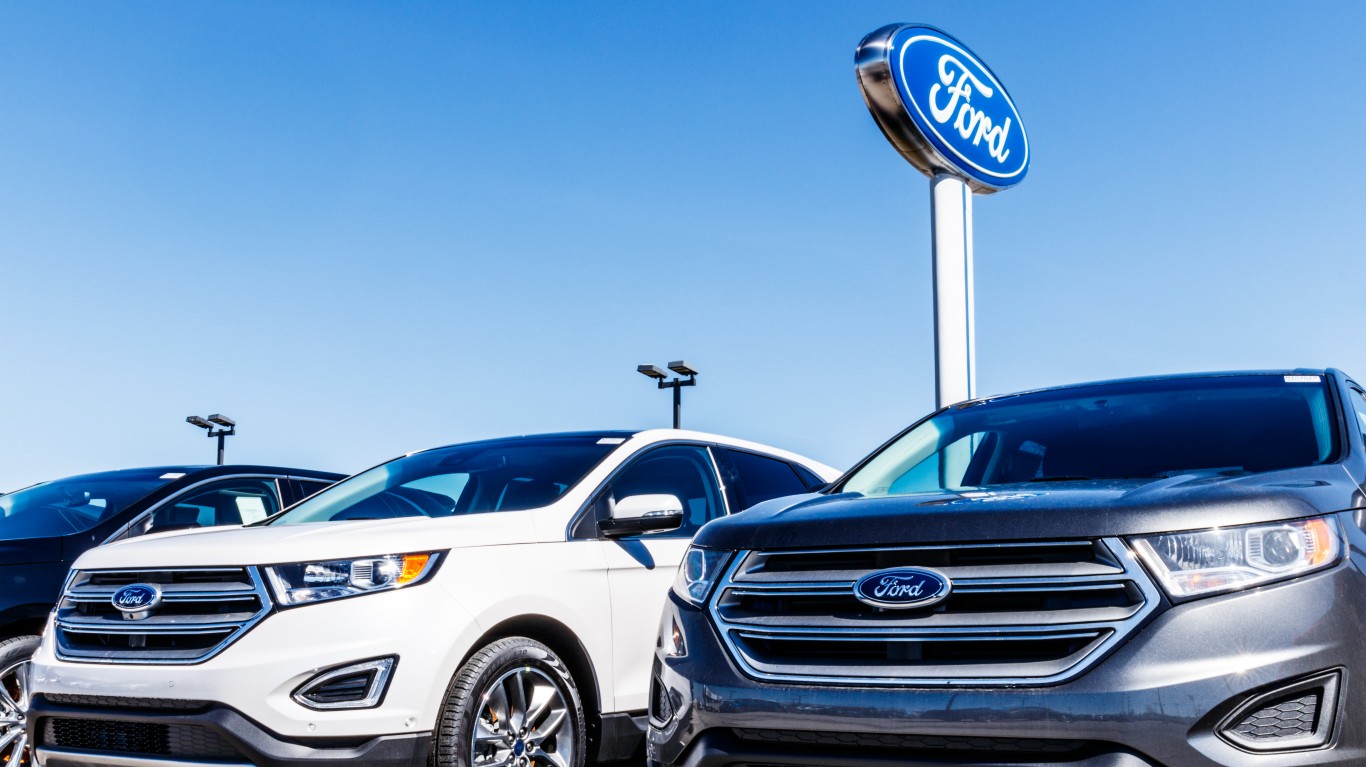
The recovery for Ford Motor Company (NYSE: F | F Price Prediction) has been slow since its shares bottomed in mid-March. Even with the Dow Jones industrial average and the S&P 500 recovering off their lows, Ford and other automakers like General Motors (NYSE: GM) have lagged. Is a recovery in the cards or will this be a long trudge back for American auto manufacturers?
A reopening of the economy is definitely a step in the right direction for Ford, but there are a few near-term hurdles this company must overcome, with sales being the most important. Ford has already begun its phased restart of factories but to actually make any headway Ford will have to sell the metal.
Auto sales have taken a hit since the coronavirus pandemic, and there are underlying problems that could last for a while. First, for sales to pick back up, consumers must be able and willing to purchase these vehicles. If the markets have shown us anything, more consumers are saving money, not spending it.
Also another major factor to consider is that about 40 million Americans have filed for unemployment. This means that even as people start returning to their workplaces, about 10% of the U.S. population will not be joining them. The wages from these jobs could have been used for buying new cars and trucks. Until more people feel comfortable about their employment situations, spending and disposable income will be suspect—meaning depressed sales for big-ticket items like cars.
[nativounit]
This is not to say that there has been no recovery for Ford stock. Shares have recovered 42% off the March lows, but the stock is still down 38% from its February highs. In the coming months, sales will determine how much of a recovery takes place.
Currently Ford stock ranks last among American auto manufacturers in terms of its year-to-date performance. Its shares are down 37% year to date, compared to competitors General Motors, down 27%, and Tesla (NASDAQ: TSLA), up 93%.
Auto Sales
Cox Automotive, which oversees Kelley Blue Book, Xtime, and Autotrader, issued a report forecasting auto sales for 2020 based on the month of May. Considering market headwinds, it’s not surprising that this firm expects that this will be the worst year for auto sales since 2009, at the depths of the Great Recession.
In terms of the sales forecast, Cox Automotive expects–based on this pace–that 2020 sales will reach 11.4 million, down from 17.4 million last year. A quick look at the math, would show sales dropping by over one third–34.5% to be exact.
[recirclink id=707528]
For those who don’t remember, the Great Recession forced General Motors and Chrystler into bankruptcy. However this time around, Ford and General Motors are fairly confident that their balance sheets will be able to weather this storm.
It’s worth pointing out here that both Ford and General Motors are facing problems in China, the world’s largest auto market. Each of these companies saw steep sales drops last year ahead of the pandemic. Many consider China to be the future of the global auto industry, but it seems COVID-19 has put this on the backburner.
Summertime Blues
Summer usually brings with it vacations, traveling, and huge auto sales events. However, this summer could be a real bummer for Ford and other participants in the North American auto industry.
The summer selling season is facing multiple headwinds that might pump the brakes on recovery. Cox Automotive says that “this crisis is unique because the industry is facing a negative demand shock and a negative supply shock simultaneously.” These same factors have been seen across multiple industries, not just autos.
Also vehicle factories have been mostly shuttered since late March; only now are the wheels starting to turn as production resumes. What this means is that new vehicle inventory is at its lowest volume in over a year. Low inventory generally translates to less choices for consumers, especially for more popular vehicles–trucks and SUVs.
So as sales begin to recover–if they do–inventory levels will drop even further, resulting in serious shortages among certain brands. At the very least, selection will become more limited and consumer-specific demands like color or trim may not be in stock. Ultimately, this could result in consumers delaying purchases, switching brands, or even moving into the used-vehicle market.
Ford will likely have the summertime blues when it comes to reaching its sales goals. How bad those blues will be depends on how the pandemic plays out, the unemployment numbers, and consumer sentiment.
[wallst_email_signup]









 Top Gaining Stocks
 Top Losing Stocks