


 Several research firms publish data on corporate reputations each year. It is not difficult to predict which companies are likely to be on the section of these lists where there has been a large erosion of the public’s or Wall St.’s estimation of a firm. It has been twenty-three years since the “60 Minutes” segment on acceleration problems with Audi’s flagship sedan ran. There is not a single complete history of product marketing that does not review the multi-year damage that the incident did to Audi’s sales. The brand finally recovered. Interbrand puts its value at over $5 billion in 2008. Audi has returned to being one of the most highly regarded luxury automobiles in America. There is no record of what the story cost Audi, but it has to be in the billions of dollars.
It is certain that the reputations of many of the largest financial companies in the United States have been damaged over the last year. It would be hard to imagine that the AIG (AIG) brand, which had a value of $7 billion in last year’s Interbrand study, would be worth anything close to that. Selling products with the AIG name on them would be remarkably difficult.
Charles Schwab (SCHW) is being sued by New York State for selling its clients auction-rate-securities. The paper was considered nearly as liquid as cash from the late 1980s until early in 2008 when the market for the popular investments dried up. The large financial institutions which made a market in the securities abandoned them as the credit crisis began. A system that supported over $300 billion in transactions collapsed in a number of days and individuals and corporations were trapped in investments that were suddenly illiquid.
Most of the nation’s biggest banks and brokerages had marketed ARS to clients and one-by-one they bought the paper back from their customers. Several state attorneys general accused companies including Citigroup (C) and Goldman Sachs (GS) of selling clients ARS, knowing full well that the paper was not as easy to trade as investors were told and that there was no assurance that clients would have immediate access to their money.
Schwab’s major competitor, TD Ameritrade (AMTD), settled with New York State recently, and agreed to pay back its clients $456 million. TD Ameritrade will probably never disclose what the incident cost it in legal fees, but it certainly has to be in the millions of dollars. The brokerage will also never disclose how many customers it lost because of the fiasco, but that number certainly has to be in the thousands.
Schwab, in the meantime, insists it did nothing wrong. New York State has finally brought a fraud charge against the discount broker. The attorney general’s office issued a statement saying “Today’s notice should send a signal that if Charles Schwab will not stand by its customers, this office will.”
Schwab insists that the suit is “without merit”. The firm is taking the position that it did not know that the market could seize up quickly, leaving its clients without access to capital. Schwab, it is claiming, was as innocent a victim of the trouble in the market as its clients were.
Schwab may be relying on the ethical principle that it does not owe anyone money because it did nothing wrong. Industry estimates are that Schwab’s exposure if it loses the case with New York State would be as high as $500 million. Schwab appears ready to put its reputation, which has already been damaged by the auction rate problem, further at risk. It results from Schwab’s decision to fight this charge based on an ethical decision, which that it is blameless.
Schwab is making a mistake by confusing responsibility with reputation. The company may be right in saying that it had nothing to do with the harm that came to its clients that had ARS holdings. Schwab did sell its clients the investment and Schwab does have executives that certainly understand the financial markets better than almost any of its customers do. The fact that those executives did not educate themselves about ARS and had no obligation to do so is beside the point. A broker should know enough about any investment so that his ignorance can never damage his client’s interests.
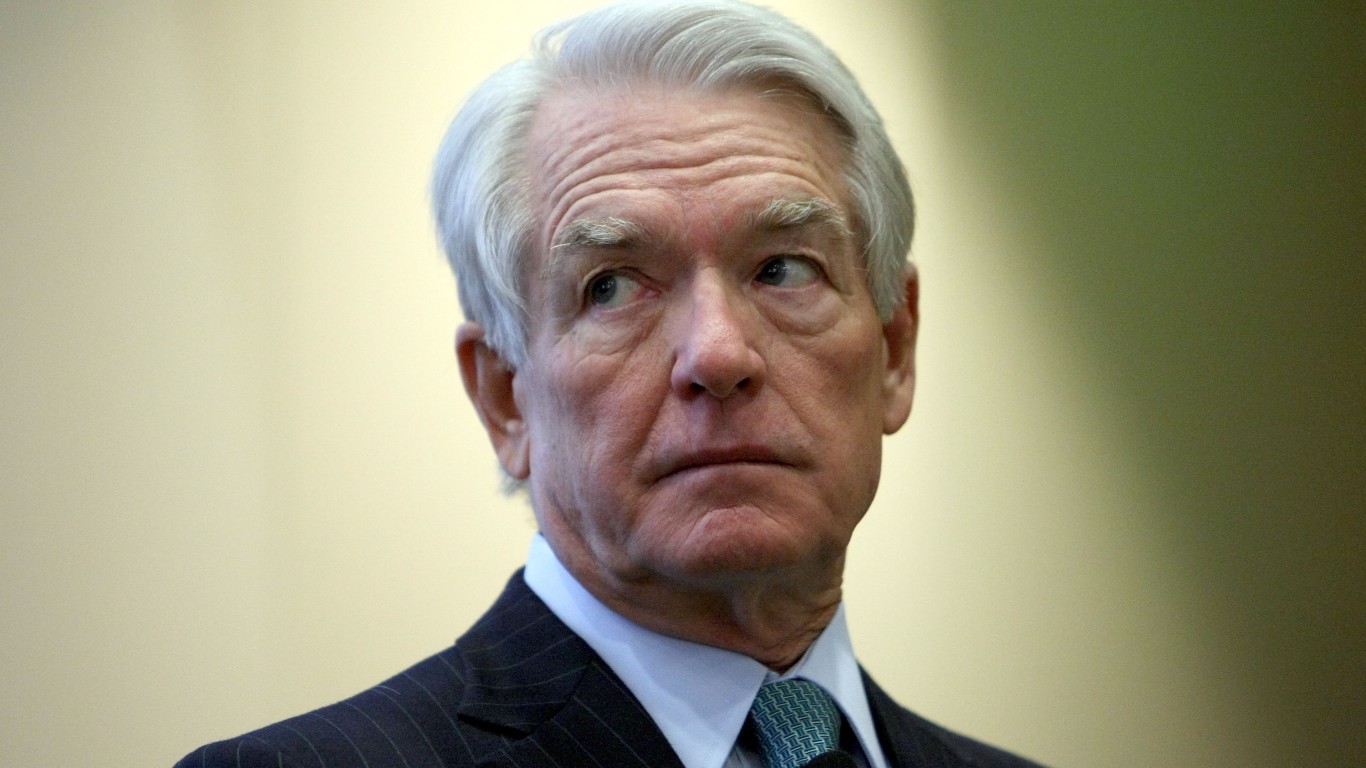
Schwab’s reputation is likely to be undermined much further as it becomes clear that it is unwilling to follow the lead of its industry peers. The position that “ignorance of the products” may be a moral excuse is true only in the most modest sense of the word. Schwab has clearly put its own interests ahead of its clients at this point. It may settle the case tomorrow, which it has made clear is not a possibility, and still suffer irreparable harm to the Schwab name. Charles Schwab is still alive and as a matter of fact still runs that company that bears his name. There is a great deal of irony in the fact that no other firm involved in the ARS mess has its founder at the head of the company. It would seem that he would be more anxious than most to put the matter behind him and his firm.
The ethics of the Schwab decision may pass some standard of moral behavior but it is one where the bar is set very low. The client’s interest should not come last because no one bothered to read the fine print on the ARS agreements.
Douglas A. McIntyre








 Top Gaining Stocks
 Top Losing Stocks