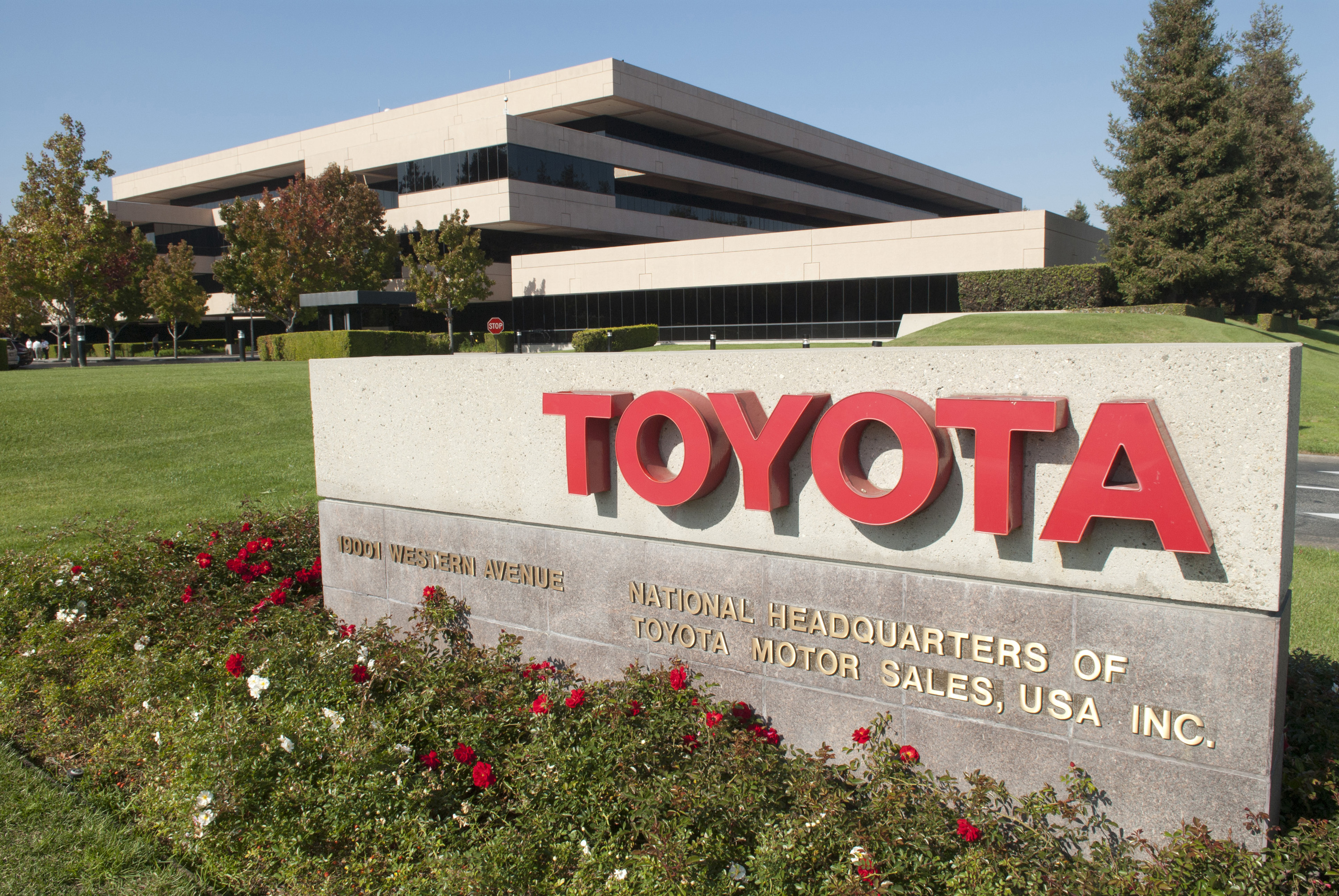
Toyota Posts Spectacular Results Following Ford and GM Earnings

Photo of Douglas A. McIntyre
By Douglas A. McIntyre Published
This post may contain links from our sponsors and affiliates, and Flywheel Publishing may receive compensation for actions taken through them.

General Motors Co. (NYSE: GM) and Ford Motor Co. (NYSE: F) each posted earnings above Wall Street expectations last week. The numbers were another sign the car industry, so badly wounded by the recession and Japanese earthquake, has nearly returned to the health of 2005 and 2006. As a matter of fact, this health may be even better than at any time in the past because of cost cuts and better efficiency.

Toyota Motor Corp. (NYSE: TM), the largest Japanese manufacturer, just released results for the quarter that ended on June 30, and they were even better than those of the two U.S. manufacturers. Toyota accomplished this not long after a series of large recalls and a halt to much of its factory activity because of the disaster in Japan. Toyota had enough problems that the improvement is hard to explain.

According to Toyota:

Toyota Motor Corporation today announces financial results for the first quarter ended June 30, 2013. On a consolidated basis, net revenues for the first quarter totaled 6.2553 trillion yen, an increase of 13.7 percent compared to the same period last fiscal year.

Operating income increased from 353.1 billion yen to 663.3 billion yen, while income before income taxes was 724.1 billion yen. Net income increased from 290.3 billion yen to 562.1 billion yen. Operating income increased by 310.2 billion yen. Major factors contributing to the increase include currency fluctuations of 260.0 billion yen, cost reduction efforts of 70.0 billion yen, and marketing activities of 30.0 billion yen.

So, operating income was up 92%.

Toyota complained about Europe, as has every other auto manufacturer, particularly those based there. If there is any single muzzle on the celebrations of the car companies, it is Europe. The trouble showed in the GM and Ford results, and it has nearly sunk PSA Peugeot Citroën. Europe’s second largest car company has hung on via a series of job cuts. However, powerful unions and concerned national governments have slowed that progress.

Toyota’s problems hit a peak in early 2010 when it recalled 8.1 million cars. Such a large setback would have killed the fortunes of many car companies for years. Then the magnitude 9.0 Tohoku quake in 2011 cut Toyota’s production just as it had begun to crawl out of the recall hole.

Why was Toyota resilient enough to reclaim most of the U.S. market share it lost, among other things? Many analysts believe the recovery was based on Toyota’s decades long history of quality, which had built it into a mighty brand. Other than the overall surge in car sales in most regions, there is no ready alternative explanation. Toyota has not just posted improved results because of an auto industry turnaround. It also has returned to its status as probably the most powerful car company in the world. The power of its brand must be the reason, because it is hard to make any other case.


Photo of Douglas A. McIntyre
About the Author Douglas A. McIntyre →

Douglas A. McIntyre is the co-founder, chief executive officer and editor in chief of 24/7 Wall St. and 24/7 Tempo. He has held these jobs since 2006.

McIntyre has written thousands of articles for 24/7 Wall St. He is an expert on corporate finance, the automotive industry, media companies and international finance. He has edited articles on national demographics, sports, personal income and travel.

His work has been quoted or mentioned in The New York Times, The Wall Street Journal, Los Angeles Times, The Washington Post, NBC News, Time, The New Yorker, HuffPost USA Today, Business Insider, Yahoo, AOL, MarketWatch, The Atlantic, Bloomberg, New York Post, Chicago Tribune, Forbes, The Guardian and many other major publications. McIntyre has been a guest on CNBC, the BBC and television and radio stations across the country.

A magna cum laude graduate of Harvard College, McIntyre also was president of The Harvard Advocate. Founded in 1866, the Advocate is the oldest college publication in the United States.

TheStreet.com, Comps.com and Edgar Online are some of the public companies for which McIntyre served on the board of directors. He was a Vicinity Corporation board member when the company was sold to Microsoft in 2002. He served on the audit committees of some of these companies.

McIntyre has been the CEO of FutureSource, a provider of trading terminals and news to commodities and futures traders. He was president of Switchboard, the online phone directory company. He served as chairman and CEO of On2 Technologies, the video compression company that provided video compression software for Adobe’s Flash. Google bought On2 in 2009.

Continue Reading

Top Gaining Stocks

CBOE Vol: 1,568,143
PSKY Vol: 12,285,993
STX Vol: 7,378,346
ORCL Vol: 26,317,675
DDOG Vol: 6,247,779

Top Losing Stocks

LKQ
LKQ Vol: 4,367,433
CLX Vol: 13,260,523
SYK Vol: 4,519,455
MHK Vol: 1,859,865
AMGN Vol: 3,818,618