How Many More Fires Drive a Tesla Recall?

Photo of Douglas A. McIntyre
By Douglas A. McIntyre Published
This post may contain links from our sponsors and affiliates, and Flywheel Publishing may receive compensation for actions taken through them.

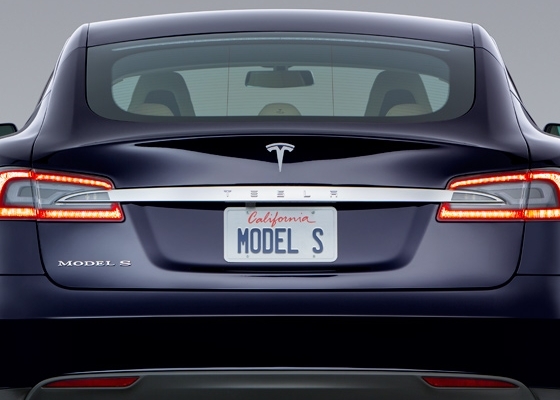
There will be no recall of Tesla Motors Inc.’s (NASDAQ: TSLA) model S. The three Tesla S cars that caught fire are not enough to justify a recall by the luxury electric auto company, at least in the eyes founder Elon Musk. He spoke to each of the owners of the damaged cars. Apparently all three believe their cars are safe enough that they want replacements — as soon as they are available. What Musk dodged was how many fires make a recall?

Chrysler CEO Sergio Marchionne was the last car executive who tried to dodge a recall. Chrysler refused to recall 2.7 million Jeeps after a request to do so from the National Highway Traffic Safety Administration. Marchionne fought the action, and then buckled to both public opinion and government pressure. Musk is under no such pressure for the time being. However, the agency recently noted: “NHTSA is in close communication with Tesla and local authorities gathering information about the incident to determine if additional action is necessary.” The incident mentioned was the one in Tennessee when a Tesla caught fire.

Three car fires may not be enough for an in-depth government investigation or a recall. However, it would not take many more similar fires, or an actual injury, to force Musk to change his mind, or have it changed for him.

One of his primary problems is that reviewers and ratings firms have praised the Tesla S at such an extraordinary level that the public, and perhaps the government, expects it to be flawless — something a car with thousands of parts can never be. Batteries used for transportation power appear to have a tendency toward fire, although most comparisons about that issue are naive. Fox News recently reported:

The liquid-cooled 85 kilowatt-hour battery in the Tesla Model S is mounted below the passenger compartment floor and uses lithium-ion chemistry similar to the batteries in laptop computers and mobile phones. Investors and companies have been particularly sensitive to the batteries’ fire risks, especially given issues in recent years involving the Chevrolet Volt plug-in hybrid car and Boeing’s new 787 plane.

The three batteries are not alike, but each battery caught fire nevertheless. Tesla has not made a persuasive case that its battery technology is safer than others. And it may not be.

Musk’s observation about a recall is based on accidents that have already happened. Tesla may be just a fire away, or an injury away, from a recall.

Photo of Douglas A. McIntyre
About the Author Douglas A. McIntyre →

Douglas A. McIntyre is the co-founder, chief executive officer and editor in chief of 24/7 Wall St. and 24/7 Tempo. He has held these jobs since 2006.

McIntyre has written thousands of articles for 24/7 Wall St. He is an expert on corporate finance, the automotive industry, media companies and international finance. He has edited articles on national demographics, sports, personal income and travel.

His work has been quoted or mentioned in The New York Times, The Wall Street Journal, Los Angeles Times, The Washington Post, NBC News, Time, The New Yorker, HuffPost USA Today, Business Insider, Yahoo, AOL, MarketWatch, The Atlantic, Bloomberg, New York Post, Chicago Tribune, Forbes, The Guardian and many other major publications. McIntyre has been a guest on CNBC, the BBC and television and radio stations across the country.

A magna cum laude graduate of Harvard College, McIntyre also was president of The Harvard Advocate. Founded in 1866, the Advocate is the oldest college publication in the United States.

TheStreet.com, Comps.com and Edgar Online are some of the public companies for which McIntyre served on the board of directors. He was a Vicinity Corporation board member when the company was sold to Microsoft in 2002. He served on the audit committees of some of these companies.

McIntyre has been the CEO of FutureSource, a provider of trading terminals and news to commodities and futures traders. He was president of Switchboard, the online phone directory company. He served as chairman and CEO of On2 Technologies, the video compression company that provided video compression software for Adobe’s Flash. Google bought On2 in 2009.

Featured Reads

Our top personal finance-related articles today. Your wallet will thank you later.

Continue Reading

Top Gaining Stocks

CBOE Vol: 1,568,143
PSKY Vol: 12,285,993
STX Vol: 7,378,346
ORCL Vol: 26,317,675
DDOG Vol: 6,247,779

Top Losing Stocks

LKQ
LKQ Vol: 4,367,433
CLX Vol: 13,260,523
SYK Vol: 4,519,455
MHK Vol: 1,859,865
AMGN Vol: 3,818,618



