Volvo’s Self-Driving Car Runs on Magnets

Photo of Douglas A. McIntyre
By Douglas A. McIntyre Published
This post may contain links from our sponsors and affiliates, and Flywheel Publishing may receive compensation for actions taken through them.

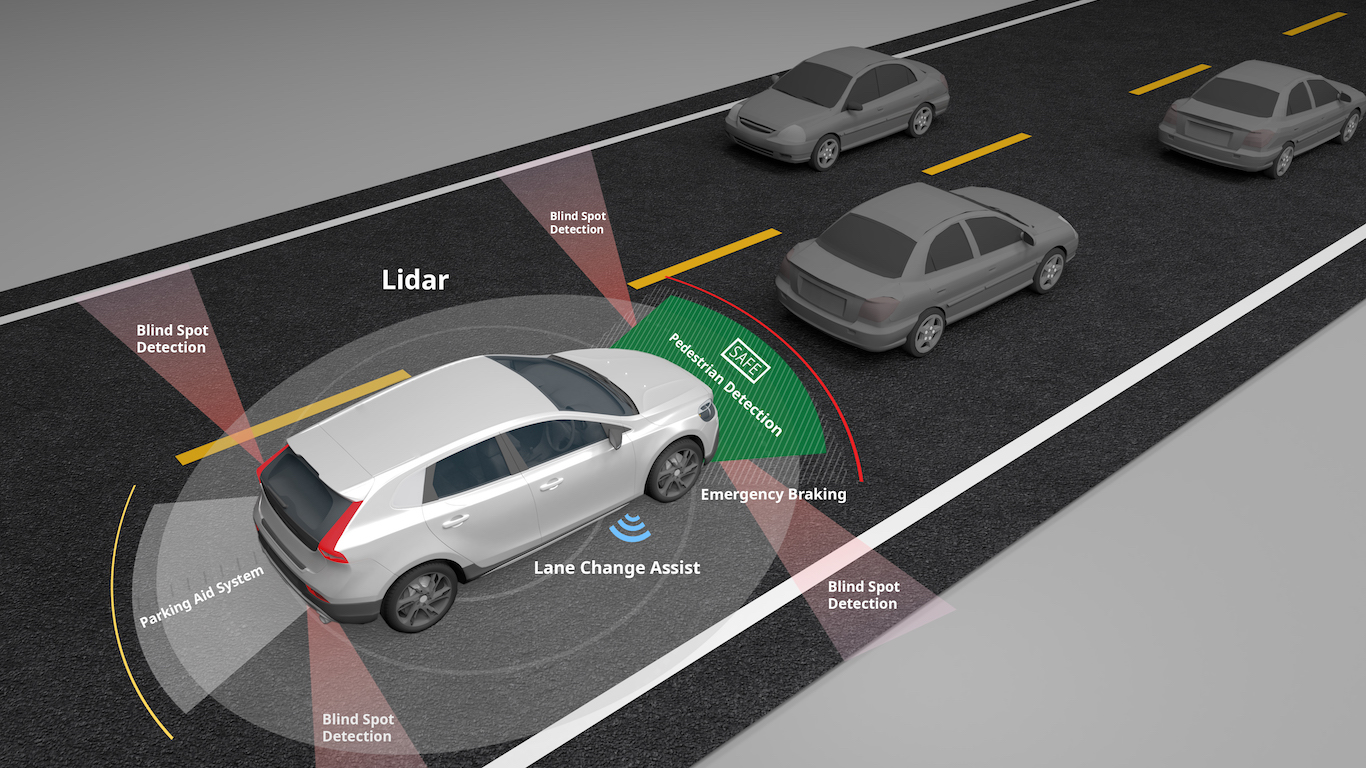
Volvo may be one of the world’s smallest car companies, but it has created a big footprint in the self-driving vehicle business, led by cars that park themselves. Its latest venture is a vehicle that runs on magnets placed under the road, a far cry from most systems that require more complex technology.

The magnets put under driving surfaces are a means to guide both the speed and direction of cars. A matching set of magnets are installed in the vehicles. The system can also be used in cars with drivers to alert them that their vehicles are drifting out or their proper lanes.

According to Automobile Magazine:

The system consists of small ferrite magnets placed 7.9 inches below the road surface. Special sensors at the bottom of the Volvo test cars detect the magnets and determine the location of the road edges or lane markings. The company is currently testing this system on a special section of pavement at its test track in Sweden. Volvo says this allows its cars to locate themselves with an accuracy of less than four inches — far better than can typically be achieved with GPS.

What is even less certain than whether the car will work is how an infrastructure to accommodate it could be built. Magnetizing great distances of highway would be expensive, perhaps preventively so. Volvo does not have the financial resources to build the system. It would take a consortium of the world’s largest car manufacturers to do so, or financial participation of nations where most of the world’s cars are sold — certainly China, the United States and much of Europe.

There are reasons that other large worldwide car companies like General Motors Co. (NYSE: GM), Toyota Motor Corp. (NYSE: TM) and Volkswagen would shy away from participation. Each has its own vision of how a self-driving car should be built and operated. So far, none has suggested that its plan involves the use of magnets.


Photo of Douglas A. McIntyre
About the Author Douglas A. McIntyre →

Douglas A. McIntyre is the co-founder, chief executive officer and editor in chief of 24/7 Wall St. and 24/7 Tempo. He has held these jobs since 2006.

McIntyre has written thousands of articles for 24/7 Wall St. He is an expert on corporate finance, the automotive industry, media companies and international finance. He has edited articles on national demographics, sports, personal income and travel.

His work has been quoted or mentioned in The New York Times, The Wall Street Journal, Los Angeles Times, The Washington Post, NBC News, Time, The New Yorker, HuffPost USA Today, Business Insider, Yahoo, AOL, MarketWatch, The Atlantic, Bloomberg, New York Post, Chicago Tribune, Forbes, The Guardian and many other major publications. McIntyre has been a guest on CNBC, the BBC and television and radio stations across the country.

A magna cum laude graduate of Harvard College, McIntyre also was president of The Harvard Advocate. Founded in 1866, the Advocate is the oldest college publication in the United States.

TheStreet.com, Comps.com and Edgar Online are some of the public companies for which McIntyre served on the board of directors. He was a Vicinity Corporation board member when the company was sold to Microsoft in 2002. He served on the audit committees of some of these companies.

McIntyre has been the CEO of FutureSource, a provider of trading terminals and news to commodities and futures traders. He was president of Switchboard, the online phone directory company. He served as chairman and CEO of On2 Technologies, the video compression company that provided video compression software for Adobe’s Flash. Google bought On2 in 2009.

Continue Reading

Top Gaining Stocks

CBOE Vol: 1,568,143
PSKY Vol: 12,285,993
STX Vol: 7,378,346
ORCL Vol: 26,317,675
DDOG Vol: 6,247,779

Top Losing Stocks

LKQ
LKQ Vol: 4,367,433
CLX Vol: 13,260,523
SYK Vol: 4,519,455
MHK Vol: 1,859,865
AMGN Vol: 3,818,618