


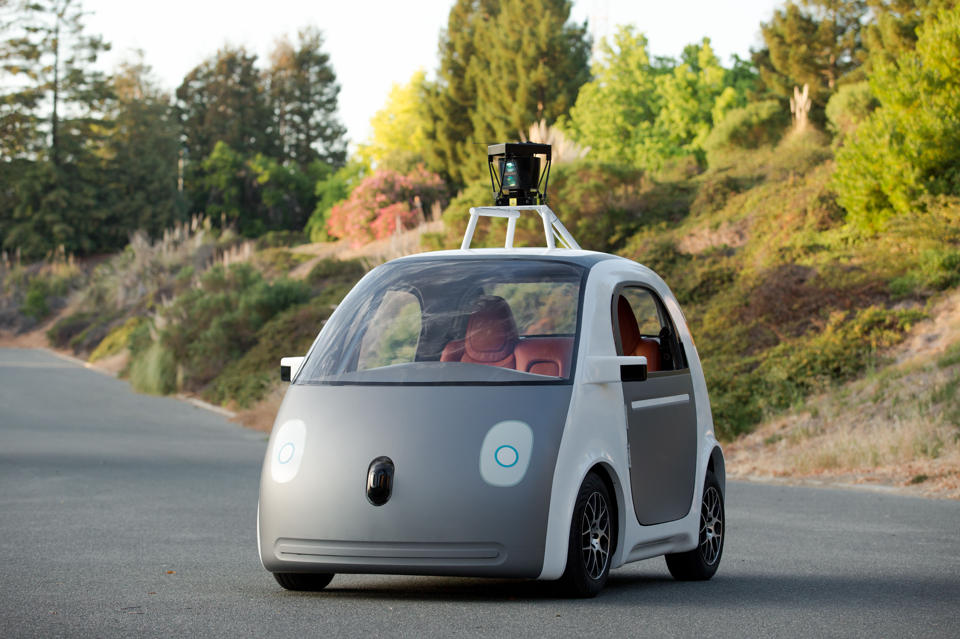
The big question, always, is, “What’s the point?” After all even if the car can drive to the supermarket by itself, how can it buy a quart of milk? Perhaps in some Jetson’s world the car’s owner will be able to let the market know that he or she is sending the car for a quart of milk and to charge the milk to the usual bank account. Not impossible to conceive, but a little tricky to execute.
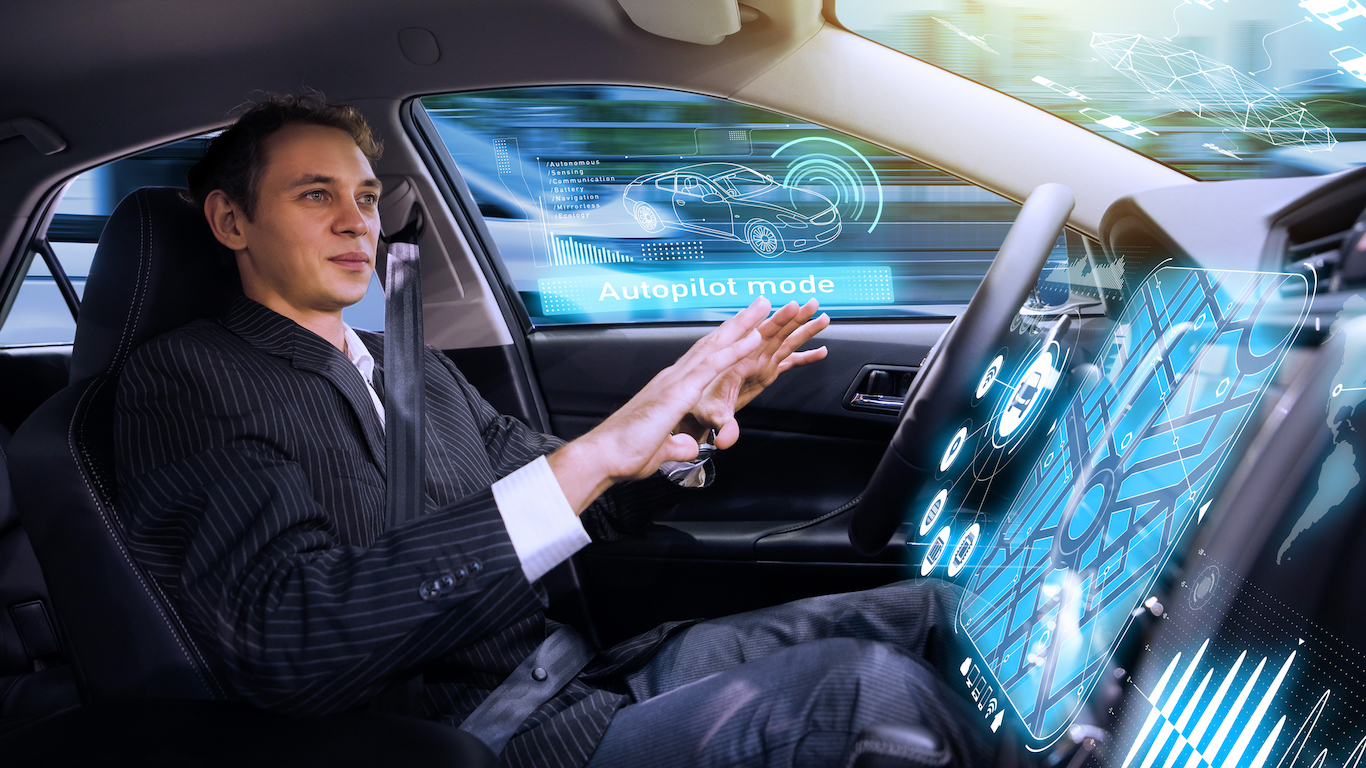
The technology in Google’s driverless cars is the big attraction, and while we are not likely to see Tesla Motors Inc. (NASDAQ: TSLA) working on a driverless car anytime soon, we are very likely to see Tesla and General Motors Co. (NYSE: GM) and Ford Motor Co. (NYSE: F) adopt driverless technologies that make all cars safer to operate.
Tesla is never going to build an all-electric, driverless car with a top speed of 25 miles per hour. That wouldn’t fit in with its image as a maker of cutting edge vehicle with high-end performance and looks. Both Google and Tesla, though, are changing the way cars will be made and helping to shape the future of the automobile industry.
A solid argument could be made that Tesla is really a technology company and not an automaker. Building and selling 35,000 cars a year qualifies the company as a boutique maker of a luxury technology product — a battery-powered living room with accelerator and brake pedals. The Model S has glamour, performance, and eco-appeal to go with a spendy sticker price. That may change over time, but expecting Tesla to sell millions of cars a year in less than a couple of decades is probably wishful thinking.
Google’s driverless car is a collection of technologies that can be adapted by and for mainstream car makers. Advanced driver assistance systems (ADAS) such as lane departure warning signals and forward collision warning systems are already available as options on some cars and Ford demonstrated its vehicle-to-vehicle (V2V) technology earlier this year and how it can be used with the ADAS technologies to help avoid collisions. Nothing as sexy and speedy as a Model S, but a market for these systems exists in every car that is currently being manufactured and sold.
Google is even less a carmaker than Tesla, and probably has even less aspiration to becoming a car maker. Where Google derives a pay-off from its automobile technologies is a bit hard to divine, but any car that uses these technologies will also have a full-time connection to the Internet and the more places Google can reach users, the more advertising it can sell and the more profit it can make.
ALSO READ: What Is Google Thinking With Its Self-Driving Car?






 Top Gaining Stocks
 Top Losing Stocks