


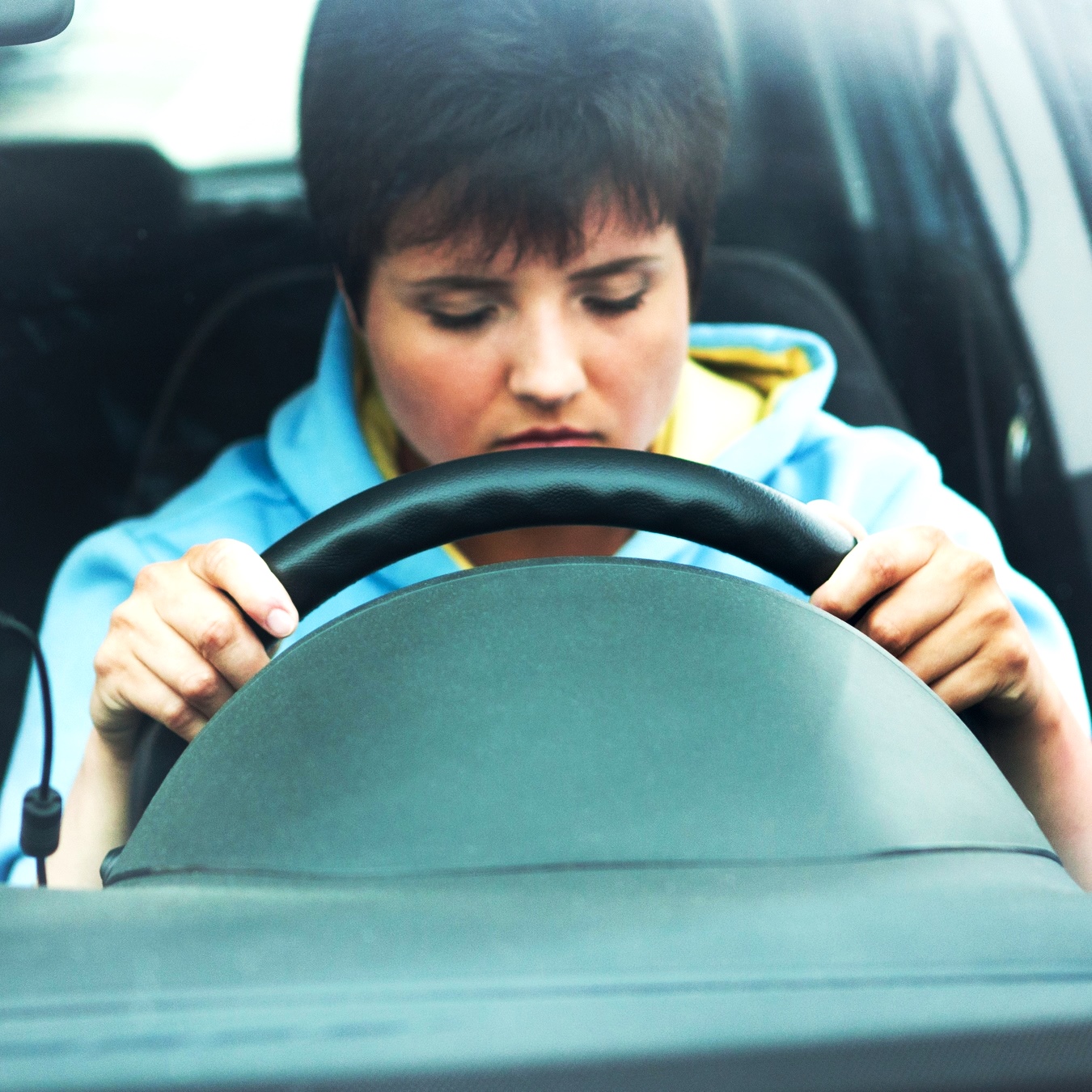
If drunk driving is the major cause of car accidents, drowsy driving is among the other common ones. Both problems could be largely, if not entirely, solved by the spread of autonomous cars, which take driver condition out of the equation.
“Drowsy driving” is a term coined by the AAA, which says:
The most in-depth drowsy driving research ever conducted in the U.S. using footage of everyday drivers found that the percentage of crashes involving drowsiness is nearly eight times higher than federal estimates indicate, according to the AAA Foundation for Traffic Safety.
The difficulty in detecting drowsiness following a crash makes drowsy driving one of the most underreported traffic safety issues. The new research provides an unprecedented analysis of in-vehicle dashcam video from more than 700 crashes, confirming that the danger of drowsy driving soars above official estimates.
[nativounit]
Drivers often agree with the assessment that drowsiness is a problem. AAA reports:
In a recent related AAA Foundation survey, nearly all drivers (96 percent) say they view drowsy driving as a serious threat to their safety and a completely unacceptable behavior. However, 29 percent admitted to driving when they were so tired they had a hard time keeping their eyes open at some point in the past month.
Among the conclusions of the research are that 9.5% of all crashes and 10.5% of crashes that caused “significant property damage” are caused by drowsy driving. The research was conducted via video of drivers in the three minutes prior to car accidents. Among the major markers of the condition were people who had trouble keeping their eyes open, people drifting out of their lanes and those not recalling the past several miles they have driven.
Although early experiments with self-driving cars show they can get into accidents, it is presumed that over time these will be reduced to very close to zero. With the amount of money being invested in the projects, that is almost certainly what will happen. Work by Waymo and by several other tech companies, as well as experiments by every major car company in the world, means that billions of dollars are being invested into perfecting the technology.
Several pieces of research show that eventually the accident rate of self-driving cars will plunge, and as these vehicles become ubiquitous the accident rate will become nonexistent. At that point, drowsiness while driving won’t be a problem.
[wallst_email_signup]





 Top Gaining Stocks
 Top Losing Stocks