



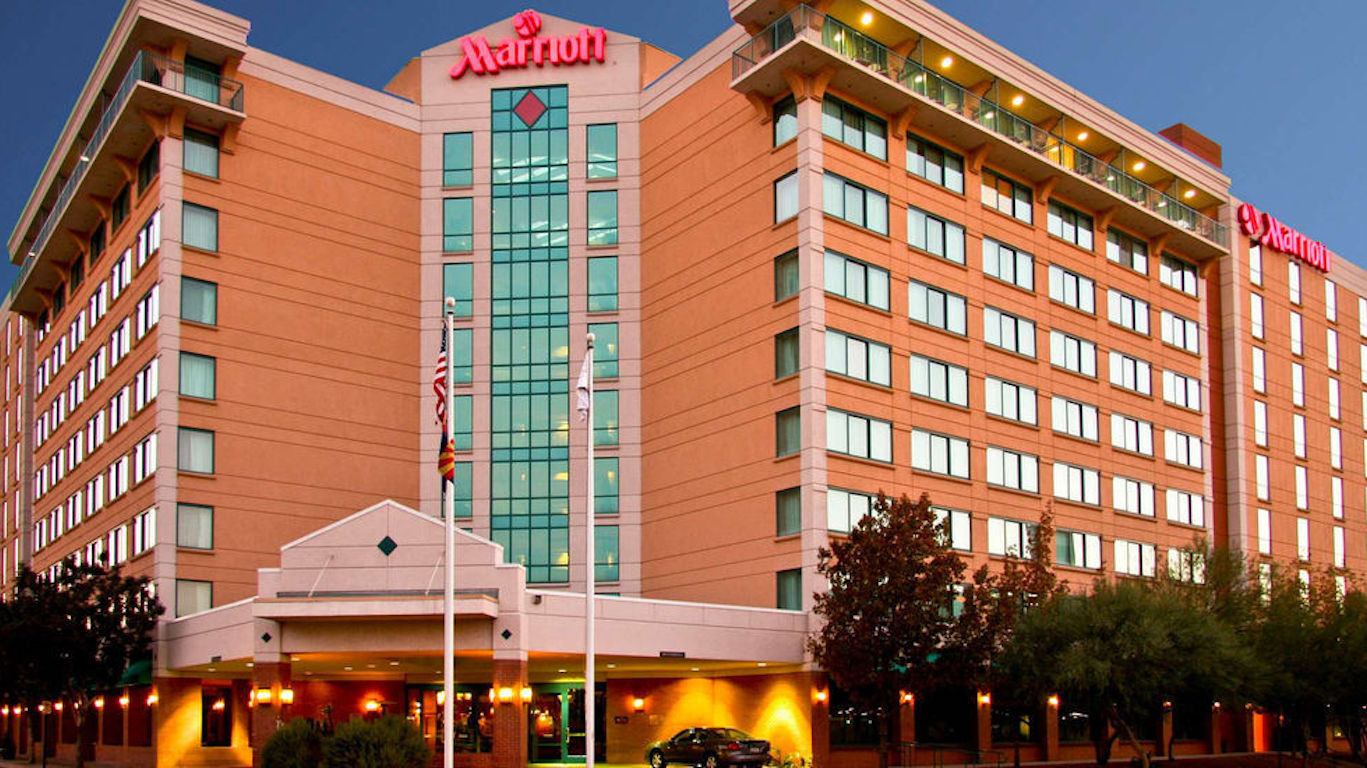
Marriott International Inc. (NASDAQ: MAR) has agreed to acquire Starwood Hotels & Resorts Worldwide Inc. (NYSE: HOT). In the deal, Starwood shareholders will receive $2 in cash and 0.92 shares of Marriott stock for each Starwood share. Total value of the deal is $12.2 billion, of which $11.9 billion is Marriott stock and the value per share is approximately $72.08. The acquisition offers a premium of 19% to the 20-day volume-weighted average price of Starwood stock for the period ending October 26, 2015, prior to rumors of the possible acquisition.
Starwood stockholders also will receive about $7.80 per Starwood share from a future spin-off subsequent merger of Starwood’s timeshare business with Interval Leisure Group. The timeshare transaction is expected to close prior to the Marriott-Starwood deal.
The merged companies operate or franchise more than 5,500 hotels with 1.1 million rooms worldwide. The combined company’s pro forma fee revenue for the 12 months ended September 30, 2015, totals over $2.7 billion. Marriott also said that it expects to return at least $2.25 billion to shareholders in 2015 through dividends and buybacks and that the company “believes it can return at least as much in the first year following the merger.”
Marriott expects the transaction to be earnings accretive by the second year after the merger, and to deliver at least $200 million in annual cost savings by the same time. The earnings estimate does not include the impact of transaction and transition costs. Earnings will benefit from post-transaction asset sales, increased efficiencies and accelerated unit growth. Cost savings are expected to come from leveraging operating and general and administrative efficiencies.
One-time transaction costs for the merger are expected to total approximately $100 million to $150 million. The company expects transition costs over the next two years and said that the costs are expected to be meaningful.
ALSO READ: 9 Companies That Failed Shareholders Last Week
Marriott’s share traded down about 2% in Monday’s premarket session to $71.30, after closing at $72.74 on Friday. The stock’s 52-week trading range is $63.95 to $85.00.
Starwood’s stock traded down about 5.9%, at $70.60 in a 52-week range of $63.99 to $87.99. Shares shot up to more than $80 on October 30 and closed at $74.99 on Friday. Clearly investors were looking for a higher premium for this deal.







 Top Gaining Stocks
 Top Losing Stocks