


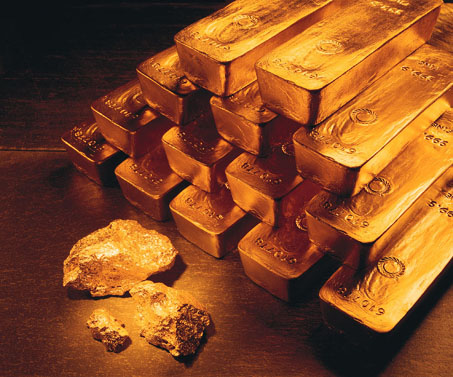
 Any Wall St. pundit will tell you that the overprinting of money is a train wreck waiting to happen. The Federal Reserve balance sheet sits at almost three trillion dollars after two rounds of quantitative easing and Operation Twist. That’s three trillion dollars acquired out of thin air. So in addition to artificially lowering interest rates in an attempt to boost the economy, they have increased the specter of future inflation with inevitable interest rate increases. The tried and true method to hedge interest rate and inflation risk? Buy gold. But according to Jefferies Group Inc. (NYSE: JEF), there is a problem with that trade if you are long the gold miners.
In theory, owning the miners gives you exposure to the spot price. The downside to owning the miners is that gold mining is an extremely capital intensive business, often performed in very volatile locations like Africa and other high risk locations. They see absolutely no reason for investors seeking gold price exposure to own high multiple mining stocks, which due to their very nature expose the investor to even more inherent risk. This will spell bad news for Market Vectors Gold Miners ETF (NYSEMKT: GDX) and for Market Vectors Junior Gold Miners ETF (NYSEMKT: GDXJ) if Jefferies is right.
Sure you can hedge the miners by purchasing puts or using a costless collar (whereby you sell a covered call against your purchased stock and use the proceeds to buy protective put options). But you may just be adding more layers to an already risky portfolio holding. It is their contention that large cap miners like Newmont Mining Corp. (NYSE: NEM) will find it extremely difficult to replace current reserves with ounces acquired at comparable costs. Why? For the same reason an investor is long gold in the first place — inflation. Costs are continuing to rise, from equipment to labor, and will only stay on a similar path as central banks around the world continue to thirst for large stockpiles of gold to hedge their currency risk.
So what’s the answer? Simple, a gold pair trade. The investor buys the ETF that attempts to track gold pricing, SPDR Gold Shares (NYSEMKT: GLD). Then, you are short a basket of large cap gold-mining stocks that have been underperforming and/or Market Vectors Gold Miners ETF (NYSEMKT: GDX) and Market Vectors Junior Gold Miners ETF (NYSEMKT: GDXJ).
The aforementioned Newmont has declined in price this year despite materially higher gold prices. So if the same trend continues, the investor benefits as SPDR Gold Shares rises, and the price of the large cap miners continues to decline, or at worst stay flat. Short and long, the classic pair trade.
Lee W. Jackson





 Top Gaining Stocks
 Top Losing Stocks