



A widely regarded research firm forecasts that global smartphone production will fall 5% this year. The drop will be uneven as several companies face severe challenges.
TrendForce management commented:
Chinese smartphone brands have continued the prior year’s strong growth momentum in 2017, bringing the global smartphone production to 1.46 billion units, an increase of 6.5% compared with 2016. For 2018, the growth will slow down, and smartphone makers will face heavier cost pressure as the prices of key smartphone components constantly rise. Therefore, TrendForce forecasts the global smartphone production at around 1.53 billion units, a 5% growth only.
The Chinese industry will not be without problems, however. They have come close to saturating their own market and are being pressed by Apple Inc. (NASDAQ: AAPL) and Samsung in a market share war. To expand, they will need to look overseas:
In particular, Xiaomi registered a considerable growth of 76% in smartphone production, as a result of increasing physical distribution channels and expanding overseas markets such as India and Indonesia. Transsion brands also had impressive performance in emerging overseas markets.
[nativounit]
Once again, their ability to expand will be challenged by Apple and Samsung.
Samsung, the market leader, will be up against headwinds:
Samsung’s success of its budget J (Junior) series has made up for its losses in Chinese market. It turned out to record 320 million units for smartphone production in 2017, an increase of 3%. As the industry leader, Samsung will remain the top for smartphone production in 2018, but will witness a 3% drop in production volume because of great challenges and fierce competition brought by its rivals, including Apple in high-end market and a number of Chinese brands with Android OS.
Apple will be helped by both new models and updates of older ones:
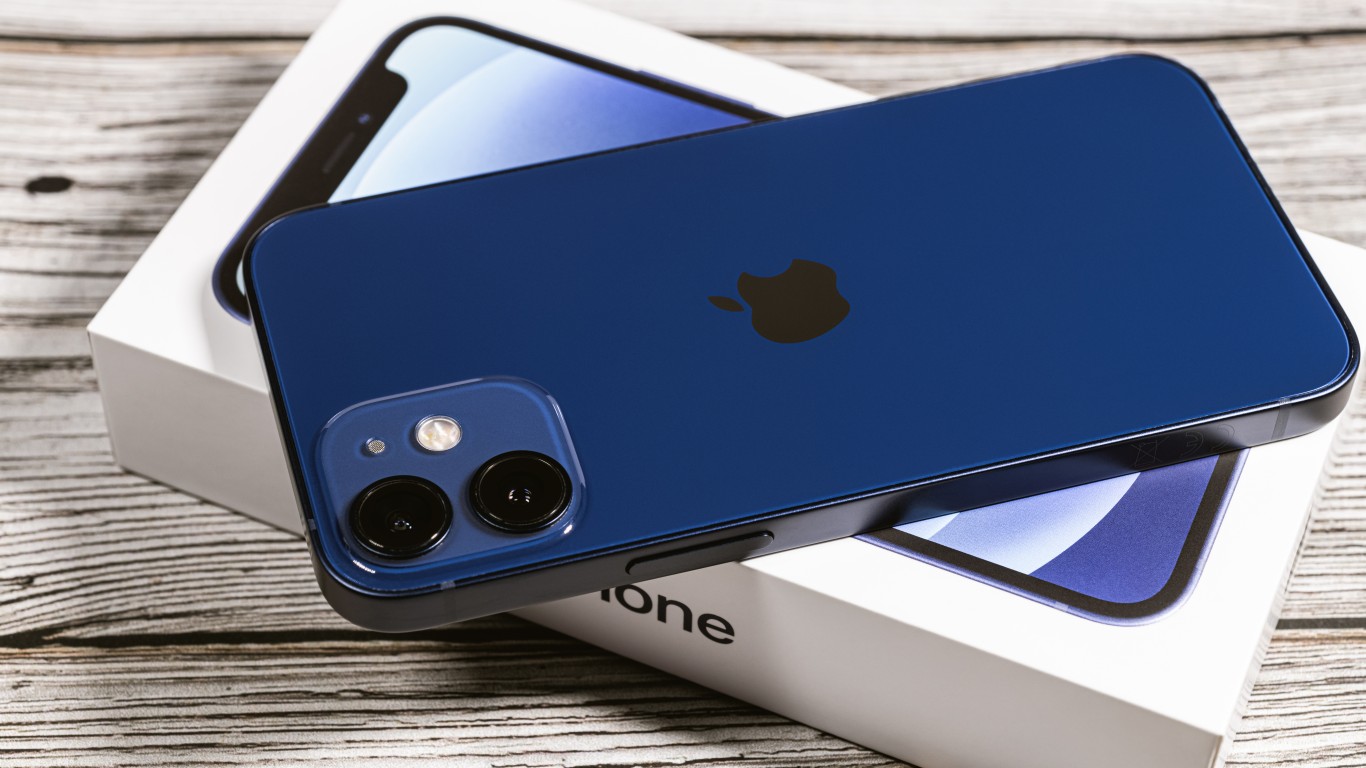
IPhone X sparked a heated discussion in 2017, but iPhone’s production volume increased by only 3% over 2016 due to the technical barriers in improving yield rate of innovative models. With regard to the supply chain, new iPhones in 2018 will continue to improve Face ID technology, screen to body ratio, etc., moreover, the company plans to increase the memory content and embed AMOLED display in two of its models. In order to meet the demand in different ranges of market, Apple will launch the second generation of iPhone SE which targets at the mid-range segment. Therefore, Apple will continue to expand its iPhone production in 2018, and the volume is estimated to register a 7.5% growth.
Finally, expectations for smartphone features will change:
Smartphone brands will continue to enhance the user experiences in 2018, with development focusing on 18:9 all-screen, dual-camera, wide-angle front camera, AI embedded applications, etc. In terms of biometric recognition, iPhone will continue to feature Face ID while other brands will use mainly capacitive fingerprint sensors in the first half of 2018 due to existing technical barriers. Smartphone models with under-display fingerprint or 3D sensing will have chance to enter mass production in the second half of 2018
The fates of several of the world’s largest consumer electronics companies are in the balance as the year passes.
[wallst_email_signup]













 Top Gaining Stocks
 Top Losing Stocks