


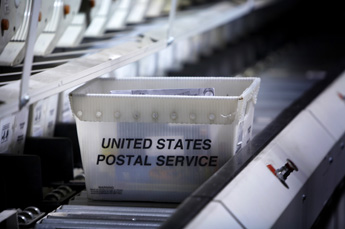
Does a $5 billion loss for fiscal 2013 sound appealing? Operating revenues were up by just over 1% to $66 billion. Where this gets tricky is that total mail volume fell by 0.9% to 158.4 billion pieces.
We see that the USPS is claiming nearly $1 billion in savings from lower work hours (12 million in total). The USPS is also signaling that it faces substantial deficit liabilities of $61 billion, exceeding assets by approximately $40 billion.
At the end of the 2012 fiscal year, the USPS reached its statutory debt ceiling of $15 billion for the first time, and it remains at the limit at the end of the 2013 fiscal year. “Our liquidity continues to be dangerously low and our liabilities exceed our assets by approximately $40 billion.”
What is working is that the package-services business is growing, up 8% in sales and 6% in volumes. Standard mail revenue rose 3% and volume was up 1.8%. The traditional first-class mail was down 2.4% in revenue and down 4.1% in volume.
Operating expenses were down 11% to $72.1 billion in 2013, including a required $5.6 billion obligatory contribution to retiree health care benefits.
The USPS calls itself a self-supporting government enterprise and claims that it receives no tax dollars for operating expenses. Somehow, it keeps operating at losses, it keeps having severe pension issues and it cannot seem to operate like a normal business.
After you see losses for seven straight years and declining business metrics annually, you know what question has to be asked. How has the USPS never gone bankrupt or been declared formally insolvent? If its money is not coming from taxpayers, then its shortcomings are being financed perhaps by the same magical money that is created to fund quantitative easing’s endless bond buying.
We would also note that the USPS just this week formalized the new pricing plans, and the average is that prices will be up by 2.4% when they kick in during January.









 Top Gaining Stocks
 Top Losing Stocks