


The total operating revenue for the U.S. Postal Service was up 2% to $16.5 billion. Total operating expenses for the third quarter outweighed the revenues at $18.4 billion. These expenses increased by $1.5 billion from last year, due to the Workers’ Compensation fair value adjustment.
Segment revenues continued to increase this quarter. Shipping and package services revenue was up by 6.6%, but shipping and package volume increased 7.7%. Standard Mail revenue was up 5.1%, but it was up by 0.9% in volume. These increases are a direct result of the increase in price from January. Although this mixed news, this formal price raise is being called a surcharge — which will continue to be collected until a total of $3.2 billion in incremental revenue is reached.
Here is an additional part of the problem. Standard Mail volumes rose by 0.9%, while First-Class Mail volume declined by 1.4%. This last quarter marked the thirty-second consecutive quarterly decline for First-Class Mail volume. As far as what is driving the expenses higher, the US Postal Service said,
Total operating expenses for the third quarter of 2014 were $18.4 billion, an increase of $1.5 billion from the same period last year, driven mainly by the Workers’ Compensation fair value adjustment. Compensation and benefits expenses increased by $15 million, or 0.1%, compared to the third quarter of 2013, as contractual pay increases were offset by work-hour reductions and more efficient use of available labor flexibility.
USPS Chief Financial Officer and Executive Vice President Joseph Corbett said, “Due to continued losses and low levels of liquidity, we’ve been extremely conservative with our capital, spending only what is deemed essential to maintain existing infrastructure.
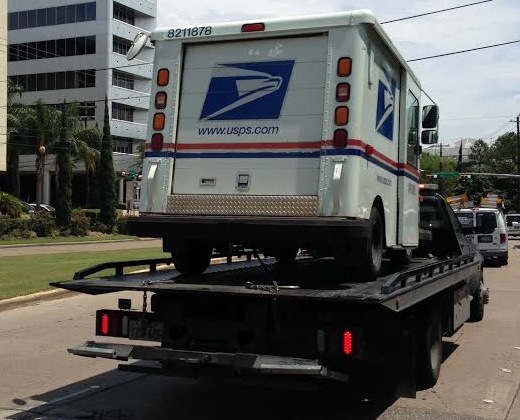
Corbett went on to say that the U.S. Postal Service must invest up to $10 billion to replace its aging vehicle fleet, to purchase additional package sorting equipment, and also to make the necessary upgrades to its infrastructure. Considering the debts owed and another $10 billion investment shortfall, the U.S. Postal Service looks like it’s going to be in the red for a while.
What continues here is that internal call for comprehensive legislation. Corbett admitted that the Postal Service will not be able to make its required $5.7 billion retiree health benefit prefunding payment to the U.S. Treasury that is coming due on September 30, 2014.
ALSO READ: Retirement Scare – Too Many Have No Clue How To Pay For Retirement








 Top Gaining Stocks
 Top Losing Stocks