


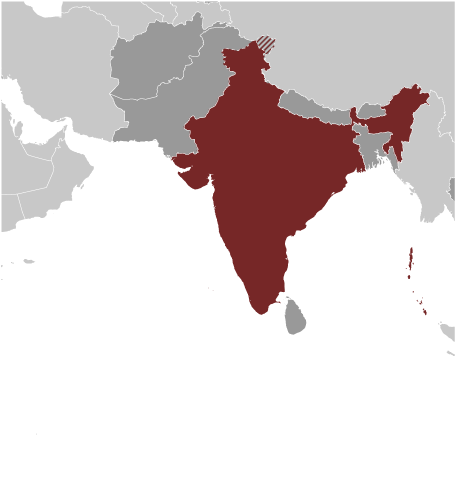
More recent post-2008 analysis reveals that, while the food, fuel and financial crises over the past four years had at times sharp negative impacts on vulnerable populations and slowed the rate of poverty reduction in some countries, global poverty overall kept falling. In fact, preliminary survey-based estimates for 2010 — based on a smaller sample size than in the global update — indicate that the $1.25 a day poverty rate had fallen to under half of its 1990 value by 2010. This would mean that the first Millennium Development Goal of halving extreme poverty from its 1990 level has been achieved before the 2015 deadline.
The information is probably not heartening to the poor. The report goes on to say:
The developing world as a whole has made considerable progress in fighting extreme poverty, but the 663 million people who moved above the poverty lines typical of the poorest countries are still poor by the standards of middle- and high-income countries. This bunching up just above the extreme poverty line is indicative of the vulnerability facing a great many poor people in the world. And at the current rate of progress, around 1 billion people would still live in extreme poverty in 2015.
The war on poverty may have to be won a single person or a single region at a time so, country by country, low-income problems can be addressed. That is not much of a relief to those who, individually, are “bunching up just above the extreme poverty line.” Based on what the incomes of these people are, the threshold of what each can afford for food, shelter and fuel remain well short of levels likely to provide any quality of life.
The poverty problem remains mostly unaddressed, despite the modest optimism of the World Bank. Its report offers no reasonable solutions. There is a good reason for that: there really are none. The World Bank has no access to the hundreds of billions of dollars necessary for any meaningful effect on the trouble. Neither do the developed nations that have struggled with their own financial problems recently. No pool of capital anywhere in the world is large enough to significantly reduce poverty levels or to raise the incomes of those who are bunched just above the poverty line. And that is what is terrible. It is a major global problem that cannot be solved.
Douglas A. McIntyre






 Top Gaining Stocks
 Top Losing Stocks