The Fed: What Difference Does $10 Billion a Month Make?

Photo of Douglas A. McIntyre
By Douglas A. McIntyre Published
This post may contain links from our sponsors and affiliates, and Flywheel Publishing may receive compensation for actions taken through them.

In the scheme of things, as far as the size of the economy and the massive amounts of credit capital that wash around the financial markets like a huge ocean, $10 billion a month does not mean a thing. Neither does $20 billion, probably, or even more. Most economists believe that the Federal Reserve will cut its monthly purchases of various kinds of paper by $10 billion. The action may influence the psychology of the markets, but there is really nothing in the change at all.

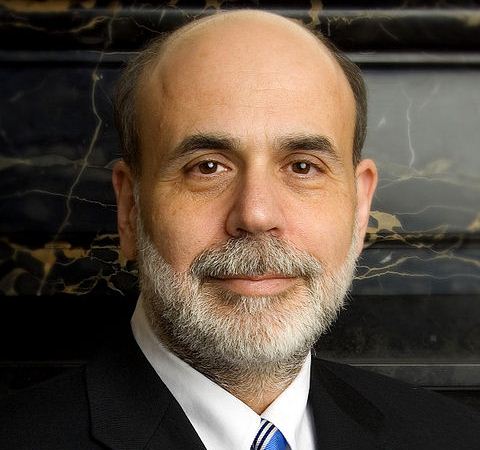
Among the reasons for a decision to cut the bond program is the pressure brought on Chairman Ben Bernanke by his fellow Fed members on the central bank’s board and the presidents of the Fed’s 12 regional “branches.” Ever more of them have pressed Bernanke in public. He probably believes it is time to bow to the changing consensus. There is no reason for him to be implacable in his final months on the job.

Another reason that the $10 billion means so little is that the plan to buy less could be replaced by a plan to buy more. The economy may not keep the course of improvement. Among the things that could push it off track are the fights in Washington over federal government spending. Reuters recently reported:

“It is an important milestone … juxtaposed against five years ago, when the Fed began the huge expansion of its balance sheet,” said Carl Tannenbaum, chief economist at Northern Trust in Chicago. “This is going to be the first step, potentially, in a very, very long walk.”

It is not only the change of direction in the wake that could become different; it is the pace, which could break into a run at any moment.

The consensus among economists and experts on the history and actions of the Fed is that the world’s equity and bond markets will shudder if the Fed changes its $85 billion addiction. The Dow Jones Industrial Average might drop a few hundreds points over several days. Overseas markets could be hurt even more seriously.

Just a few years ago, the Fed took unprecedented actions to drive interest rates toward zero. Apparently, the end of that is beginning. Yet one or two quarters of a future, dangerous move into a new recession will change the plans again — very quickly.


Photo of Douglas A. McIntyre
About the Author Douglas A. McIntyre →

Douglas A. McIntyre is the co-founder, chief executive officer and editor in chief of 24/7 Wall St. and 24/7 Tempo. He has held these jobs since 2006.

McIntyre has written thousands of articles for 24/7 Wall St. He is an expert on corporate finance, the automotive industry, media companies and international finance. He has edited articles on national demographics, sports, personal income and travel.

His work has been quoted or mentioned in The New York Times, The Wall Street Journal, Los Angeles Times, The Washington Post, NBC News, Time, The New Yorker, HuffPost USA Today, Business Insider, Yahoo, AOL, MarketWatch, The Atlantic, Bloomberg, New York Post, Chicago Tribune, Forbes, The Guardian and many other major publications. McIntyre has been a guest on CNBC, the BBC and television and radio stations across the country.

A magna cum laude graduate of Harvard College, McIntyre also was president of The Harvard Advocate. Founded in 1866, the Advocate is the oldest college publication in the United States.

TheStreet.com, Comps.com and Edgar Online are some of the public companies for which McIntyre served on the board of directors. He was a Vicinity Corporation board member when the company was sold to Microsoft in 2002. He served on the audit committees of some of these companies.

McIntyre has been the CEO of FutureSource, a provider of trading terminals and news to commodities and futures traders. He was president of Switchboard, the online phone directory company. He served as chairman and CEO of On2 Technologies, the video compression company that provided video compression software for Adobe’s Flash. Google bought On2 in 2009.

Continue Reading

Top Gaining Stocks

CBOE Vol: 1,568,143
PSKY Vol: 12,285,993
STX Vol: 7,378,346
ORCL Vol: 26,317,675
DDOG Vol: 6,247,779

Top Losing Stocks

LKQ
LKQ Vol: 4,367,433
CLX Vol: 13,260,523
SYK Vol: 4,519,455
MHK Vol: 1,859,865
AMGN Vol: 3,818,618