


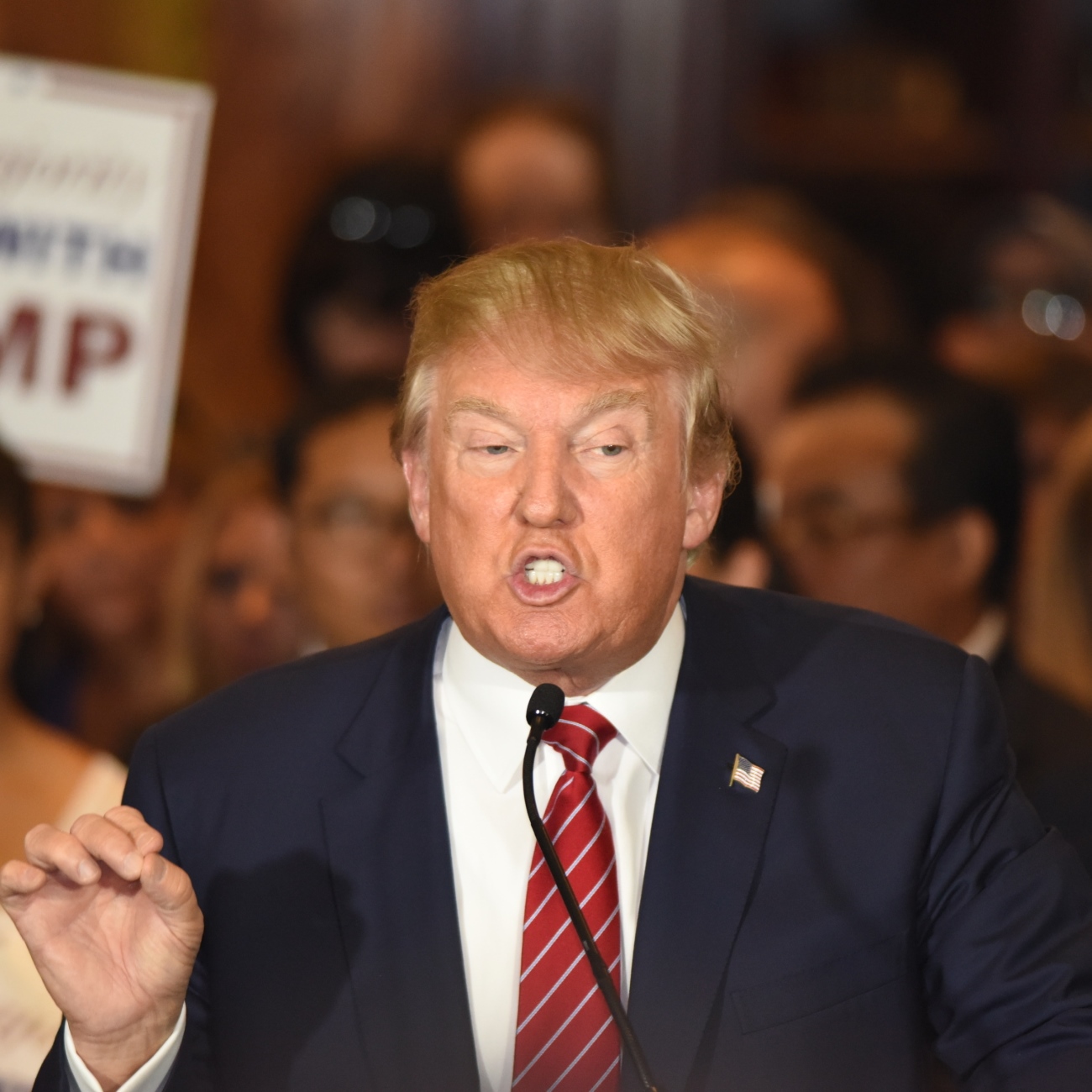
If there has ever been an incredible election cycle, this has been it. For the first time in years, we may very well have a contested convention for the Republicans, and the Democrats could easily get into a big squabble over the so-called super delegates. One thing is for sure, we have seen the rhetoric escalating, and escalating in a big way, and the general election is still seven long months away.
While we generally steer clear of politics at 24/7 Wall St. and leave that for the experienced pundits in that arena, we did find the recent comments by current Republican front-runner, businessman Donald Trump, as reasonably inflammatory when it comes to the economy and the stock market.
In an interview that was published this past weekend in the Washington Post, Trump was quoted as saying that the U.S. economy was poised for a “very massive recession,” and he questioned current statistics that put the nation’s unemployment numbers in the 5% range, saying they were closer to 20%.
Now he is hardly the first to make that claim, but the reality is the nation’s current labor force participation rate from the Bureau of Labor Statistics for March stands at about 63%. That is the lowest rate since the Jimmy Carter era, back in 1978. The low point, according to historical data going back to 1948, came in December 1954, when the rate was 58.1%. With those numbers in mind, the current unemployment numbers, while arguably hit or miss, are probably close to accurate. We rarely have a huge recession at 5% unemployment, and the participation rate was actually higher in March.
[recirclink id=323127]
In addition, the March Institute for Supply Manufacturing Index rose to 51.8 from February’s 49.5, reaching the highest level since July of last year, according to data published by Jefferies. That broke a string of five straight readings below 50, offering some support that manufacturing is turning around.
Plus, it is very rare for the economy to go into recession when inflation remains reasonably tepid. While oil has bounced strongly off the lows posted earlier this year, it has had a very difficult time breaking through the $40 level, even with the seasonally strong summer driving season right around the corner. With some of the lowest gasoline prices in years in many parts of the country, consumers are flush with cash, and a large part of that will flow back into the economy with retail and entertainment purchasing.
With expenditures representing 70% of gross domestic product (GDP), and acknowledging that GDP only measures the value of final output, it’s very hard to envision a recession, let alone a massive one, with consumer strength that appears to be gaining some steam, or at the very least, not waning dramatically.
Lastly, it certainly seems that the Federal Reserve is being careful as to not move the federal funds rate up at too fast a clip, and Fed Chair Janet Yellen’s recent comments have been very dovish. Even in the event that the Fed raises rates twice this year, that would still leave the funds rate at 75 basis points, or three-quarters of 1%. Those are still historically very low and can help continue to fuel a steady housing market and purchases of large ticket durable goods items.
There is no question that Trump has tapped a pulse of discontent in the electorate, and with good reason. By the time the next president, regardless who takes office, the national debt will be approaching $20 trillion. In addition, American corporations have trillions of dollars overseas and are taxed at among the highest levels in the developed world. Repatriating that cash for investment here could create jobs, and to his credit Trump has said he would address that if elected.
[nativounit]
The likelihood of a massive recession at this juncture looks very small, and a host of Wall Street economists and strategists have said just that. “We’re not heading for a recession, massive or minor, and the unemployment rate is not 20 percent,” said Harm Bandholz, chief U.S. economist at UniCredit Research in New York. Others echoed his comments, and of course opponents of Trump were fast to criticize his comments.
Investors should remember that election cycle hyperbole and rhetoric is nothing new, and this could just be more of the same. The most important thing for investors of all stripes to remember is that currently, in the developed world, the United States economy is among the best, and investing here is still a decent proposition, as a massive or even mild recession seems remote now.







 Top Gaining Stocks
 Top Losing Stocks