Los Angeles Has World’s Worst Traffic Jams

Photo of Douglas A. McIntyre
By Douglas A. McIntyre Updated Published
This post may contain links from our sponsors and affiliates, and Flywheel Publishing may receive compensation for actions taken through them.
Los Angeles Has World’s Worst Traffic Jams

© Thinkstock

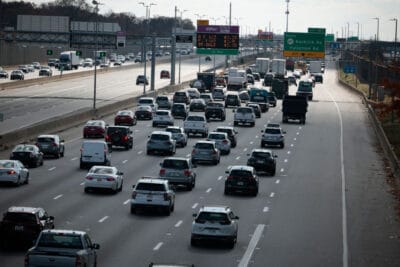
[cnxvideo id=”510062″ placement=”ros”]Among 1,064 cities measured based on traffic congestion, Los Angeles ranks as the worst, according to a new study. The research covered 240 cities. Traffic measurements were taken in 38 countries.

According to the INRIX Global Traffic Scorecard:

Los Angeles tops the list of the world’s most gridlocked cities, with drivers spending 104 hours in congestion in 2016 during peak time periods, followed by Moscow (91 hours), New York (89 hours), San Francisco (83 hours) and Bogota (80 hours)

The U.S. accounted for 11 of the top 25 cities worldwide with the worst traffic congestion.

[nativounit]

And:

U.S. cities dominated the top 10 most congested cities globally, with Los Angeles (first), New York (third), San Francisco (fourth), Atlanta (eighth) and Miami (10th) each dealing with an economic drain on the city upwards of $2.5 billion caused by traffic congestion. Los Angeles commuters spent an average of 104 hours last year in traffic jams during peak congestion hours – more than any other city in the world. This contributed to congestion costing drivers in Los Angeles $2,408 each and the city as a whole $9.6 billion from direct and indirect costs. Direct costs relate to the value of fuel and time wasted, and indirect costs refer to freight and business fees from company vehicles idling in traffic, which are passed on to households through higher prices.

Bob Pishue, senior economist at INRIX, commented:

A stable U.S. economy, continued urbanization of major cities, and factors such as employment growth and low gas prices have all contributed to increased traffic in 2016. Congestion also costs our country hundreds of billions of dollars, threatens future economic growth and lowers our quality of life. Traffic truly is a double-edged sword, “The demand for driving is expected to continue to rise, while the supply of roadway will remain flat. Using big data and technology to improve operations of existing roadways offers a more immediate impact on traffic flows and mobility while transportation officials explore strategic capital investments.

[wallst_email_signup]

Photo of Douglas A. McIntyre
About the Author Douglas A. McIntyre →

Douglas A. McIntyre is the co-founder, chief executive officer and editor in chief of 24/7 Wall St. and 24/7 Tempo. He has held these jobs since 2006.

McIntyre has written thousands of articles for 24/7 Wall St. He is an expert on corporate finance, the automotive industry, media companies and international finance. He has edited articles on national demographics, sports, personal income and travel.

His work has been quoted or mentioned in The New York Times, The Wall Street Journal, Los Angeles Times, The Washington Post, NBC News, Time, The New Yorker, HuffPost USA Today, Business Insider, Yahoo, AOL, MarketWatch, The Atlantic, Bloomberg, New York Post, Chicago Tribune, Forbes, The Guardian and many other major publications. McIntyre has been a guest on CNBC, the BBC and television and radio stations across the country.

A magna cum laude graduate of Harvard College, McIntyre also was president of The Harvard Advocate. Founded in 1866, the Advocate is the oldest college publication in the United States.

TheStreet.com, Comps.com and Edgar Online are some of the public companies for which McIntyre served on the board of directors. He was a Vicinity Corporation board member when the company was sold to Microsoft in 2002. He served on the audit committees of some of these companies.

McIntyre has been the CEO of FutureSource, a provider of trading terminals and news to commodities and futures traders. He was president of Switchboard, the online phone directory company. He served as chairman and CEO of On2 Technologies, the video compression company that provided video compression software for Adobe’s Flash. Google bought On2 in 2009.

Featured Reads

Our top personal finance-related articles today. Your wallet will thank you later.

Continue Reading

Top Gaining Stocks

CBOE Vol: 1,568,143
PSKY Vol: 12,285,993
STX Vol: 7,378,346
ORCL Vol: 26,317,675
DDOG Vol: 6,247,779

Top Losing Stocks

LKQ
LKQ Vol: 4,367,433
CLX Vol: 13,260,523
SYK Vol: 4,519,455
MHK Vol: 1,859,865
AMGN Vol: 3,818,618