


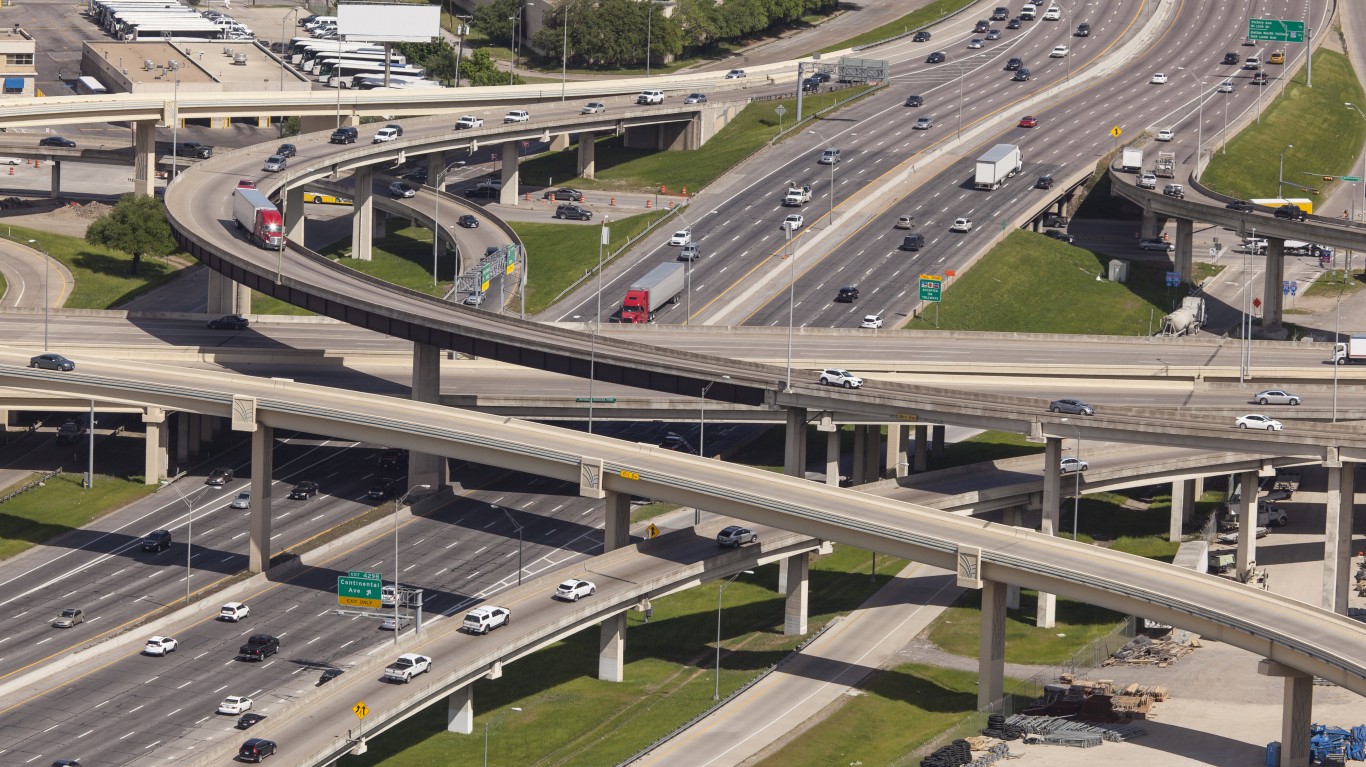
Real-time traffic data comes from two general sources: dedicated, specialized monitoring systems that watch the traffic and drivers who are using vehicles with specialized equipment or who carry a smartphone. This might be useful for a person’s daily commute, but without some way to aggregate the data over time, its usefulness as a planning tool is limited.
A startup based in Kirkland, Washington, and called Inrix has just released a new traffic information system it calls Inrix AI Traffic that “leverages artificial intelligence” (AI) to deliver the most precise and actionable information available about traffic flows on every road in the world.
In the United States, lost productivity from traffic congestion costs $87 billion last year. In Boston alone, the average driver lost 164 hours last year, the highest total of any U.S. city, with a dollar loss of $4.1 billion, according to a study by Inrix cited by the World Economic Forum.
According to an Inrix announcement released Monday morning, “INRIX AI Traffic provides instantaneous updates to traffic conditions and pinpoints traffic speeds in different lanes to deliver accurate ETAs [estimated times of arrival] on every roadway around the world,” and that includes the cities with the absolute worst traffic in the world.
[nativounit]
Inrix has developed a new geospatial engine that combines historical insights based on “trillions of data points collected over a decade” with real-time data. The company claims the system “can identify traffic conditions with an amazing level of precision for every type of complex situation.” The new geospatial engine processes data “faster than ever before” and, because it is always learning as it adds new data points, “accuracy improves over time.”
The company was founded in 2005 and has received more than $143 million in venture capital funding, including a $55 million investment in 2014 from Volkswagen’s Porsche division. Prior to that, Inrix raised $37 million in 2011 in an investment round led by August Capital and Kleiner Perkins. Intel also invested $10 million in 2014.
One of Inrix’s more well-known chief competitors is Alphabet’s Google Waze, a Tel Aviv-based firm that Google acquired in 2013 for a reported $966 million. Waze last week introduced a new feature that will allow users of Google Maps to receive an alert when passing a speed trap. The feature was available on Waze when Google acquired the company but has just been rolled out as a Google Map feature in 43 countries.
The Inrix AI Traffic system appears designed to appeal to planners, highway management offices and transportation professionals. While this is just a first step in applying AI to traffic congestion issues, with hundreds of million vehicles on the world’s billions of miles of roadways, traffic and highway management could push Inrix into the arms of one of the companies leading the AI revolution.
[recirclink id=545645]
[wallst_email_signup]











 Top Gaining Stocks
 Top Losing Stocks