


By David Callaway, Callaway Climate Insights
SAN FRANCISCO (Callaway Climate Insights) — One of the darlings of the boom in environmental, social and governance stocks in the past year has been Trane Technologies (TT), which is up 27% this year and is among the 20 most popular stocks in ESG portfolios and exchange-traded funds, according to Morningstar.
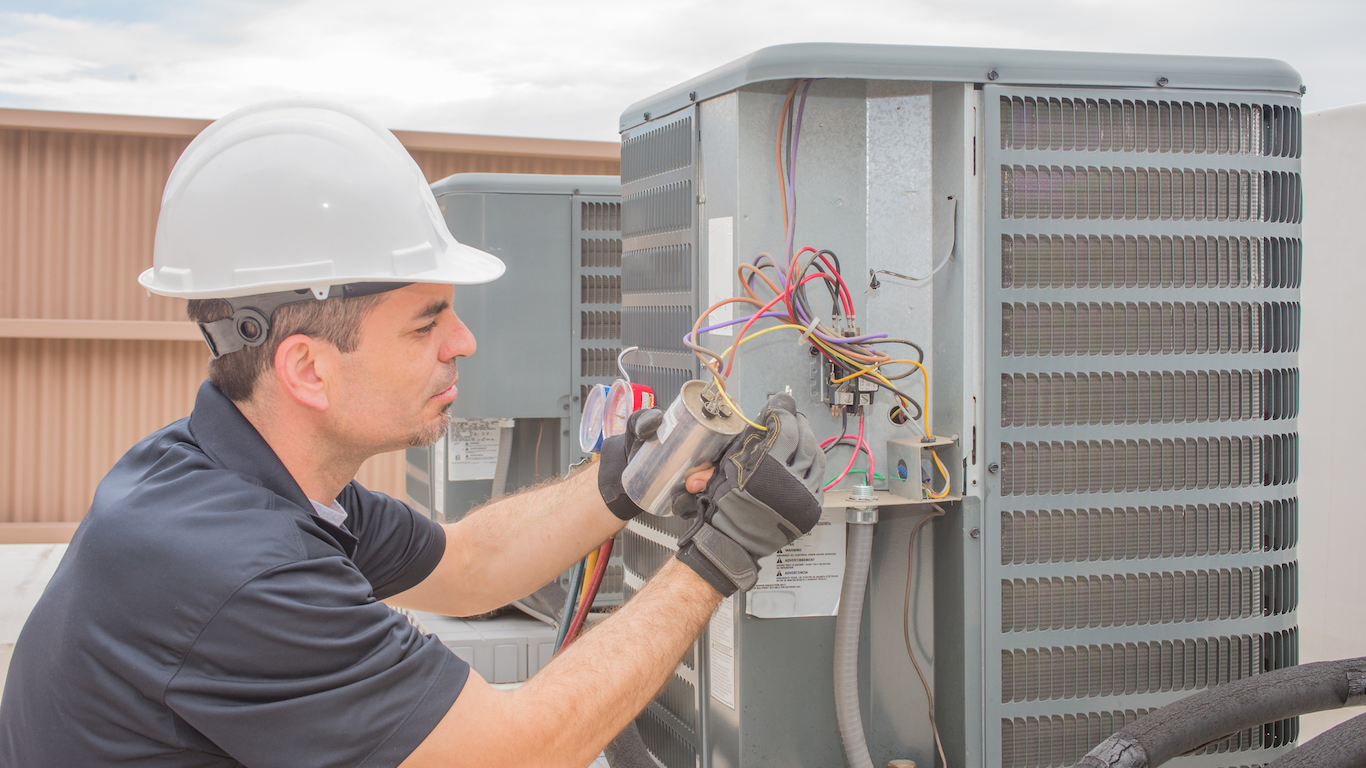
Part of that reason is that the industrial maker of hearting and cooling systems for buildings, and refrigerated transporter of food, is in the sweet spot of the energy efficiency revolution to decarbonize our cities. A more important part might be how the company sees its mission, and projects it. And a key part of that is Scott Tew.
Tew manages a team of about 10 people in what Trane calls its Center for Energy Efficiency and Sustainability (CEES). That team drives the climate mission of a global company with 35,000 employees, working to engage staffs from supply chain to product engineering to raw materials selection on the company’s goals of reducing its carbon footprint and at the same time improving productivity.
Much has been written about Trane, formerly known as Ingersoll Rand before a split early last year. With 15% of greenhouse gases coming from heating and cooling systems, and another 10% from food transportation, it’s in a position to impact as much as a quarter of the harmful emissions that cause global warming. But it also serves as a blueprint for how companies and their management teams can adapt ESG practices internally to their strategies and operations, and increase productivity.
“There is a north star that many of our leaders have personalized,” Tew said in an interview last week from his home in North Carolina, where Trane’s U.S. headquarters is based (it’s domiciled in Ireland). “The thing we thought of from the beginning was how do you move a company from being just compliance focused to something else. There are thousands of things to focus on and many companies just hit a wall.”
To begin with, Trane bills itself as a “global climate solutions company.” Not an industrial heating and cooling systems operation. It’s popular brands include Thermo King, as well as Trane air conditioners. It lays out bold commitments to its shareholders, customers and employees about reducing carbon and other practices, and then it engages them on how to reach them. Earlier this month, it announced executive compensation would now be tied to sustainability goals, and applied to some 2,300 managers worldwide.
“We’ve found big commitments draw engagement, Tew said. “They send a signal to your customers.”
It starts at the top, with CEO Mike Lamach, who engaged the board and management of the company with Tew a decade ago to integrate sustainability into every process, not just to be a good corporate citizen but to improve efficiency to boost profits.
Tew’s team of about 10 include two working on the supply chain, one in product engineering, and one communications leader, for ESG reporting, among other things. Two more are in advocacy, another works with sales and marketing on how to get the message to customers, and another is a stakeholder representative. Along with Tew and a few more, the team impacts every aspect of the business.
I asked if the team was popular inside the company, or if they were regarded as some sort of climate police. He said keeping it small and focused on a few priorities everyone understands allows for the engagement process to work better than with a large task force because it draws the other teams into the creative process.
For example, one of the company’s three major initiatives back at its first climate commitments in 2014 was to invest $500 million in research in areas where initial reviews showed no clear pathway to reduce emissions. They found some, and it helped them hit their 2020 targets in just one year, by 2015.
Another commitment helped it lower its refrigeration footprint by 35% by 2018. Part of this led to products that required building code changes in many international markets, so in this way the process not only benefited Trane but helped drive other improvements in energy efficiency.
Tew said he is optimistic about the surge in investments in ESG in the last two years because the investor dollars will help tackle some of the bigger challenges in mitigating global warming, such as transitioning the energy grid or de-carbonized buildings.
“Your can’t get to net zero without adjusting HVACs in your own building,” he said.
For Trane, the proof of concept is in the customer and shareholder response to its efforts. Shares are up 139% in the last year. But as more and more companies begin to wonder how they will meet their climate pledges, or respond to shareholder and finance pressure to do something, the idea of “go big or go home” could be a useful guide.












 Top Gaining Stocks
 Top Losing Stocks