


By David Callaway, Callaway Climate Insights
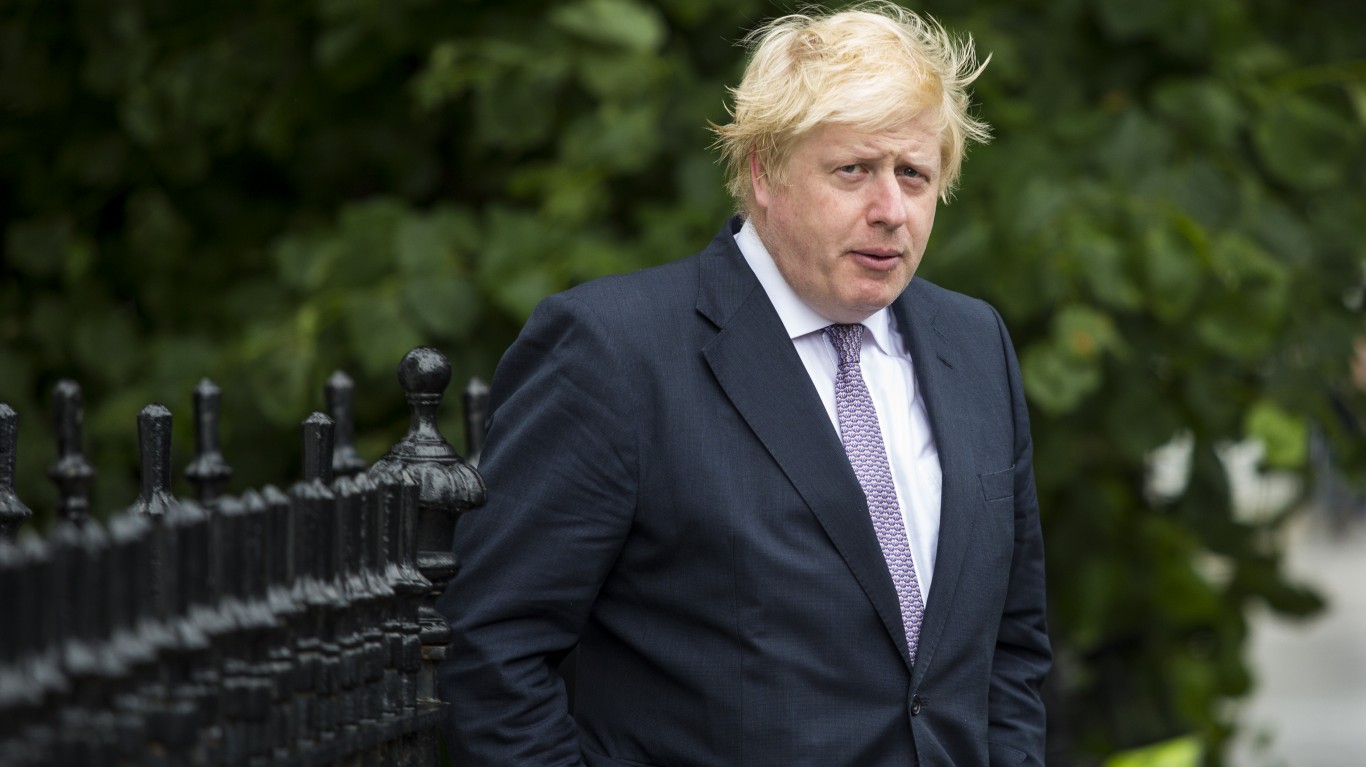
The spectacle of a British prime minister succumbing, like a wounded caribou, to a pack of wolves from his or her own party, is unique in international politics. And Boris Johnson’s ouster this week after three years in office is no different. Although at press time Thursday the PM was saying he would stay on until a successor is chosen, it is unlikely he will make it through the weekend, next week at the latest.
Johnson treated climate change like he did most other issues, by flip-flopping with the most politically expedient argument of the day. He mostly voted against climate policy while he was an MP and previously as Mayor of London, though under his watch he did push through some successful green initiatives.
The expansion of bicycle lanes through Central London happened under his watch as mayor. In late 2020, as PM, he ordered that cars and buses using petrol would be banned in Britain by 2030. He also championed offshore wind power, a slashing of carbon emissions by a third by 2035, and he hosted global leaders at the COP26 climate summit in Glasgow last fall.
Of the growing list of potential Tory successors to Johnson, only Michael Gove and Liz Truss served as Environment Secretary in the cabinet, though both have mixed records that protest groups such as Extinction Rebellion will be sure to highlight during any party leadership campaign. Gove has voted against cutting carbon emissions, for example, and Truss approved cuts in subsidies to solar farms.
In short, the resignation of Boris Johnson will highlight the weakness on climate of both his bench and his Conservative party, though not without the spectacle of politicians clamoring for climate credit in coming weeks as they vie to replace him. It should make for an entertaining, if frustrating, summer.
More insights below . . . .
This is how investors can really help mitigate climate change
. . . . Shareholder support for environmental and social resolutions to force change at public companies has soared in the past decade, as has support for complete divestment of those companies who continue to pollute, writes Mark Hulbert. But a new international study gaining traction takes each of the strategies to their logical conclusions and shows that even a tiny bit more support for resolutions from each and every shareholder would have dramatically better results than divestment. . . .
A selection of this week’s subscriber-only insights
California tries its trend-setting auto emissions rules on plastics
. . . . California is bringing its strictest-in-the-nation auto emissions regulations strategy to the climate threat of plastics, joining a handful of smaller states in enacting stringent new requirements on plastics manufacturers and sellers. The rules, like with auto emissions, will effectively create two tiers of plastic-making standards that will ultimately push manufactures to upgrade nationwide. Read more here. . . .
The homeowner’s climate insurance crisis has arrived
. . . . California homeowners who have started losing insurance coverage because of wildfire risk have now been joined by Florida homeowners in hurricane pathways, a troublesome trend that has all the potential to become a global crisis as climate change begins to pick off certain geographic regions over others. Read more here. . . .
Europe’s affair with nuclear and gas energy looks permanent
. . . . The European Union’s bitter debate this year over whether nuclear energy and gas energy should be classified as sustainable energies that can be invested in by governments appears to have been decided, with the ruling this week that they will be included in the EU’s sustainable taxonomy after all. Protests and lawsuits are inevitable, but for now the real question is whether Europe can meet its climate targets and still support them. . . .
The future of ESG ratings may look something like this
. . . . Everybody’s up in arms about the confusing metrics and differing parameters of ESG data in the finance industry, but as disclosures improve and expand, certain products will rise to the top. They may even look something like this, one of the best ratings tables I’ve yet seen on electric vehicles, courtesy of Bloomberg Green. Reams of data presented in an easy-to-scan and understand manner, and now I know where that Mustang Mach-E that I’ve been looking at ranks in the EV world. . . .
Van life goes electric
. . . . America’s recreational vehicle industry, centered in Indiana and Ohio, is a $50 billion industry that employs about 300,000 people. But it is a slave to fuel prices, because the large vehicles are mostly gas-guzzlers. Now, makers are racing to go electric, a move that could both stabilize their futures and lure new customers to the van life beyond the somewhat older crowd that dominates it now. Read more here. . . .
To read all our insights, news and in-depth interviews, please subscribe and support our great climate finance journalism.
Words to live by . . . .
“We are in the midst of multiple crises, including climate change, that are challenging our society and economy. … We are taking concrete steps to incorporate climate change into our monetary policy operations. With these decisions we are turning our commitment to fighting climate change into real action.” — Christine Lagarde, president of the European Central Bank.











 Top Gaining Stocks
 Top Losing Stocks