


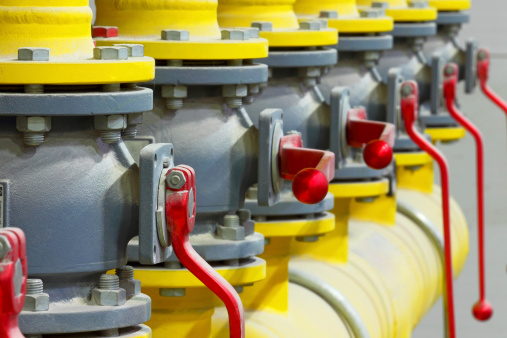
In a recent report, the Jefferies team points out that natural gas in storage has shrunk to 1.35 trillion cubic feet. While that may seem like a lot, it is actually 35% below what we have had in storage on average over the past five years. It is 40% below what we had in storage just one year ago. The bottom line they say? Natural gas is going back over $5. If the weather stays unseasonably cold in March and April, it is not out of the question we could see $6. Front month contracts have already hit the $6 level.
We researched the largest natural gas producers to see who may benefit the most from this increase in pricing. They probably have hedged some of their expected production, but given the upward trend it is very likely that some of the production is not hedged and could sell for substantially higher than first expected.
Exxon Mobil Corp. (NYSE: XOM) is the biggest natural gas producer and is also the country’s biggest oil company, and one of the most profitable corporations in the world. Exxon has operations in every continent but Antarctica. Its oil and gas operations range across several states, from Pennsylvania to Colorado, and it also has wells in the Gulf of Mexico and off the California coast. Exxon produces nearly 50% more gas than its closest competitor. Daily production is about 4 billion cubic feet. The stock pays investors a 2.6% dividend. The Thomson/First Call price target for the stock is $99.53. Exxon closed Friday at $96.27.
Chesapeake Energy Corp. (NYSE: CHK) calls itself the most active driller in the country, with operations in 15 states, from the Rockies to Texas to Pennsylvania. The company is a good example of how “independent” does not necessarily mean small. As of last year, the company owned an interest in 45,800 wells, of which 38,900 were primarily gas wells. Daily the company produces almost 3 billion cubic feet. Investors are paid a 1.3% dividend. The consensus price target is $27.16. The stock closed Friday at $25.91.
Anadarko Petroleum Corp. (NYSE: APC) is one of the biggest independent oil and gas producers in the country, with exploration or production work in all major domestic drilling areas, as well as in South America, Africa, Asia and New Zealand. Worldwide, natural gas makes up just over half of Anadarko’s reserves, but 87% of the new wells it drilled in the United States last year were gas wells. The company has daily production of more than 2.5 billion cubic feet. Investors are paid a small 0.9% dividend. The consensus price target is $102.13. Anadarko closed Friday at $84.16.
Devon Energy Corp. (NYSE: DVN) is an independent driller, primarily active in the United States. More than 70% of Devon’s U.S. reserves are in natural gas, with most of that lying in Texas’s Barnett Shale. The company plans to invest more than $1.1 billion this year in the Eagle Ford shale and drill more than 200 wells. Daily production is exceeding 2 billion cubic feet. Investors are paid a 1.4% dividend. The consensus price target is $73.62. Devon closed Friday at $64.42.
BP PLC (NYSE: BP) has battled back from the horrific Macondo spill in the Gulf of Mexico in 2010. The company drills in 29 countries and sells its products in 70. While BP is headquartered in London, 42% of the company’s assets are in the United States. While primarily an oil producer, the company produces 1.9 billion cubic feet of natural gas per day. Investors are paid an outstanding 4.6% dividend. The consensus price target is $49.94. BP closed Friday just above that at $50.61.
Natural gas is going higher, and in many ways, that is good for America. Liquid natural gas prices have spiked around the world, and increased production here will lead to valuable exports in the future. While it takes a situation like Hurricane Katrina to really spike prices, which went to $15 in 2005, the consistent grind higher may be here for good. The current situation in the Ukraine may very well add to price increases, depending on how that escalates. If so, the top producers stand to make a lot of money.







 Top Gaining Stocks
 Top Losing Stocks