


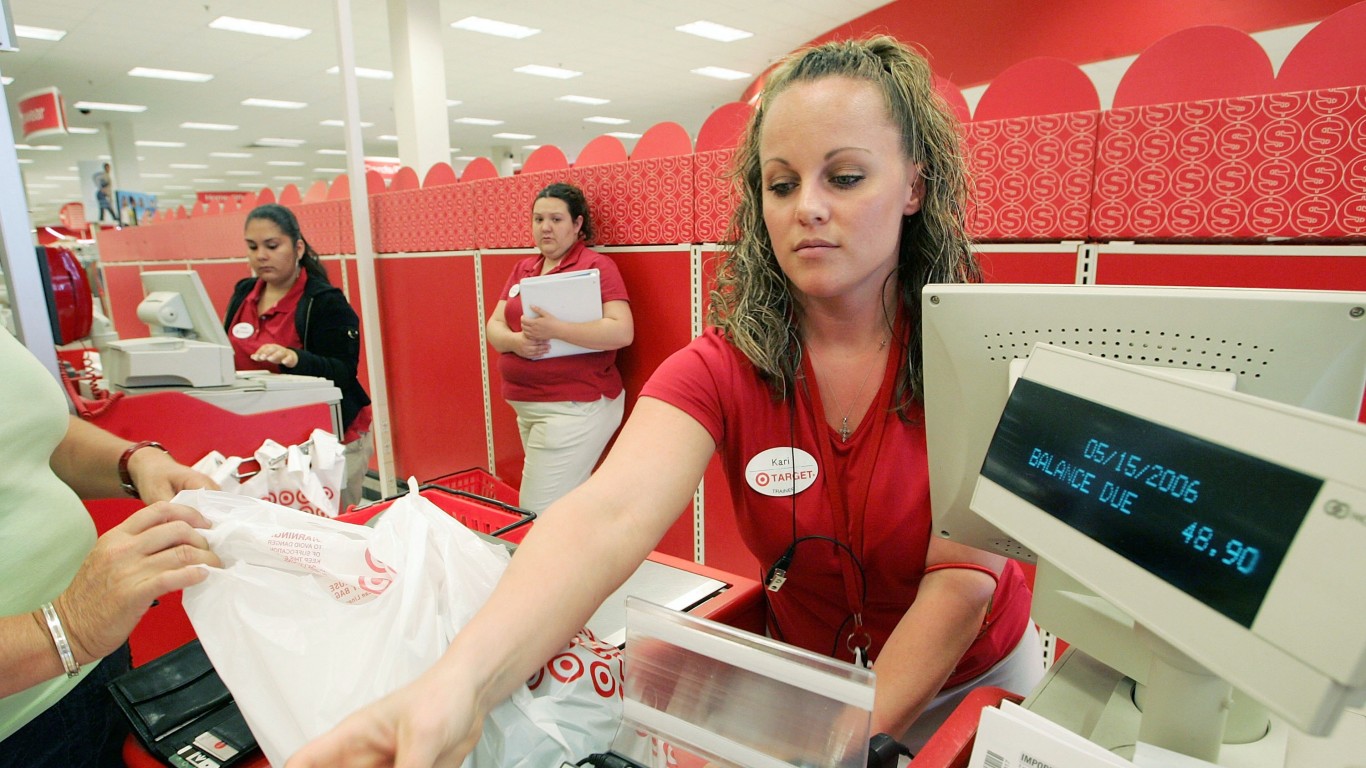
Shares of Target (NYSE:TGT | TGT Price Prediction) are changing hands near $129 in midday trading Tuesday, up 1% on the session and sitting on a year-to-date gain of 32%. That run has turned the longtime laggard into the surprise leader of the big-box pack in 2026.
By comparison, Walmart (NASDAQ:WMT) stock is up 18% year to date and Costco Wholesale (NASDAQ:COST) stock is also up 18%. Target stock has nearly doubled the return of either rival, a sharp reversal from the multi-year stretch when it badly trailed both peers.
The horse race tells a bigger story about consumer rotation, valuation digestion at the top of the sector, and a turnaround narrative that has finally caught a real bid heading into the summer months. The spread among the three names is now wider than it has been in years.
Target Leads After Years of Lagging
Target’s Q4 FY2026 report on March 3 set the tone. Adjusted EPS came in at $2.44 against a $2.16 consensus, a beat driven by margin recovery rather than a top-line snap-back. Revenue still slipped 2% year over year to $30.45 billion.
What got investors interested was the mix shift. Target’s gross margin expanded 40 basis points to 26.6%, non-merchandise revenue jumped more than 25%, and same-day delivery via Target Circle 360 grew over 30%.
New Target CEO Michael Fiddelke guided FY2026 sales up roughly 2% with EPS of $7.50 to $8.50. Fiddelke called February “a healthy, positive sales increase… an important milestone on our path back to growth this year.” Even after the rally, Target stock is still down 39% over five years, leaving the recovery setup intact.
Walmart: Premium Operator, Premium Multiple
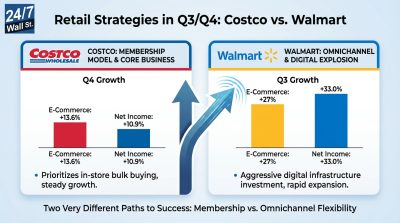
Walmart’s Q4 FY2026 results showed the model still firing: revenue of $190.66 billion beat estimates, global eCommerce grew 24%, and the board authorized a fresh $30 billion buyback alongside a dividend increase to $0.99 per share. Yet, Walmart shares have only matched the broader retail tape this year.
The pushback is based on Walmart’s valuation. With a P/E ratio of 47x, Walmart stock has been the subject of sustained skepticism on Reddit, where one widely viewed r/WallStreetBets post asked, “Someone ****ing explain why Walmart ($WMT) is at 47x earnings?”
Premium multiples leave less room for upside surprise. Walmart’s operational execution is arguably the best in retail, but the stock is already paid for that excellence at current levels.
Costco: Strong Fundamentals, Valuation Digestion
Costco’s Q2 FY2026 report delivered revenue of $69.6 billion, up 9% year over year, with comp sales up 7% and digital comps up 23%.
Membership fee income climbed 14% to $1.35 billion. Moreover, Costco’s renewal rates held at an impressive 90%.
The catch is that Costco stock’s one-year return is essentially flat, which is unusual for a name that has compounded relentlessly. A March r/stocks thread captured the tension, asking, “If 35x earnings felt wild for Costco, how are we supposed to feel about 50x?”
The fundamentals at Costco are pristine. The multiple is doing the digesting, and this is showing up in the relative scoreboard.
What the Spread Could Signal
Consumer sentiment sits at 53.3 in the latest University of Michigan reading, deep in pessimistic territory. Yet, BEA data shows total personal consumption still climbing in early 2026, with clothing spend rising sequentially from 574.4 to 589.6 billion from January through March.
That mix favors discount-leaning, discretionary-exposed names that had already been beaten down. Target’s setup fit that profile perfectly. Walmart and Costco entered the year priced for excellence, while Target entered priced for further disappointment.
Investors revisiting recent big-box retail outlooks for the back half of 2026 have seen the rotation play out in real time. Capital is quietly cycling from defensive premium names into the recovery story.
What to Watch
Target’s Q1 FY2026 report is the next major checkpoint, and Fiddelke’s commentary on whether February’s positive comparable sales extended into March and April will likely set the tone for traders. Watch for whether the gap between Target and its peers narrows or widens into the release.
For Walmart and Costco stockholders, the question is simpler: does multiple compression continue, or do operating results justify the premium? Year-to-date scoreboards reset every January, but the spread between these three has rarely been this wide, and the next few earnings cycles will decide whether Target’s lead is durable or simply a snap-back.








 Top Gaining Stocks
 Top Losing Stocks