


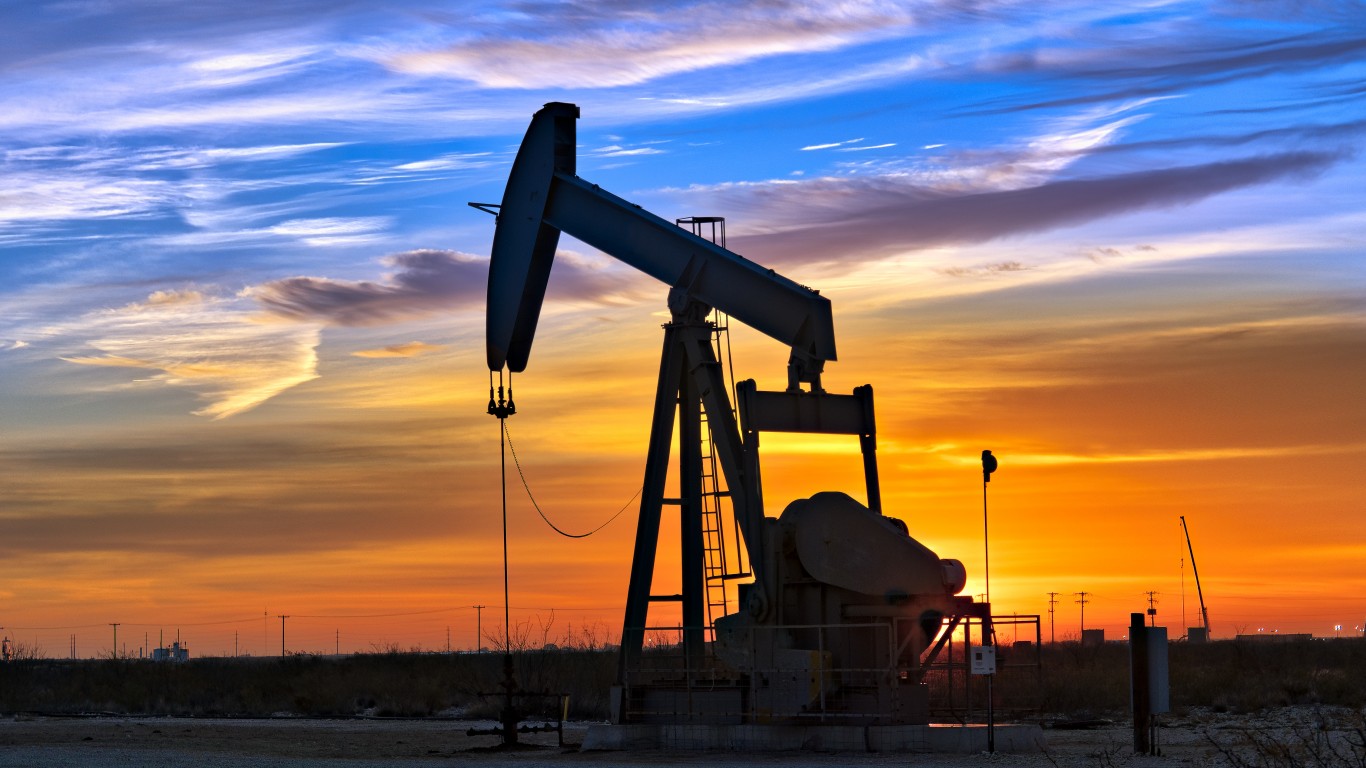
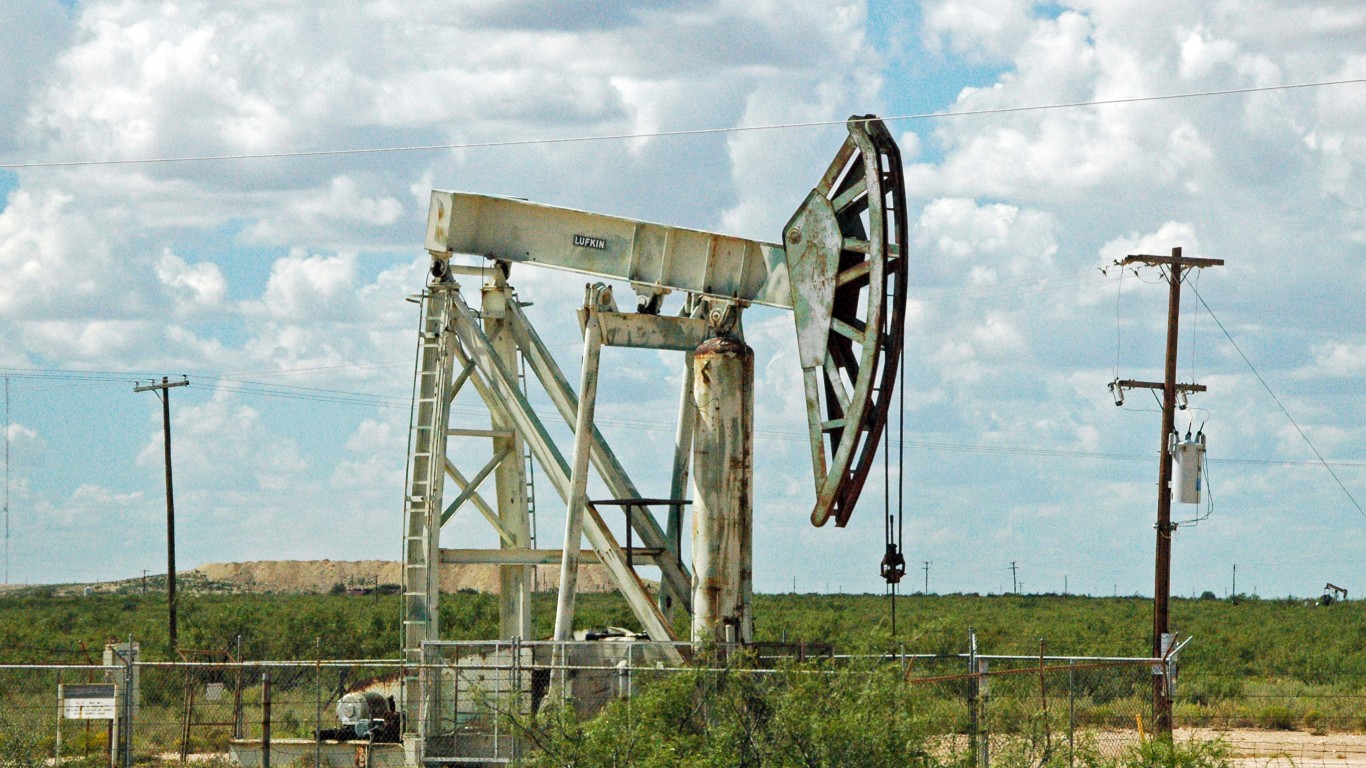
In June of last year, analysts at IHS Markit predicted that total oil production from the Permian Basin of west Texas and southwest New Mexico would grow by 3 million barrels a day to 5.4 million barrels by 2023. That’s more than any other single OPEC oil producer, aside from Saudi Arabia.
The analysts further estimated that reaching that level of production would require 41,000 new wells costing $308 billion in upstream capital spending in the five years between 2018 and 2023. That’s more than double the $150 billion these companies spent in the five years between 2012 and 2017. IHS Markit also estimated that three of the world’s supermajor integrated oil companies would alone have to invest $30 billion in the Permian by the end of 2020 to achieve those growth targets.
So far, though, pretty good, according to a report in the Houston Chronicle. Exxon Mobil Corp. (NYSE: XOM | XOM Price Prediction) and Chevron Corp. (NYSE: CVX), two of the supermajors IHS Markit was talking about, have filed for 470 and 145 new drilling permits, respectively, so far in 2019. Royal Dutch Shell PLC (NYSE: RDS-A) has been negotiating to acquire privately held Endeavor Energy Resources since at least the beginning of the year in a deal variously valued at $8 billion or $10 billion. Endeavor, on its own, has filed 203 new drilling permits so far this year.
The catch is that production from each well is declining at rapidly increasing rates. IHS Markit expects a base decline of some 2 million barrels a day in 2020. In order to maintain production — to say nothing of increasing it — means more drilling, which raises costs and demands for cash. Because so many of the independent producers borrowed heavily to boost production, they are being forced to fund new drilling from their cash flows.
[nativounit]
To do that, shareholders may have to accept stagnant (or worse, no) dividends. Shareholders are not interested. IHS Markit noted, “[E]quity markets [have] demonstrated less tolerance for adding debt or equity to fund growth. Instead, they are demanding that companies live within cash flow – or even return cash to shareholders.”
Are only the supermajors and some large independents able to afford both to spend on new drilling and to maintain or lift their returns to shareholders? No, but it’s a lot easier for the giants to maneuver. Diamondback Energy Inc. (NASDAQ: FANG), a Permian-only producer, has filed just 10 new drilling permits so far this year.
Diamondback’s dividend yield is just 0.77%, compared to Exxon’s 4.83% and Chevron’s 3.83%, but Diamondback’s second-quarter capital spending was nearly $160 million more than its operating cash flow. Exxon’s capital spending also was greater than its second-quarter operating cash flow, but the company features $8.5 billion in cash compared to $326 million on Diamondback’s balance sheet.
If IHS Markit is right about the impending decline rates and shareholder demands for returns, the only solution is to drill and pay juicy dividends, and both require money and the giants have it (or access to it) more readily than the smaller independents.
The outline is in place. How it plays out over the next 16 months is the interesting part.
[recirclink id=579645]
[wallst_email_signup]







 Top Gaining Stocks
 Top Losing Stocks