


Mineral royalty companies rarely get credit for their natural gas exposure, but Viper Energy (NASDAQ:VNOM | VNOM Price Prediction) is positioned at the intersection of two powerful tailwinds: rising LNG export demand and elevated oil prices in the Permian Basin. With shares up roughly 22% year-to-date and the board recently raising the base dividend by 15%, the income structure is worth understanding in detail.
How Viper generates its income
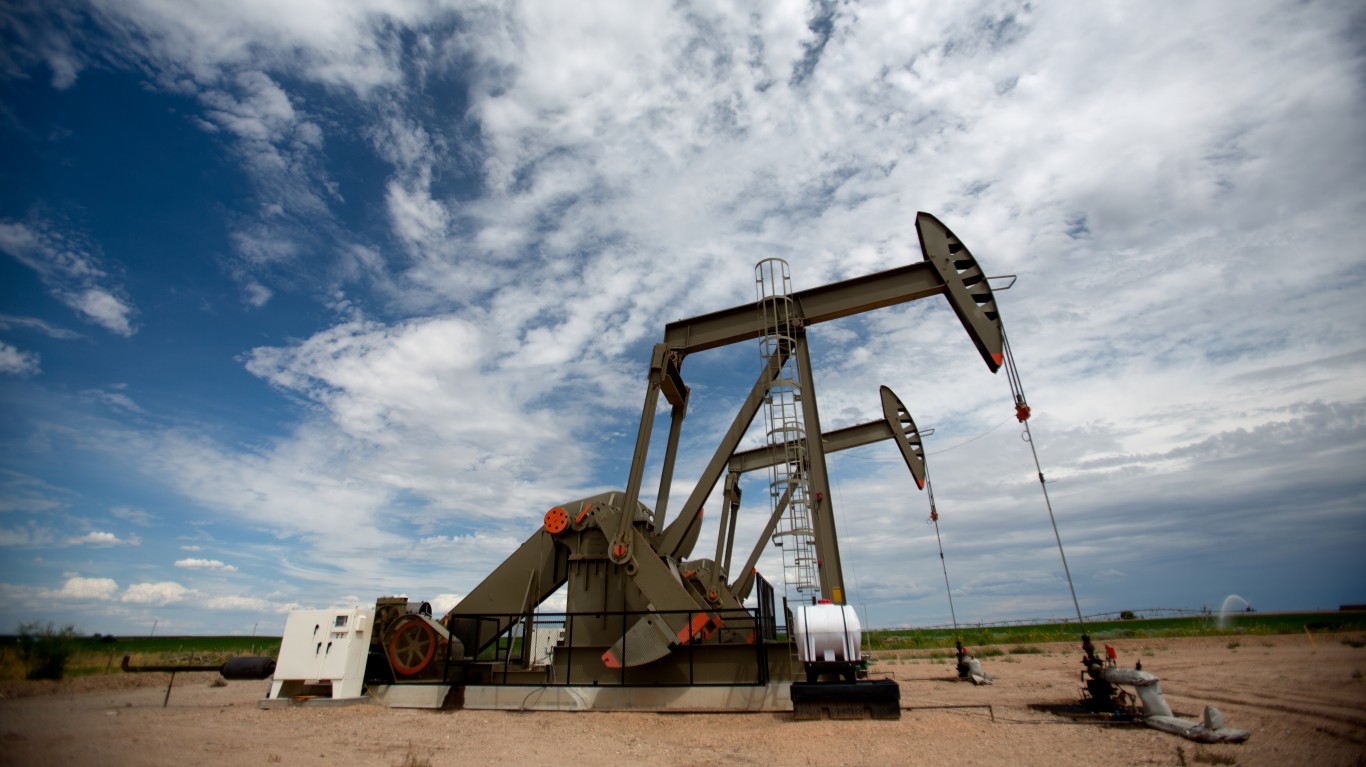
Viper owns mineral and royalty interests, primarily in the Permian Basin. Royalty owners collect a percentage of production revenue from every barrel of oil, cubic foot of natural gas, and barrel of natural gas liquids produced on their acreage without bearing drilling costs or capital expenditures. When operators like Diamondback Energy (NASDAQ:FANG) or ExxonMobil (NYSE:XOM) drill a well on Viper’s land, Viper receives its royalty check regardless of who paid for the rig.
In Q2 2025, oil income contributed $241 million, natural gas liquids added $36 million, and natural gas contributed $10 million. Oil dominates today, but natural gas is gaining relevance as LNG export infrastructure expands and Henry Hub prices recover from their 2024 lows.
The dividend has two components: a fixed base dividend paid quarterly and a variable dividend that rises and falls with commodity prices and free cash flow. The base is designed to be durable across commodity cycles; the variable is the upside lever when prices are strong.
The natural gas tailwind
Natural gas prices spent much of 2024 near multi-year lows, touching roughly $1.20 per MMBtu in November 2024. In early 2026, a January cold snap sent spot prices to nearly $31 per MMBtu on January 23. Prices have since normalized to the $2.64 to $3.04 range in April, but the episode illustrated how quickly demand can outpace supply.
For Viper, higher natural gas realizations directly lift royalty revenue. In Q1 2025, natural gas realized prices rose to roughly $2 per Mcf from about $1.20 per Mcf in Q1 2024, a meaningful improvement that flowed straight to the royalty check with no incremental cost.
Is the base dividend safe?
The board raised the base dividend by 15%, bringing the annualized base to $1.52 per share. Management stress-tested the base dividend at approximately 50% of estimated 2026 free cash flow at $50 WTI and described it as fully covered even below $30 WTI. With WTI crude currently near $100 per barrel, the margin of safety is wide.
Pro forma net debt following the Sitio acquisition stands at approximately $1.6 billion, just over one turn of leverage. Viper’s stated long-term net debt target is $1.5 billion, representing approximately 1.0x leverage at $50 WTI. For a royalty business with no capital expenditure obligations, this is conservative.
The royalty model provides a natural buffer that operating companies lack. Because Viper bears no drilling or production costs, its free cash flow margin is structurally high. Operating cash flow in Q2 2025 reached $172 million on revenue of $297 million, and the company returned 90% of available cash to shareholders in Q4 2025.
The variable dividend’s volatility
Combined quarterly payouts ranged from $0.52 per share in Q1 2026 to $0.65 per share in Q1 2025. Q4 2024 came in at $0.65 per share, while Q2 2025 was $0.53 per share. That $0.12 swing reflects oil price movement, not structural problems.
Investors anchoring to headline yield based on peak variable payouts will be disappointed when oil retreats. The trailing dividend yield sits near 4.9%, but that blends quarters with higher variable components. The base yield alone is lower and worth stress-testing for income planning.
Production growth adds durability
Oil production reached 66,413 barrels per day in Q4 2025, up from 29,859 bbl/d in Q4 2024, largely from the Sitio acquisition closing in August 2025. Management guided for mid-single digit percentage production growth in 2026 from pro forma 2025 levels. Growing production means growing royalty revenue even if commodity prices stay flat, providing a natural dividend growth engine independent of price cycles.
CEO Kaes Van’t Hof framed the operator relationship as a key differentiator: “The symbiotic relationship between Diamondback and Viper is highlighted during times like these where Diamondback continues to focus its development on wells where Viper owns high royalty interests, and therefore enhances Diamondback’s consolidated capital efficiency.”
Analyst consensus and multi-year performance
Viper shares have gained approximately 29% over the past year and roughly 284% over five years. Analyst consensus skews heavily positive, with 13 buy ratings and 5 strong buys against just 1 hold.
Base dividend durability versus variable payout risk
The base dividend is well-covered and designed to survive severe commodity downturns. The variable dividend will fluctuate with oil and natural gas prices, a feature of the structure. Investors who understand that distinction and want royalty-style exposure to Permian Basin energy production with a growing natural gas tailwind from LNG demand are getting a durable income stream. The structure is designed for investors comfortable with commodity-linked variability, not those requiring a fixed, predictable payout.









 Top Gaining Stocks
 Top Losing Stocks