


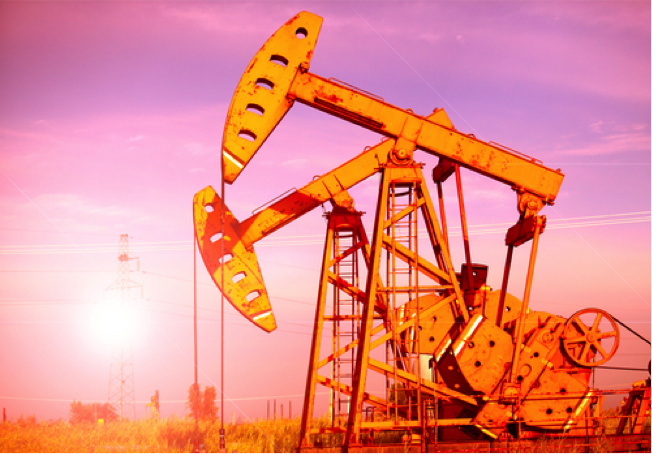
With crude prices at multidecade lows, Saudi Arabia pushed its OPEC partners into adopting a policy of no production cuts and letting the market decide the winner. What Saudi oil minister Ali al-Naimi understands — and what many other oil industry experts fail to understand — is summed up in a question he asked at an OPEC conference in December 2014. In a paper by energy economist Philip Verleger, Naimi is quoted:
[I]s there a black swan the we don’t know about which will come by 2050 and we will have no demand [for oil]?
To guard against that (remote) possibility, the Saudis did not cut production to force prices up for every producer, but they took the more sensible step of calling into question the feasibility of all the hugely expensive hydrocarbon projects that were started in the middle of the past decade.
ALSO READ: Is a Crude Oil Super Contango in Our Future?
Naimi also said that he gets a “sense that people want to get rid of coal, oil, and gas.” The recent agreement between China and the United States on further steps to slow global warming is just the latest indication of that desire to rid the world of hydrocarbons.
Production costs in the Canadian oil sands, for example, cannot come close to production costs in Saudi Arabia or Kuwait. The same can be said for projects in the Arctic and in ultra deepwater. Virtually all those projects were begun before horizontal drilling and fracking became common in North America, and virtually all require a crude oil price closer to $100 a barrel than to $50 a barrel in order to make a profit. Even horizontal drilling and fracking cannot compete with conventional production in Saudi Arabia and Kuwait.
Exxon Mobil Corp. (NYSE: XOM) said last week that it would reduce capital spending by about 12% year-over-year in 2015 to approximately $34 billion and that capital spending over the following two years would be below $34 billion. Still, production is expected to rise by 300,000 barrels a day in 2015 and by another 400,000 barrels a day by the end of 2017.
The question becomes whether Exxon, or any of the supermajors for that matter, is likely to begin a new, wildly expensive project in the next few years if crude oil prices remain in a range of $50 to $75 a barrel. As the economy recovers and interest rates rise, where will the billions of dollars needed to fund those projects come from if crude oil price projections remain close to the cost of production?
Low prices will, of course, push up demand. We only need look at the boost in U.S. sales of full-size pickups and sport utility vehicles to see the impact of low gasoline prices on demand for less fuel-efficient vehicles.
ALSO READ: Sustainable Energy Taking a Larger Role in U.S. Economy
As long as Saudi Arabia doesn’t blink — and there is no reason to expect it to do so — the country can keep the pressure on prices and ultimately force high-cost producers to decide how long they can continue to pump oil and lose money. It may take several years, even a few decades, with a lot of ups and downs, but in the long run, the last oil man standing is likely to be a Saudi, and he is likely to be selling oil for the 2050 equivalent of $13 a barrel.







 Top Gaining Stocks
 Top Losing Stocks