


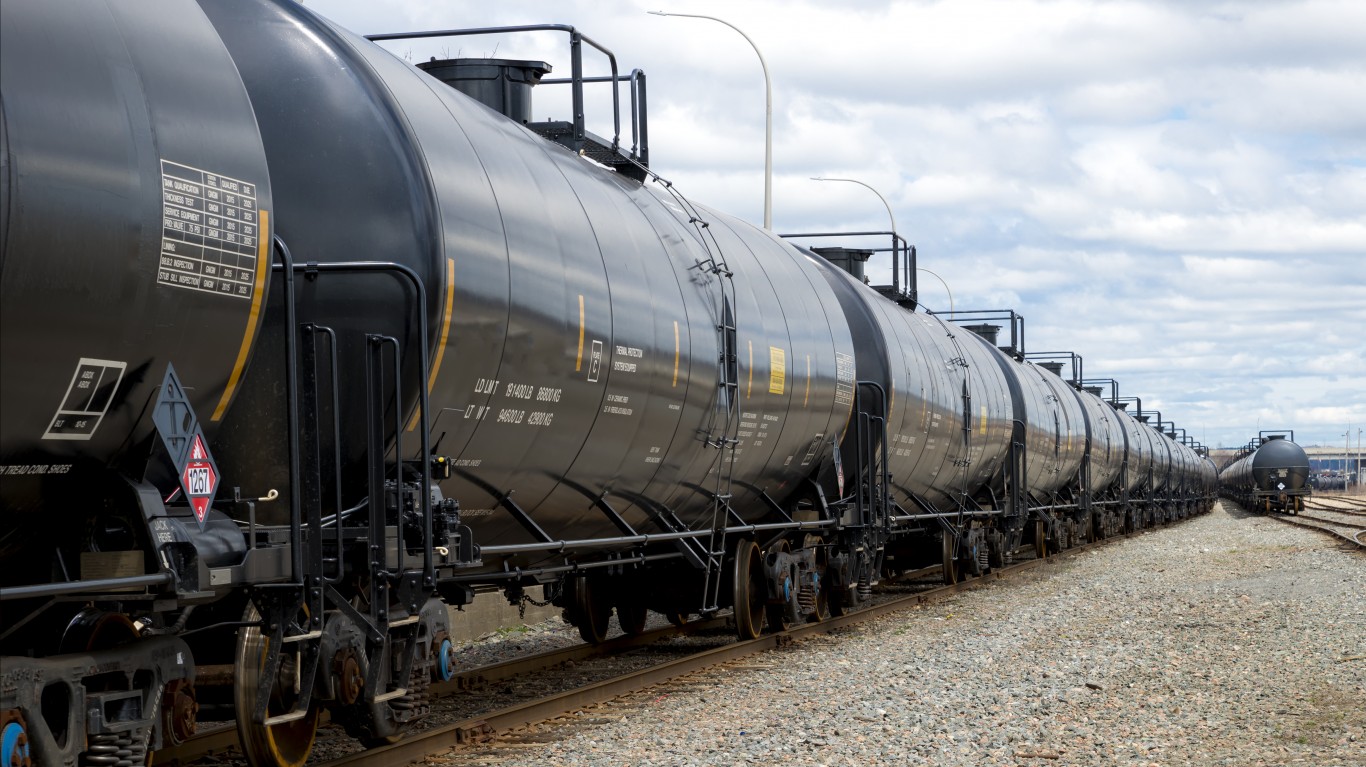
Oil prices rose above $100 a barrel in 2008 and then hit $145.29 on July 3 that summer. Yet it seemed unimaginable that crude could pass the $100 mark again. However, several factors have started to push the price above $70, and experts say that $80, $90 or even $100 oil could be back by this year’s end.
It did not take crude long to hit $100 in 2008. It traded at $71 in August 2007, about the same price it is today. It was $96 by December and rising fast. The price stayed above $100 from February 2008 until early October, a span of eight months.
2008 seems a long way back, but the factors that drove oil to $100 are in play today. A significant trigger of $100 oil in late 2007 was political unrest in several large oil-producing nations, in particular, Turkey and Nigeria. Then in June 2008, Israel threatened to attack Iran over its nuclear development program. Iran had the fourth largest oil reserve at that time.
The United States put sanctions on Iran last year for the same nuclear issues that contributed to $100 a barrel oil the last time crude topped that mark. The U.S. sanctions have been extended to Venezuela because of the activity of the dictator who rules that South American country, which has the largest oil reserves. And in the past week, military and political tensions in Libya have driven oil prices even higher.
[nativounit]
Oil experts at international bank Barclays said they expect that oil could top $80 a barrel soon. Bank of America said the price may well hit $100 this year, driven by the problems in Iran and Venezuela. Venezuela’s oil output is only a third of what it was in 2015, and financial and infrastructure problems continue to push that lower. The International Energy Agency says U.S. sanctions have cut oil exports from Iran by about half since the end of last year. The World Bank says Nigeria’s economy is faltering again.
The Organization of the Petroleum Exporting Countries (OPEC) continues to be among the single greatest suppliers of oil in the world. It announced last year that, led by Saudi Arabia, it would cut supplies early in 2019. Most of the countries in the cartel have not only agreed to the plans, but they have held production low for months. OPEC’s primary reason for the cut is that oil prices had come down far enough to put a strain on the national treasuries of its members. OPEC crude production was listed recently as a trigger to a drop in global supplies.
Finally, another primary factor in large oil prices is military unrest that could cause international conflict. Tensions with North Korea would certainly qualify. So would the battle among China, the United States and Japan in parts of the East China Sea.
Many of the factors that drove oil above $100 a barrel 11 years ago are back in force again.
[recirclink id=539799]
[wallst_email_signup]







 Top Gaining Stocks
 Top Losing Stocks