Fracking Surges Ahead of Clean Energy Regulation

Photo of Douglas A. McIntyre
By Douglas A. McIntyre Published
This post may contain links from our sponsors and affiliates, and Flywheel Publishing may receive compensation for actions taken through them.

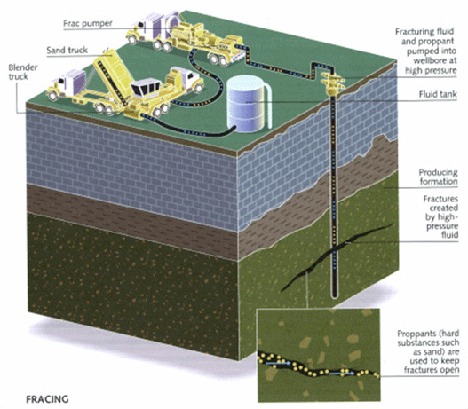
Fracking, and the resulting production of new oil and gas reserves, has been described by energy experts as a cornerstone of the nation’s economic future. The drilling, exploration, transportation and refining of the fruits of the relatively new technology should create hundreds of thousands of jobs, and it could fulfill a dream that no one believed was possible — America could become energy independent. As part of one process linked to the accelerating pace of wide use of hydraulic fracturing is legislation to monitor, limit or eliminate the practice. Much of that legislation will fail because it is not realistic.

Recently, some California state legislators have pressed for severe limits on a technology that they say could cause seismic shifts and the fouling of groundwater. The race between regulation and drilling has added speed in Illinois. According to the AP:

State records indicate that high-volume oil drilling already has begun in Illinois, where lawmakers and others are scrambling to pass a bill to establish regulations for a practice that has generated intense national debate as energy companies push into new territory.

Although it is not a hard-and-fast rule, the energy industry is not beyond moving energy production out of one region and into another, if the result of that decision is a heightened ability to make money. Fracking is no exception, so states need to decide if they can strike a balance between environmental safety and concerns about the process. The vast availability of shale puts strict regulation at an economic disadvantage. State legislatures will need to decide whether they want to improve their economies or err on the side of what appears to be safety.

Strict state regulation of fracking ignores the industry’s financial benefits of cleaning up its own messes, which causes a revenue advantage, if they can be called that. NOLA.com reported on the boon to waste disposal industry:

The explosive expansion of drilling of natural gas and oil wells in shale deposits in the United States and Canada using a directional drilling method dubbed “fracking” may have spawned a $30 billion per year expansion of the waste disposal business, waste and investment industry executives were told

However, the oil and gas industries have a poor record of policing their own polluting byproducts. This may change with fracking because of the huge amount of public and government scrutiny it has caused. However, some amount of legislation about the practice will be set at both the state and federal level. At issue, again, is the extent to which this makes the use of fracking difficult or unprofitable. This kind of difficulty will prompt the industry to look to places like shale-rich and rule-poor North Dakota.

If states do not set fracking rules that allow the industry a reasonable chance to make money, those states will find themselves without the economic benefit of the practice.


Photo of Douglas A. McIntyre
About the Author Douglas A. McIntyre →

Douglas A. McIntyre is the co-founder, chief executive officer and editor in chief of 24/7 Wall St. and 24/7 Tempo. He has held these jobs since 2006.

McIntyre has written thousands of articles for 24/7 Wall St. He is an expert on corporate finance, the automotive industry, media companies and international finance. He has edited articles on national demographics, sports, personal income and travel.

His work has been quoted or mentioned in The New York Times, The Wall Street Journal, Los Angeles Times, The Washington Post, NBC News, Time, The New Yorker, HuffPost USA Today, Business Insider, Yahoo, AOL, MarketWatch, The Atlantic, Bloomberg, New York Post, Chicago Tribune, Forbes, The Guardian and many other major publications. McIntyre has been a guest on CNBC, the BBC and television and radio stations across the country.

A magna cum laude graduate of Harvard College, McIntyre also was president of The Harvard Advocate. Founded in 1866, the Advocate is the oldest college publication in the United States.

TheStreet.com, Comps.com and Edgar Online are some of the public companies for which McIntyre served on the board of directors. He was a Vicinity Corporation board member when the company was sold to Microsoft in 2002. He served on the audit committees of some of these companies.

McIntyre has been the CEO of FutureSource, a provider of trading terminals and news to commodities and futures traders. He was president of Switchboard, the online phone directory company. He served as chairman and CEO of On2 Technologies, the video compression company that provided video compression software for Adobe’s Flash. Google bought On2 in 2009.

Continue Reading

Top Gaining Stocks

CBOE Vol: 1,568,143
PSKY Vol: 12,285,993
STX Vol: 7,378,346
ORCL Vol: 26,317,675
DDOG Vol: 6,247,779

Top Losing Stocks

LKQ
LKQ Vol: 4,367,433
CLX Vol: 13,260,523
SYK Vol: 4,519,455
MHK Vol: 1,859,865
AMGN Vol: 3,818,618