Solar Power May Be Largest Source of Electricity by 2050

Photo of Douglas A. McIntyre
By Douglas A. McIntyre Published
This post may contain links from our sponsors and affiliates, and Flywheel Publishing may receive compensation for actions taken through them.

Solar power has taken a back seat to carbon- and nuclear-based energy. That could change by mid-century, according to the International Energy Agency (IEA). Solar power may become the primary source of electricity.

Based on new data:

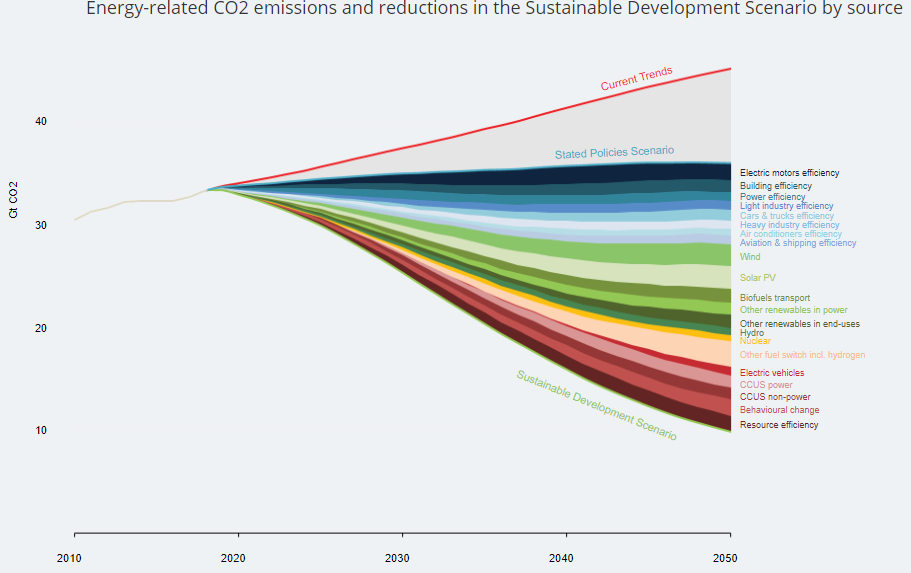
The sun could be the world’s largest source of electricity by 2050, ahead of fossil fuels, wind, hydro and nuclear, according to a pair of reports issued today by the International Energy Agency (IEA). The two IEA technology roadmaps show how solar photovoltaic (PV) systems could generate up to 16% of the world’s electricity by 2050 while solar thermal electricity (STE) from concentrating solar power (CSP) plants could provide an additional 11%. Combined, these solar technologies could prevent the emission of more than 6 billion tonnes of carbon dioxide per year by 2050 — that is more than all current energy-related CO2 emissions from the United States or almost all of the direct emissions from the transport sector worldwide today.

“The rapid cost decrease of photovoltaic modules and systems in the last few years has opened new perspectives for using solar energy as a major source of electricity in the coming years and decades,” said IEA Executive Director Maria van der Hoeven. “However, both technologies are very capital intensive: almost all expenditures are made upfront. Lowering the cost of capital is thus of primary importance for achieving the vision in these roadmaps.”

The two largest economies by gross domestic product are at the top of the list in terms of adoption:

PV expands globally, with China being by far the leading country, followed by the United States. Over half of total capacity is situated at the final consumers’ place — whether households, shopping malls or industries. STE expands in very sunny areas with clear skies, becoming a major opportunity for Africa, India, the Middle East and the United States.

Oil and gas companies and the coal industry have a bleak future, if this analysis is accurate.

ALSO READ: What Happens When Oil Drops Below $90 a Barrel?

Photo of Douglas A. McIntyre
About the Author Douglas A. McIntyre →

Douglas A. McIntyre is the co-founder, chief executive officer and editor in chief of 24/7 Wall St. and 24/7 Tempo. He has held these jobs since 2006.

McIntyre has written thousands of articles for 24/7 Wall St. He is an expert on corporate finance, the automotive industry, media companies and international finance. He has edited articles on national demographics, sports, personal income and travel.

His work has been quoted or mentioned in The New York Times, The Wall Street Journal, Los Angeles Times, The Washington Post, NBC News, Time, The New Yorker, HuffPost USA Today, Business Insider, Yahoo, AOL, MarketWatch, The Atlantic, Bloomberg, New York Post, Chicago Tribune, Forbes, The Guardian and many other major publications. McIntyre has been a guest on CNBC, the BBC and television and radio stations across the country.

A magna cum laude graduate of Harvard College, McIntyre also was president of The Harvard Advocate. Founded in 1866, the Advocate is the oldest college publication in the United States.

TheStreet.com, Comps.com and Edgar Online are some of the public companies for which McIntyre served on the board of directors. He was a Vicinity Corporation board member when the company was sold to Microsoft in 2002. He served on the audit committees of some of these companies.

McIntyre has been the CEO of FutureSource, a provider of trading terminals and news to commodities and futures traders. He was president of Switchboard, the online phone directory company. He served as chairman and CEO of On2 Technologies, the video compression company that provided video compression software for Adobe’s Flash. Google bought On2 in 2009.

Featured Reads

Our top personal finance-related articles today. Your wallet will thank you later.

Continue Reading

Top Gaining Stocks

CBOE Vol: 1,568,143
PSKY Vol: 12,285,993
STX Vol: 7,378,346
ORCL Vol: 26,317,675
DDOG Vol: 6,247,779

Top Losing Stocks

LKQ
LKQ Vol: 4,367,433
CLX Vol: 13,260,523
SYK Vol: 4,519,455
MHK Vol: 1,859,865
AMGN Vol: 3,818,618